By this Book We Rise or Fall

On the Quran, and it’s place in the life of a Muslim….we say that ‘when a Muslim leaves the Quran, he is an easy target to be humiliated…’ It is true, look at the Muslim nation today and where the Quran is in Muslim homes and Muslim hearts. May God grant the book is written again in the hearts of the Muslims and is the wellspring of our hearts, as our beloved prophet (peace be upon him) so eloquently made du’a (given at the end of this post).

Surkheel Abu Aaliyah's avatarThe Humble I

photo_matic_zorman_gaza_3070_copy_largeRecently, it seems that a number of pious people and a few eminent Muslim spiritual leaders have had premonitions and dreams about the quickening of the Hour and the imminent appearance of the Dajjal. Every generation has its warners proclaiming the End of Days being nigh and the doors of Dajjal, the Antichrist, being flung open. So in that respect, ours is no different.

Where our age does differ from others that have passed is that we live in times where all (or almost all) the signs spoken of in the hadiths that foretell the appearance of the Dajjal have now come to pass. The advice from these spiritual authorities, therefore, is to increase in seeking Allah’s forgiveness (istighfar), and to read the first and last ten verses of surat al-kahf (the 18th chapter of the Qur’an), daily or frequently. One hadith says about the Dajjal: ‘Whoever among…

View original post 1,257 more words

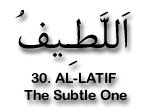
Al-Latif

030

Al- Latif is one of the ‘names’ of God that I most love. It is another word hard to translate into English. I have a very beautiful Arabic-English dictionary of the Holy Quran (linked for your reference) that is essential for any one from an English language background hoping to read and understand the original Arabic of the Quran. And indeed, we Muslims believe the Quran is the word of God. It has been preserved without a single change since its revelation to that most blessed of Messengers, Muhammed (peace be upon him). BTW on this I recently realized most people are not aware of how Muslims view prophets or messengers, peace be upon them all. Briefly we do not elevate them to divinity, believing they are human beings, but neither do we consider them ordinary people, rather we consider them the best of mankind, who were great lights upon the earth, who had the most beautiful comportment, manners and daily transactions – and this for all of them, without reservation or question, peace be upon them all. The Quran is very clear in this and addresses this special noble people in the most beautiful salutary terms. Surah (=chapter) 21 in the Quran, is called ‘The prophets’ and gives the stories of some of them. It is one among many other places in the Quran they are mentioned. I am going off on a tangent so I will stop, but inshAllah (God willing) I will post about this more later on. I actually had no idea people could think badly of any of them (peace be upon them all), i.e., that they would commit major sins such as tell lies etc. until recently and that was shocking to me.

To get back to my topic, so I opened the dictionary to look up the best way to translate this word for you, my dear readers, and found something very special that I will share further down. Especially my Muslim brothers and sisters who are reading this, I think if you did not know it, you will feel happy to know it. The word ‘latif’ comes from the root ‘latufa’ meaning to be delicate, graceful, elegant, gentle, kind, fine. ‘Lateef’ means to be Gracious, Kind, Gentle, Subtle, Sharp-sighted, Acute (the dictionary capitalized each word so I am doing the same, I think this is on the intensive form of the word so that is why). As the name of God, ‘Al-Latif’ = The ‘Latif’, it means roughly, ‘The All Subtle Being’, ‘Unfathomable’, ‘Incomprehensible’, ‘The Gentle’ and so on. We say the Arabic can never really be translated, only interpreted. Actually Muslims don’t consider the Quran in any other language other than the Arabic as the Quran. That is, while we are obligated to be in a state of purity, having taken wudu (see here for a description of this ritual washing) before touching the Arabic Quran, this rule does not apply to it in any other language. This is what I specially wanted to share about what I found in the dictionary;- The word that appears at the very middle of the Quran (and remember when I say Quran, I am talking about it in Arabic) is ‘Walyatalattaf’ (this is a complex form derived from ‘latif’, in arabic you can get a whole sentence just by using the rules of derivation upon a triliteral root word). It means ‘And let him be courteous, let him behave with great care, conduct himself with caution’. In Arabic, there are 8 letters to this word, exactly 4 belong to the first half and the rest to the second half! Isn’t that amazing! Subhahanallah (=exalted is God). It comes in ayat 19 of sura 18. As if a central admonition to us Muslims is to be gentle!

I just looked up Surah 18, it is actually Surah ‘Kahf’ (=the cave). And the passage is about the sleepers in the cave. I am not sure, but I think the Bible has this story as well? BTW I got to visit this cave which is in present day Amman, Jordan. InshAllah I will share more about that later on. Surah Kahf is a surah the prophet peace be upon him, used to recite every Friday and told us to recite every Friday too. My Muslim readers will know the specialness of this surah. It contains many stories, in addition to the ‘sleepers in the cave’ full of wise meanings and messages.

I wanted to write about this word, ‘latif’ as it denotes a trait I love. And Muhammed, peace be upon this most strong yet most gentle of human beings had many wise sayings about how to be gentle. I wanted to post because of these ahadith (saying, narration from the blessed prophet) that I love;-

He who is deprived of gentleness is deprived of good.

(Muslim)

Keep to gentleness and avoid harshness and coarseness. Gentleness is not found in anything without adorning it, and is not withdrawn from anything without shaming it.

(Muslim)

And on this note, here is a story from the traditions of the prophet peace be upon him, that I do love. It shows the gentleness of his approach toward teaching people religion. As you may know, during the month of Ramadan, Muslims fast. It is not just an external fasting (abstaining from food, drink and sexual relations) from dawn till dusk, it is also an internal one (abstaining from telling lies, gossip, backbiting, slander, being careful to not look at unlawful images etc). How much we are able to adhere to this is another story. But indeed the month is meant to train us and to help us regulate ourselves. It is like an annual cleanse you could say. A most special time (it’s only 4 months away! so excited looking forward to it. May Allah grant I have the felicity to meet another Ramadan!). I took this story from an article in the Baltimore Examiner, referenced here. However the story itself is well known and found in a many places, it is considered a very ‘authentic’ narration. The way ahadith (plural of hadith) are graded is a science itself, and there are Muslim scholars who specialize in this. Unfortunately these days due to the dearth of sound Muslim scholars, there are many deviant or fallacious ahadith floating around and many Muslims who don’t know a sound narration from a bad one, who would end up following the falsified ones. Before I go off on another tangent, albeit it is an important topic, here is the story. It is about this man who couldn’t keep his fast and came and confessed to the prophet (peace be upon him) and wanted to know what he could do to compensate –

“A man came to Allah’s Apostle and said, ‘O Allah’s Apostle! I am ruined!’

The Prophet said, ‘Waihaka (May Allah be merciful to you)!’

The man said, ‘I have done sexual intercourse with my wife while fasting in Ramadan.’

The Prophet said, ‘Manumit a slave.’

The man said, ‘I cannot afford that.’

The Prophet said; ‘Then fast for two successive months.’

The man said, ‘I have no power to do so.’

The Prophet said, ‘Then feed sixty poor persons.’

The man said, ‘I have nothing (to feed sixty persons).’

Later a basket full of dates were brought to the Prophet and he said (to the man), ‘Take it and give it in charity.’

The man said, ‘O Allah’s Apostle! Shall I give it to people other than my family? By Him in Whose Hand my life is, there is nobody poorer than me in the whole city of Medina.’

The Prophet smiled till his premolar teeth became visible, and said, ‘Take it.’”

(Bukhari, Vol. 8, Bk. 73, No. 185)

Peace be upon you all my dear readers. Al-Latif be with you!

Introducing Dr. Ingrid Mattson

Dear readers, Assalamu alaikum, peace be upon you all,

February has rushed past and it is already close to the middle of March. I am amazed at the rapid passage of time, as I am sure most of you are as well. However that aside, yours truly is hoping to post again from her travels. Though I’ve finished my series on my ‘rihla’ to Turkey (please see archives with tag ‘travels’ or ‘Turkey’) I was intending to post on Jordan soon inshaAllah as I visited there after Turkey…and what a delightful visit it was, not to mention eye-opening.

For today, here is a talk I just listened to and as most of my readers may not know this lady, I thought I’d post it up here. This is Dr. Ingrid Mattson, the former president of North America’s largest Muslim organization – Islamic Society of North America. She is answers a number of pertinent questions to those of us living in the west, both Muslim and non-Muslim, in this interview, and I was struck both by the sincerity and fairness of the interviewer as much as by the sincerity and honesty of Dr. Mattson. I hope you will listen.

Ulu camii

Assalamu alaikum dear readers,

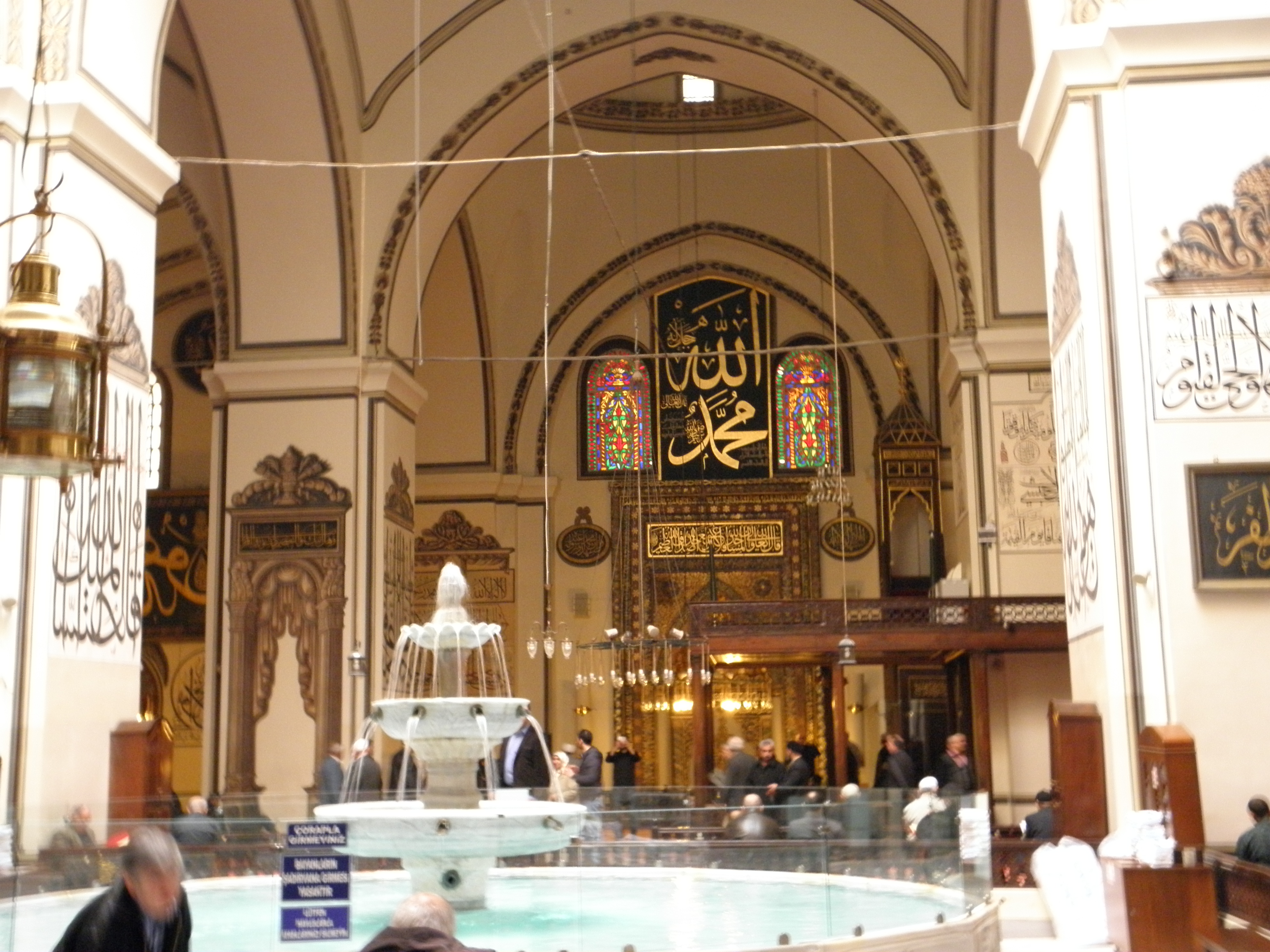
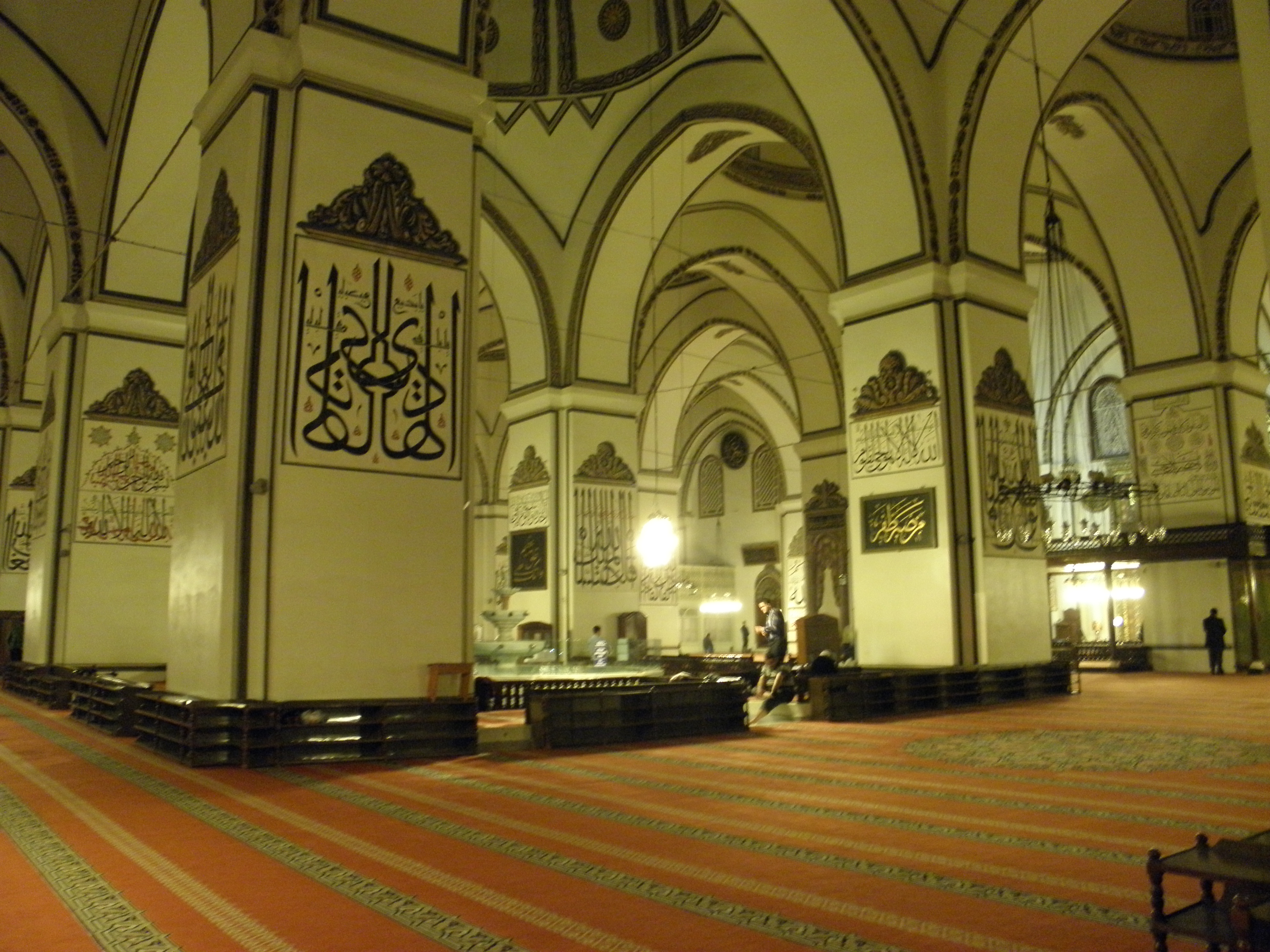
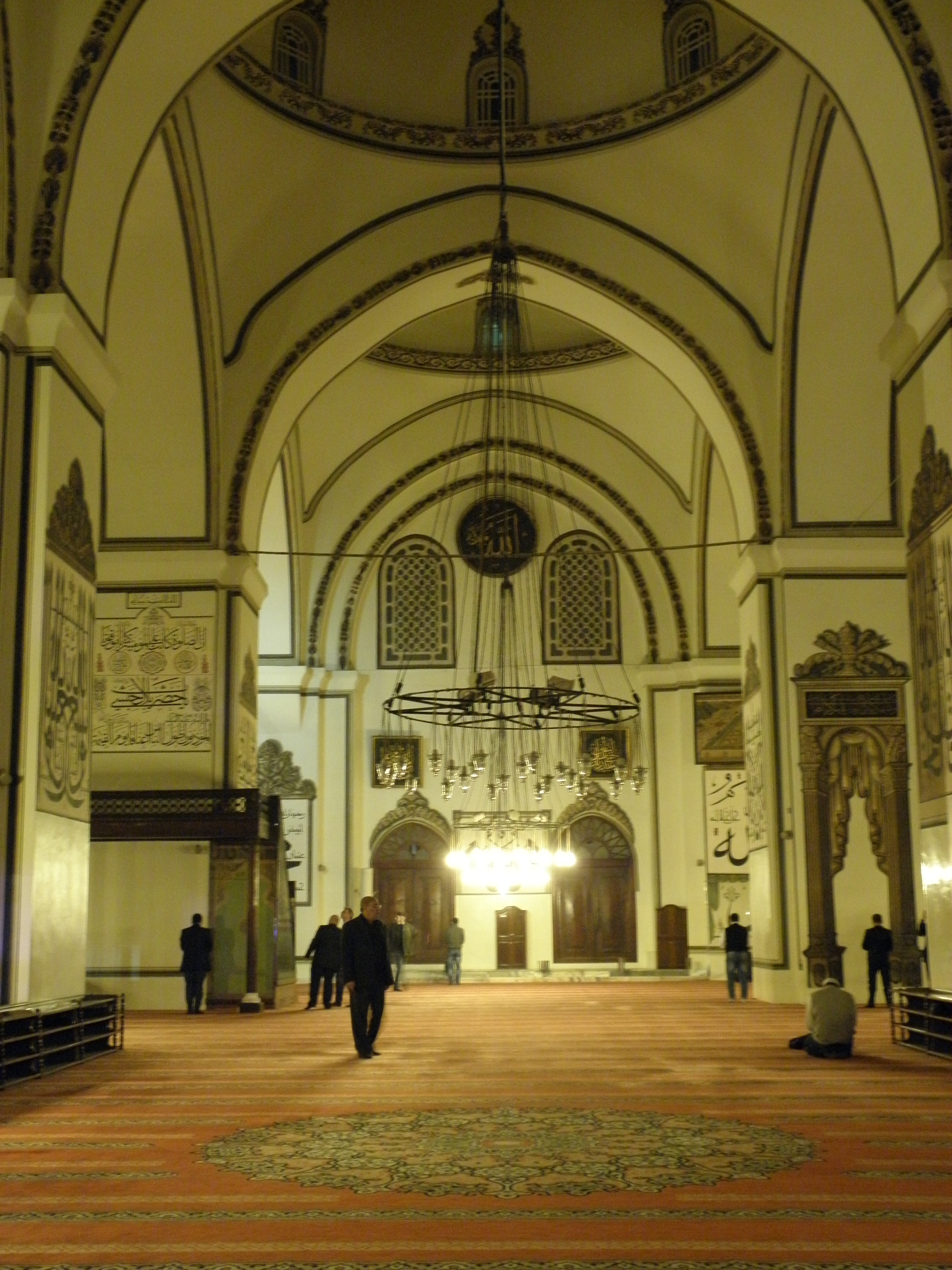
I have been wanting to write for a while but many unexpected things got in the way. I have much more to share about my rihla to Turkey, but the days are flying and new experiences are threatening to dull precious memories, as well as competing for blogging time and space (and I have been sternly denying them that). So I think this maybe the last post on Turkey. I chose for it a post about a very special camii we were blessed to visit. It is called the Ulu camii, also known as the Bursa Grand Mosque. It is an example of early Seljuk architecture and was built before the time when Constantinopole became the capital of the Empire, around the late 14th century. So it is from before the time of the great Mimar Sinan or the more famous mosques in Istanbul.

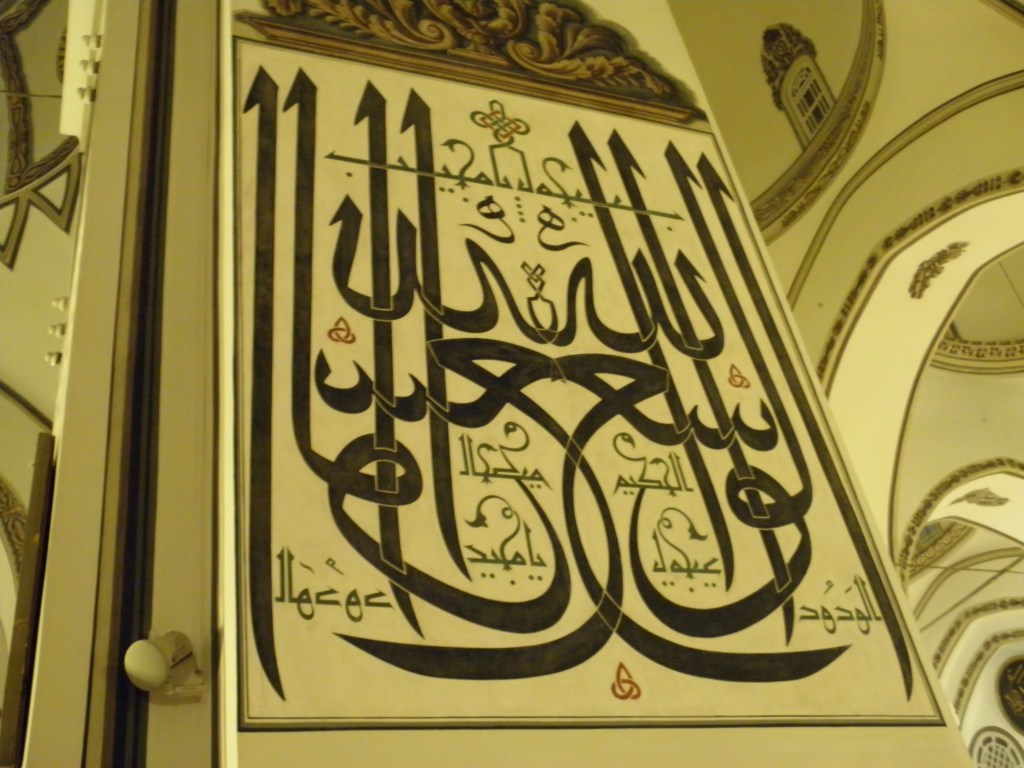
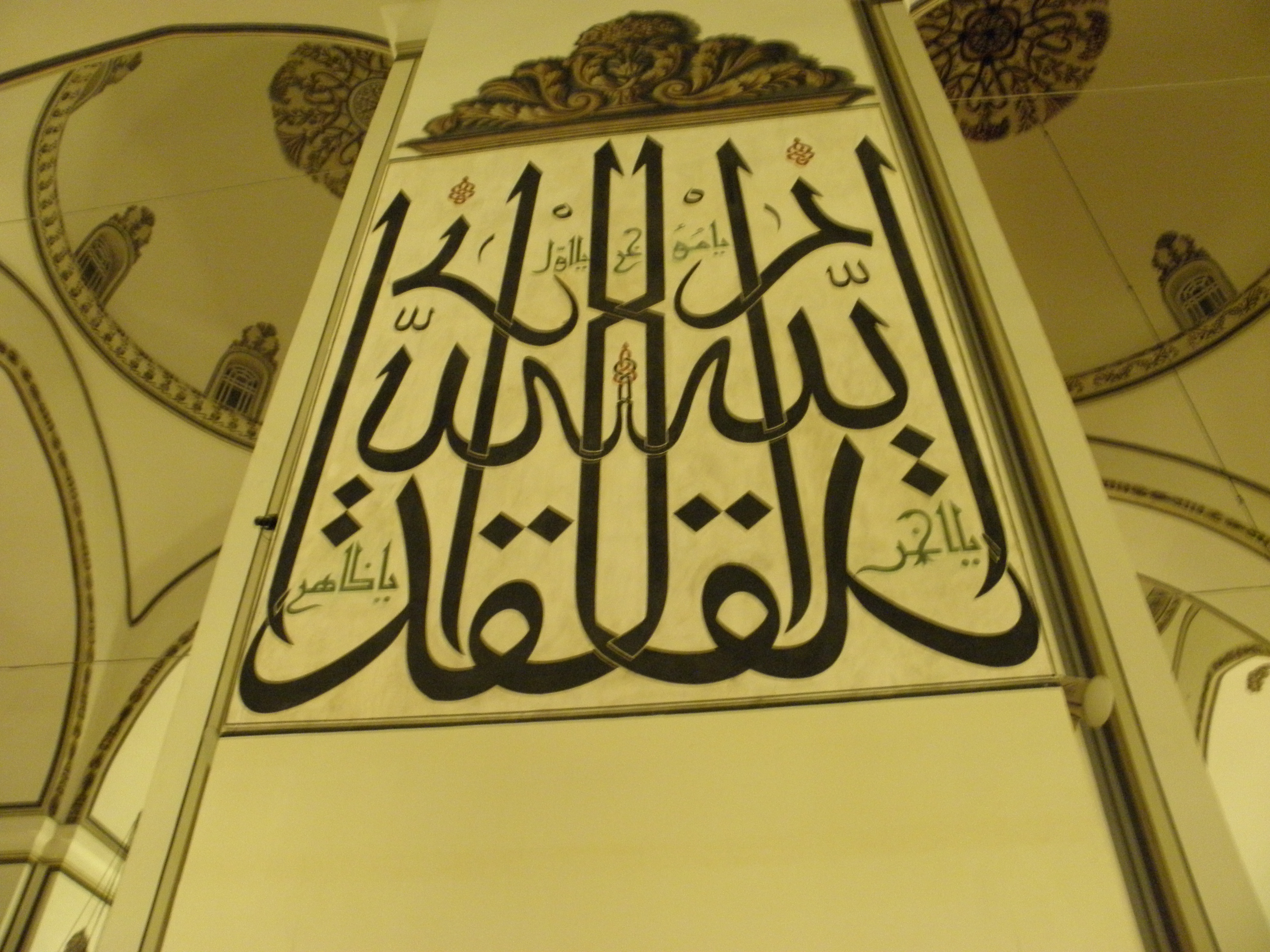
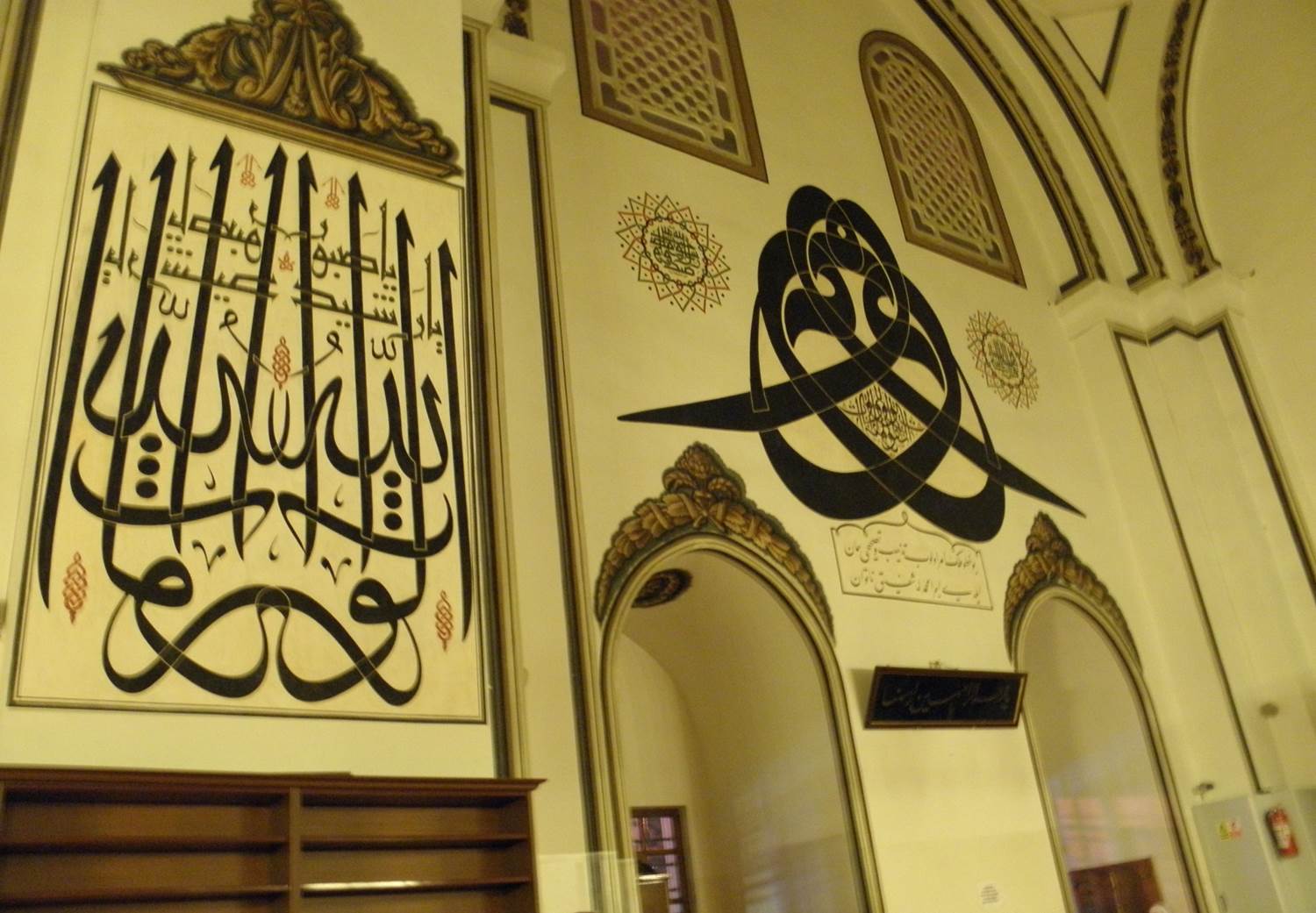
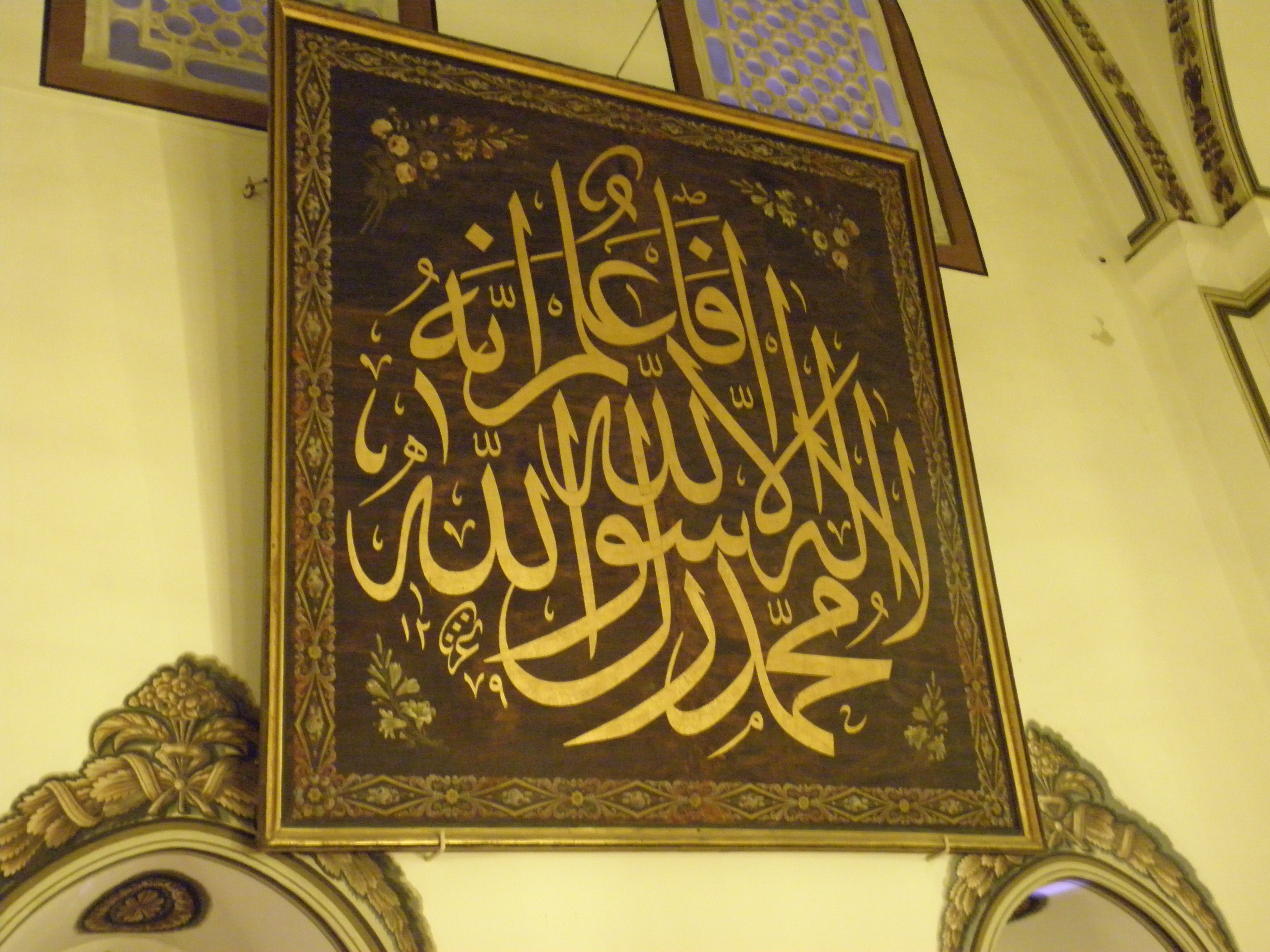
Why is this masjid (=mosque) special? Well, when you see the pictures you will know. We took a day trip down just to see it and were blessed to join the congregation for the noon, afternoon and sunset salah (respectively called ‘dhuhar’, ‘asr’ and ‘maghreb’) there before heading back to Istanbul. It is located in Bursa, a ski-station actually, a beautiful old city located high up in the mountains, overlooked by the towering Ulu-daag (Ulu mountain). The mosque unlike the later masajid (plural of masjid) is decorated in only two colours; black and gold. There is minimal tile work and ornamentation. But what it does have is considered by some as one of the most magnificent displays of Islamic calligraphy in one place. It has over 190 calligraphic panels and works painted on the walls of the mosque. Different verses of the Quran, Islamic phrases, saying of the prophet (peace be upon him). All done in a variety of the established classical styles of calligraphy. For those of you who don’t know, Islamic calligraphy has some classical styles and training in them is also handed down from teacher to student and follows the same ‘ijaza’ (=license) system of transmission. We were blessed to watch a master calligrapher at work, who has ijazaath (plural of ijaza) in I think all the major forms, and some forms took up to 13 years to master. Islamic calligraphy is very mathematical as most Islamic art forms are …unsurprising as Muslim science always considered math to be a language of knowing the divine…there are secrets of the Universe mathematical principles can unlock that no other science can. And I guess in today’s language quantum physics and allied sciences are what I would also consider pure mathematics. But I am going off on another tangent, so I better stop. Look at this interesting paper for a computer application developed to do what the old masters did by hand, exploring symmetry and how it teaches us meanings about origin and end… Here is more detail on the theory.

I believe there is a panel where in the corner the master calligrapher offers a challenge to anyone to better his work, and indeed he does sign some of the panels. The feeling engendered by these panels in the mosque is amazing, everywhere you turn there is some choice phrase or metaphysical symbolic composition of letters, it takes the soul on a journey that I can swear no visit to any Art gallery has ever done to me, and I can use the Arabic ‘wallahi’ to swear this! (Wallahi meaning ‘by Allah’ and it is not used lightly to swear on something)

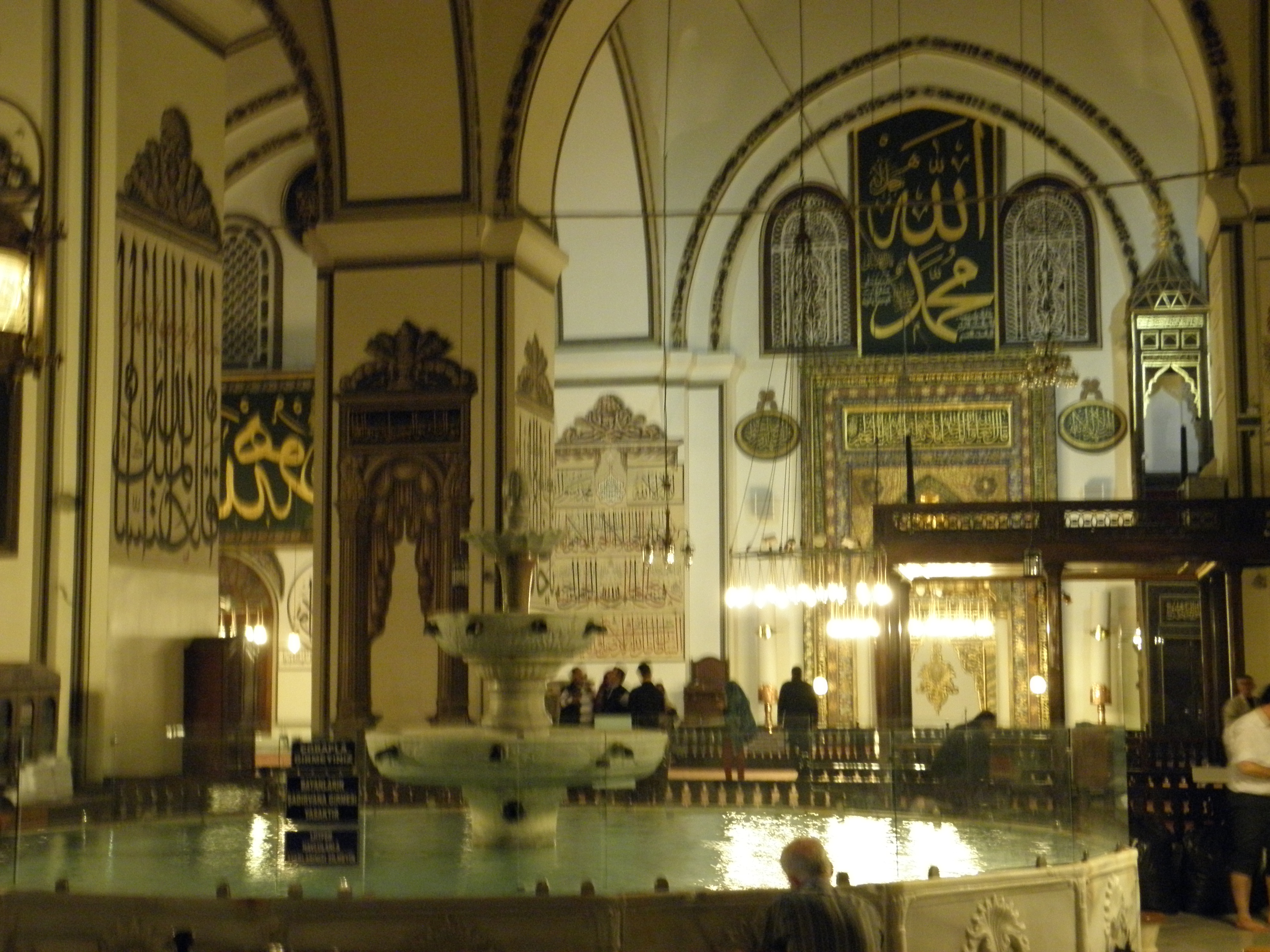
I will post pictures below. To leave you though, there is something very interesting in this masjid that I must share. Usually the place to take the compulsory washing one has to do before being able to enter the salah, called the ‘wudu’ in Arabic is outside. The wudu is often translated in English as ‘ablution’ and the idea is that one cleans ones external (the obligatory of this is to wash the hands and arms up to the elbows, the face, wipe over the hair and the feet. The prophet peace be upon him, would also wipe his ears and wash his mouth and nose so we often do that as additional and he would do this three times while reciting certain verses, so we follow his example, he also frequently brushed his teeth too) before one can enter the state of the ‘salah’ where Muslims believe we are standing directly in front of God which then is the time we go to clean our ‘internal’. Then before we go to the internal cleansing we undertake this external cleansing. So we can’t offer the salah unless we take our ‘wudu’ (certain acts nullify a wudu and then it has to be taken again, such as for example relieving oneself or falling asleep). However ‘ablution’ is a bad translation as it signifies the idea of prior sin, which is a concept foreign to the Muslim psyche. Rather the better translation I’ve heard recently is ‘lumination’ from an eminent English speaking Islamic scholar, Sheikh Hamza Yusuf Hanson, as the Arabic root word for ‘wudu’ comes from the same root as the latin ‘lumos’ (meaning gaining a state of light) comes from.

To continue the taps to take the wudu are usually located in the courtyard outside the masjid as we enter the masjid after having taken our wudu. But in the Ulu camii there is a beautiful fountain (complete with fresh clean towels!) located inside the mosque. This was an anomaly and we were curious why. The story goes, that when the Sultan wanted to build the masjid he began to acquire the land for it. All was okay except there was an old lady who lived in this small hut right in the middle of the proposed property who refused to sell to the Sultan. And it is a testament to his good rule that he could not compel her to sell her land. The story goes that eventually she died, and left no heirs. Now the Sultan went ahead and acquired the land and construction was to begin. However here is a dilemma, would the prayer of those worshipers who prayed on this land be valid, in that though acquired it was not done so with the permission of the owner. So according to Islamic law (and remember Islam as a religious tradition is most known in terms of its contributions in the field of law) the land may not be ‘halal’ (permissible) or valid, on which to build a mosque. The ‘ulema (=scholarly community) had a cunning compromise to this dilemma, they could not halt the Sultan from building the mosque but they could not rule that the prayer offered on this portion of the land would be valid according to Islamic law, so they couldn’t sanction it either. Therefore they proposed that a fountain be built on the section of land that used to belong to the old woman so that no worshiper’s head would touch the ground on what maybe a space where a prayer is unlawful. Instead people take their wudu there! I was humbled by this level of scrupulousness and earnestness in trying to find the best solution to a problem not to mention ensuring religious works are done according to the highest morality. And I could not but help think of the status of many Muslim governments of today who don’t care how they do what and would even murder their own citizens in the name of religion. May God help us all.

With that said, here are pictures. May peace be with you all and I will leave with this prayer that you too will get to visit places like this in the same way I have. And truly journey ‘through the earth to learn’

22:46
Sahih International Interpretation

So have they not traveled through the earth and have hearts by which to reason and ears by which to hear? For indeed, it is not eyes that are blinded, but blinded are the hearts which are within the breasts.

Quran 22:46
fountain
Ulu camiiOLYMPUS DIGITAL CAMERA OLYMPUS DIGITAL CAMERA Ulu camii alcove

OLYMPUS DIGITAL CAMERA OLYMPUS DIGITAL CAMERA OLYMPUS DIGITAL CAMERA OLYMPUS DIGITAL CAMERA OLYMPUS DIGITAL CAMERA OLYMPUS DIGITAL CAMERA


Istanbul

Assalamu alaikum, peace be with you


Dear readers, it has been many days since I returned from my journey and many more since I left Turkey. I still miss it very much. I miss the pre-dawn walks we took to either the blue mosque, or the Beyazid mosque or the Sulaimaniya (which I missed unfortunately) to get there just as the sounds of the call to the dawn prayer began to float on the hushed stillness of the ending night. I miss entering those great spaces of peace and sitting in silence until the prayer is begun and then the magnificent recitation. I miss sitting there after, each of us lost in our own thoughts, contemplations, in our ‘dhikr’ (=remembrance, of God, of where we came from and where we are going, of our prophet) until the rays of the sun fell on the carpet through the stained glass windows brightly enough to signal the day has broken. And then we would stand to offer two more units of voluntary prayer before walking back to our hotel for breakfast. The city magically transformed in that short time so that quiet deserted streets were then full of vendors, the fragrances of tea and ‘simit’, busy students hustling to school and busier folks on their way to work, the trams going past ‘jam-packed’ and the shops open to new delights to tempt one as one passes by. I miss this also, this cacophony of life, good busy simple life. All things should have their place and their is a time for prayer and a time for the daily duties of life. I love that about Islam that these things are ordered, but never let one take too much of the mind-heart space to the detriment of the other. Ah, balance is a hard skill to achieve. But the middle way is the best way, and so taught our prophet, peace and blessing be upon him. And yet while we maintain that balance it is not to stay stagnant but gently rise each day and year of our lives through our perseverance and training of the soul, so that we wipe away the grime from our hearts and can feel again our true center…that is so far elevated from the mundane! Those who have experienced this will know what I mean. Subhahanallah (glory be to God)

I could go on and on about each of the masajid (plural of masjid=mosque) we visited, but no doubt you will find better and more ample descriptions of these online in other places. So I will post some pictures for you below. Please read the captions for more information.

May God’s peace and blessing be with you all


Image
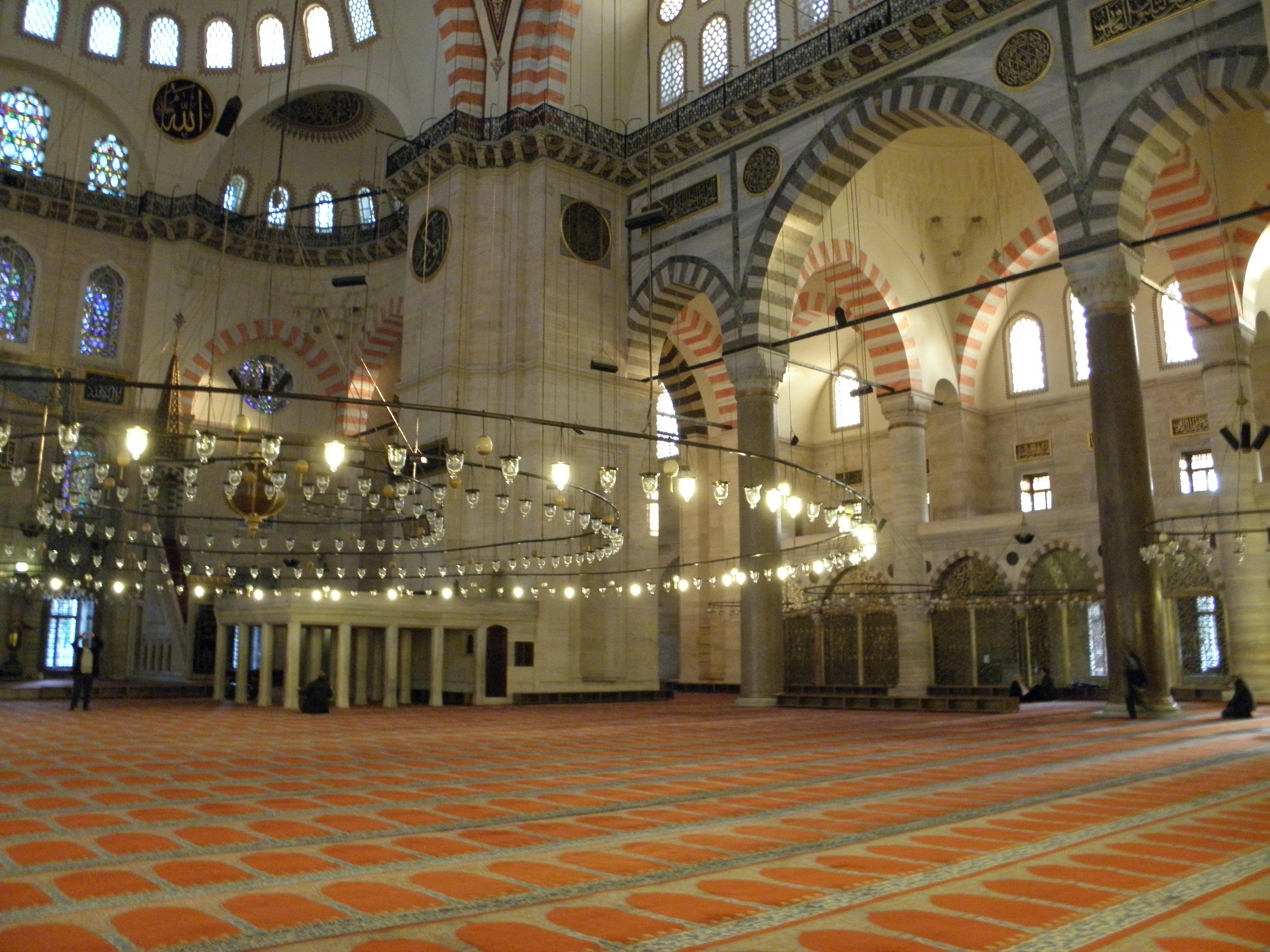
The Sulaimaniya Camii – we arrived in time for one of the prayers, it was very quiet
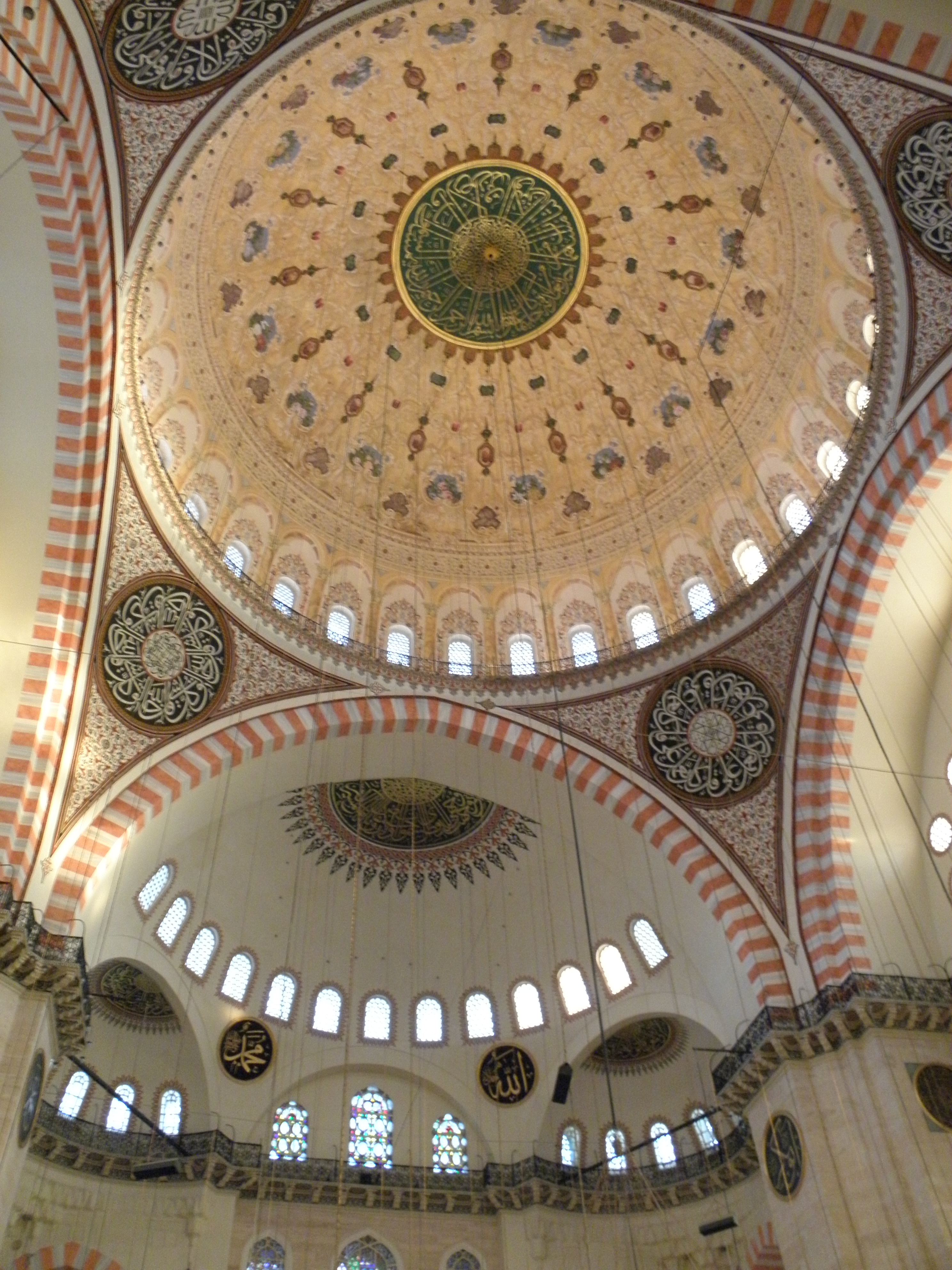
Sulaimaniya camii - dome
Built for Sulaiman the Magnificent by the great Mimar Sinan (see my post on Ederne for his masterpiece). Every Ottoman Sultan was expected to have a trade, and Sulaiman was a gifted jeweller – hence the jewel-theme artwork. The walls also had many marble elements inspired by fine jewel settings.


I think this is the Yeni (=new, its 400+ yrs old!) camii. Built by one of the mother of one of the Sultans. Amazing iznik tile work.


Image
Listening to a reciter or ‘qaari’ after the end of the salah
Image
Detail. Subhanallah!
Image
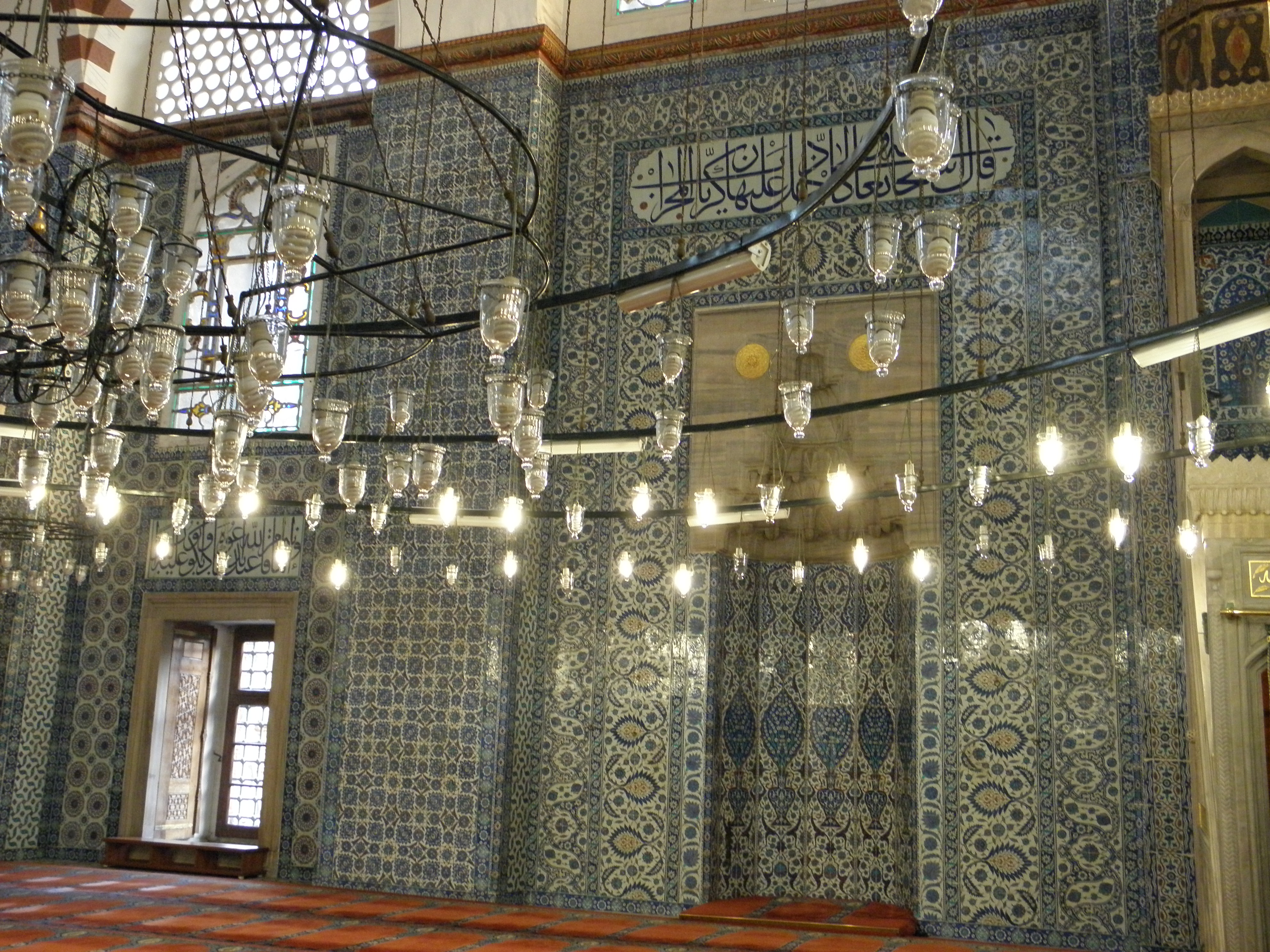
The Rustom Pasha camii – a little know camii tucked away on the top story above the busy shops of the spice bazar. Absolutely stunning, I have many photographs of the tile designs unfortunately I can’t post here. Each tile hand painted and each will have a small defect that allows the artist to recognize it as their work. And also according to the Muslim ethos in art, that perfection belongs to God alone.
Image
the dome from the ‘kucik ayah sofia’ (little aya sofia)
Image
The Sultan Ahmet camii or Blue mosque. A poorly taken picture of the early dawn light coming in.


Istanbul and Abu Ayyub al Ansari (rad)

Assalamu alaikum (peace be with you) dear readers,

Alhamdulillah (thanks and praise be to God), finally back to posting and continuing with the rihla to Turkey posts. We visited many sites in Istanbul and spent the majority of our time in that great city. What can I say? there is so much to share that I am do not know where to begin. Let me then, begin at the beginning!

We arrived in Istanbul on the day of the great Istanbul marathon, I believe over ten thousand runners were on a route that included the Bosphorus bridge, thereby crossing Asia-Europe, which I thought was rather cool. The bottom line was that traffic though was a mess, as this meant one of the two bridges across the Bosphorus was closed to vehicles. After a short time in our hotel we then headed to the Abu Ayyub al Ansari mosque, or the Ayyup camii as the Turks call it. We did this as good etiquette upon our rihla. The turks call Abu Ayyub al Ansari (radhiallahu ta’ala anhu = may God the most High, be pleased with him) the ‘first Sultan’. Here is a website from Turkey on him. He was a companion of the prophet (peace be upon him) and a man beloved to all Muslims. He was an ‘ansari’ meaning, one of the ‘ansar’ (ansar= helpers). The ansar is the name given to the people of Yathrib, a city north of Medina, that the beloved prophet (peace be upon him) migrated to to escape immense persecution from him own tribe in Mecca and also at the request of the people of that city who pledged allegiance to him and asked him to come and govern it. On his arrival there, the city came to be called ‘Medina’ meaning ‘city’. A shortened form of ‘medinatun-nabi’ (=city of the prophet). There is much to relate of this migration, called the ‘hijrah’ which begins the Muslim calander and of the prophet (peace be upon him)’s first actions when he got there, among which was to draft a constitution.

To continue, when our beloved messenger (peace be upon him) entered Medina, he stayed at the home of Abu Ayyub al Ansari for several months until his own modest dwelling was built along side a mosque simultaneously constructed. There is a beautiful story about how the site was chosen for the mosque of the prophet (peace be upon him) which exists to this day and is the second most important mosque in the Muslim world (after the Ka’aba in Mecca). It was actually the prophet’s (peace be upon him) camel that chose the site. But this post will be very long were I to relate it. Abu Ayyub al Ansari showed the prophet (peace be upon him) an immense amount of love and respect on having him as his guest. Many stories are told about his honoring of his guest and the prophet’s immense love for him and his family. He lived a long time after the prophet’s death. In his eighties he went on a campaign to what was then constantinopole and died there. Several centuries later when Muhammed al fatih located where he was buried he built a mosque, the first he built in that city. The mosque exists to this day and the locals loving visit there to celebrate marriages, circumcision ceremonies for boys and etc. It was as if they were seeking the blessings of this great man. There was a feeling of peace and serenity in that mosque hard to rival among the other many fabulous mosques in Istanbul. Also one felt the genuine love of the local people for the place, and surrounding it many restaurants, plazas and places for people to hang-out are there, and they are always full. So we began our tour with a traditional etiquette of paying our respects to this beloved soul who did so much for Islam, and who had the honour and blessing of being among the companions of our beloved messenger (peace be upon him). I have no pictures of that place, it was not a place to take pictures in, at least not for me. I will however post below a video I found on youtube, of some brothers who gathered in the mosque, following the ritual prayer or salah, to sing in praise and love of the prophet and his companion.

And then out of respect and etiquette, I will post about other aspects of the Istanbul leg of our rihla later on inshaAllah (God willing). May the peace and blessing of God always around you, be closer and closer and ever more apparent to your hearts!

Recitation from the blue mosque and celebration of our beloved

Dear readers, peace be upon you all!

I have been wanting to continue with my posts on our rihla to Turkey, but several things do with returning and settling into the work routine have kept me busy. By Allah’s grace may I continue in the coming days. In the meantime I found this recording of the profound recitation following the salah (please see in my post on Ankara for an explanation of why I prefer using the term ‘salah’ rather than prayer for our obligatory daily ritual worship) in the Sultan Ahmed mosque (or Blue mosque as it is more commonly called) in Istanbul. How I miss sitting there listening to the recitation. These are the last two ayaat (=signs, or translated loosely as verses) of Surah Baqarah I believe, the second chapter in the Quran. The recitation following the salah is optional, so you will see some people walking about/leaving. Usually in the masajid (plural of masjid=mosque), the congregational prayer is followed by a du’a (supplication or prayer) or by recitation of verses from the Quran and by sending peace and blessings upon our beloved, Muhammed, the seal of the prophets (may Allah exalt him and grant him peace and all his family, may He elevate them).

On that note, today is a special day, the 12th of the ‘spring month’ of Rabbi ul-Awwal, the birthdate of our beloved messenger. Our prophet taught us that we have only two festivals as Muslims, the one following the end of the fasting month and the one concluding the Hajj pilgrimage. But many Muslims have special gatherings to sing praises of the prophet and send peace upon him, to honour him and remember him on this special day. Something that should not be confined to just one day, and then the best honour of him is to follow his example, may peace and blessings be upon the last messenger, a mercy to the worlds. So the second video is to a beautiful poem praising him, many exist in the Muslim world and some are long some are short. This one is not too long so you can listen to the whole inshaAllah.

May peace be with you all,

Recitation from blue mosque, the acoustics of the masjid are amazing! Subhahanallah (=glory be to God, most exalted)

Qasida Muhammadiya, (qasida is a style or type of poem, its a technical term) a very famous ancient poem in praise of the prophet (peace be upon him) written by a great scholar of our past, Imam Busari (raheemahullah alai, Allah shower mercy upon him). The translation in the youtube is not the most graceful, for a better one, please see here

Ederne, the Selimiya camii (*jamii*) and the great Mimar Sinan

Assalamu alaikum, peace be upon you all,

After another hectic, but Alhamdulillah blessed period of travel, I have found some time to continue posts on our rihla to Turkey. We made a day trip out to Ederne, a city almost at the border between Turkey, Bulgaria and Greece. It used to be the capital of the Ottoman empire before the ‘fatah’ (=opening) of Constantinopole or Istanbul. After Constantinopole became a part of the Ottoman empire, Ederne functioned as a sort of co-capital. The fact that Ederne is located to the north of Constantinopole is indicative of the political, strategic and military reasons the Ottomans felt they needed to take that city, as it would literally have been surrounded by Ottaman territory by that time. But the military-political reasons for empire building are beyond the scope of this blog and I can’t say more so let me continue to tell you about the main reason we went to Ederne.

We went there to visit a masjid (=mosque) called the Selimiya camii. Camii is pronounced ‘jamii’ and is the Turkish word for mosque. It is obviously linguistically linked to the word ‘jama’ah’ which in Arabic means ‘gathering/group/congregation’. Jama’ah is the word that ‘masjid’ (Arabic for mosque) is derived from, meaning it is the place of gathering. And jama’ah is also the word that the word for the Friday salah, which is ‘jumu’ah’ comes from and also the word in Arabic for Friday which is ‘yaum al-jumuah’ (the day of the gathering) or simply ‘jumuah’ for short. Enough of my fascination with Arabic linguistics! But it is such a profoundly beautiful and meaningful language and understanding it opens up layer upon layer of meaning, that one cannot but write of it. Subhahanallaah (=glory be to God)! for the creation of language, the vehicle of communication that exalted the human over all other animals capable of making sound.

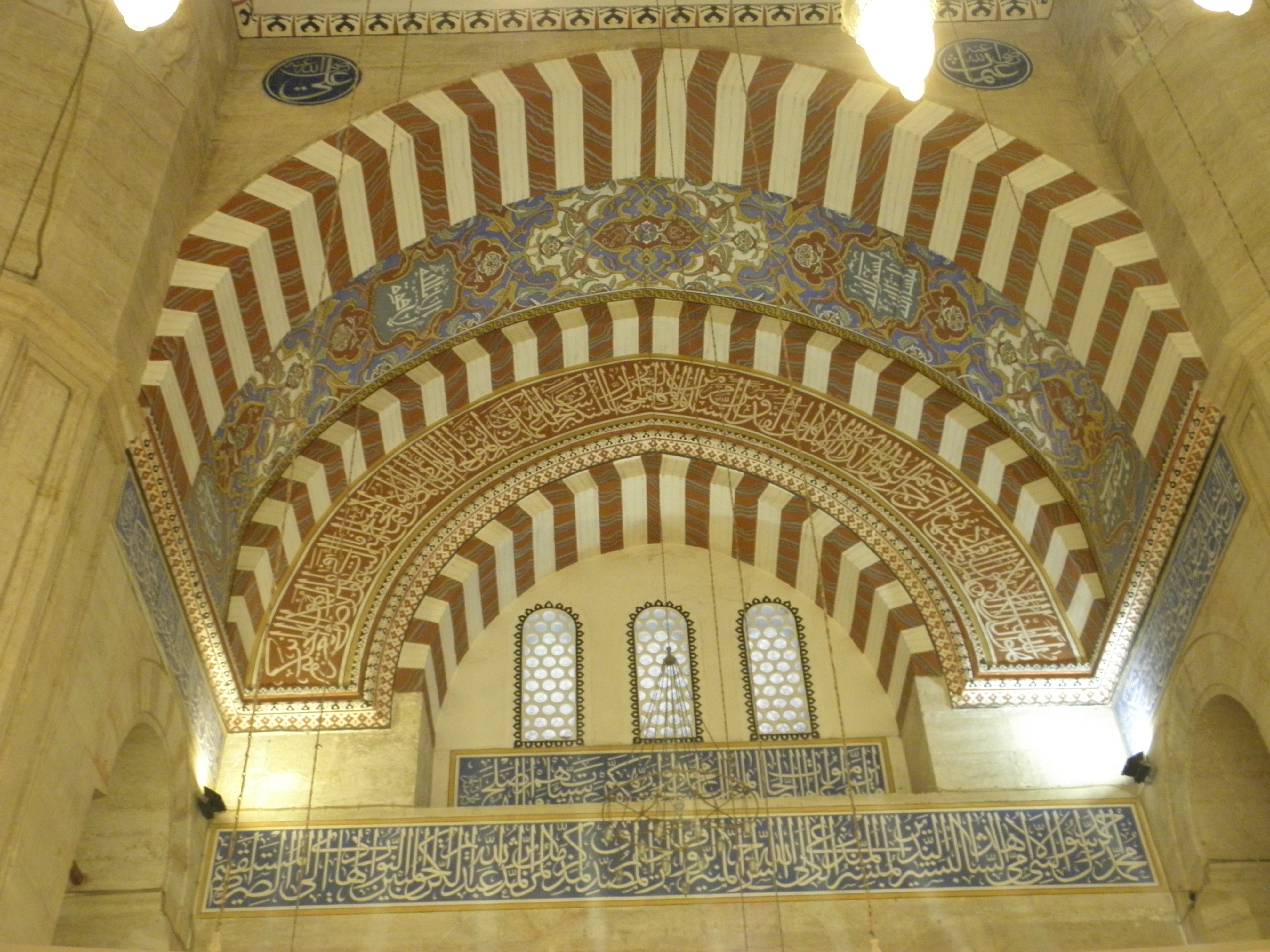
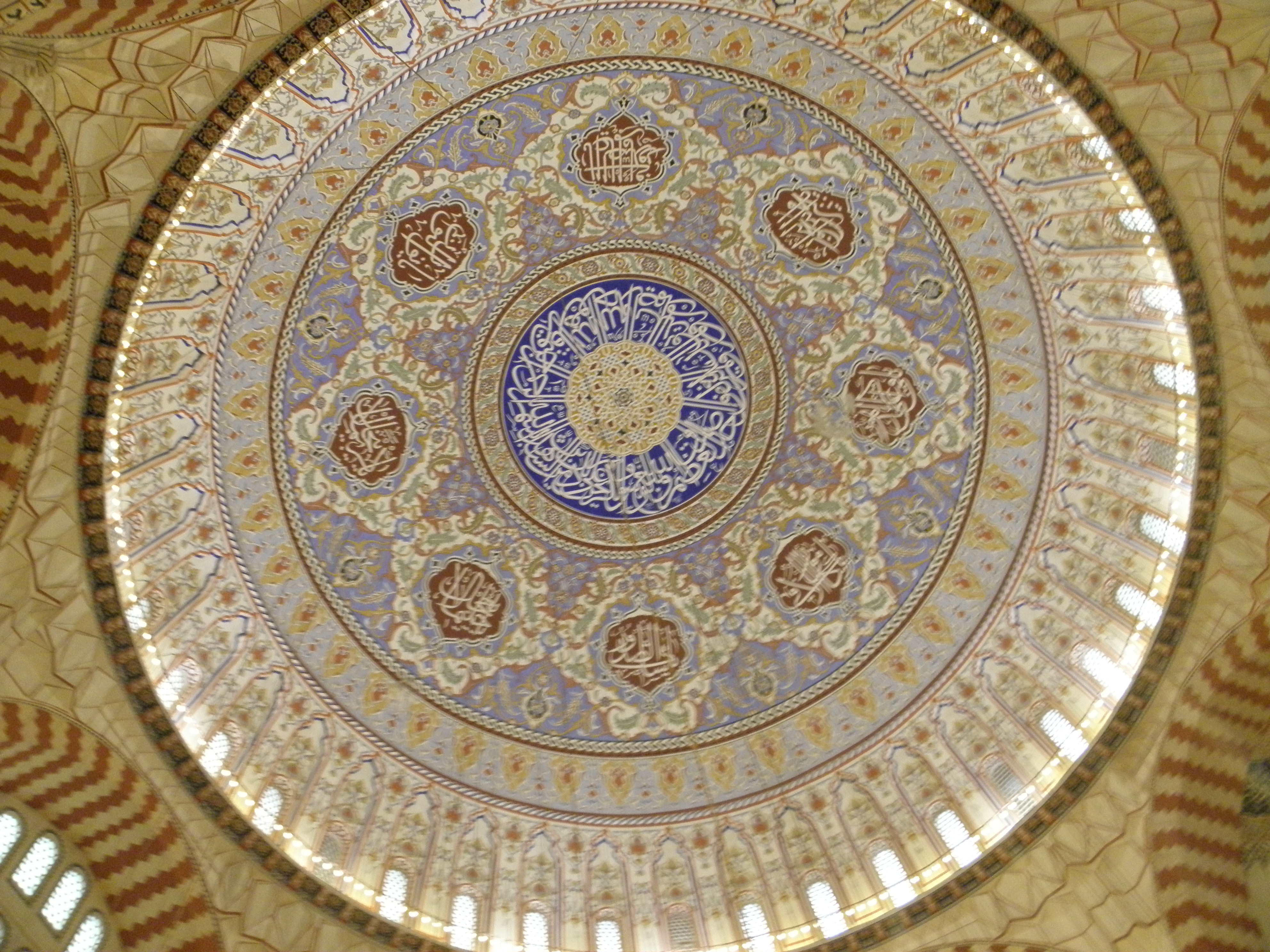
Fitting to the above, we wanted to attend the Friday prayer at the Selimiya camii, and mashaAllah (=by the grace of God) got there in time to do so. The Selimiya (derived from the Arabic root word ‘salam’ which means peace) camii is the work that Mimar Sinan, the great Ottoman architect, called his masterpiece, though his more famous work is the Sulaimaniya camii in Istanbul. Mimar Sinan is considered to be in the league of Leonardo Da Vinci and Michaelangelo for greatness, yet it is sad that until I went on this tour I had never heard his name. Yet another casualty of my colonial education and the poorer I have been for not knowing! I wonder at the so many millions of us who have only been taught a single-minded version of world history, how much we have to learn. But I digress. Indeed when we drove up to the camii and then walked in…Subhahanallah! words fail me. So pictures below. I will include captions with the pictures, please do read them. One of the reasons this work is to be considered a masterpiece is that Mimar Sinan achieved the effect of a ‘floating dome’, by moving the supporting columns of the dome to the walls and adding four more columns. You really feel as you walk into the mosque that you are walking under this magnificent dome that though you know it is a huge structure, it feels as if it is as light as a feather and is only floating above you…reminding you of the heavens above. So much more to say, so I will try to do so below. But to end this the feeling of reverence in the whole structure is indescribable. How I miss being there.

Selimiya1
Looking at the masjid as we drove up to it. Something very ‘ascending’ about the proportions of the domes to each other and to the minarets. Also most of the camii in Turkey had the cematery located in front, visible through the windows, a reminder of the eternal life to come even when one is worshiping inside an opulent and seemingly unperishable structure.
entrance
Here is a side gate we entered by. All the gates have on them these chains, that force the entree to bend his head when walking in. It also forces the mounted one to dismount. This way it is ensured all who enter, enter humbly and not with their head held high. Also all Sultans and the like could only walk, not ride, in.
courtyard
The portico surrounding the courtyard
courtyard
The courtyard was special, I think it was the mathematical ratios of the whole place…it was huge, yet it felt cozy and ‘attainable’ for lack of a better word
Inside 1
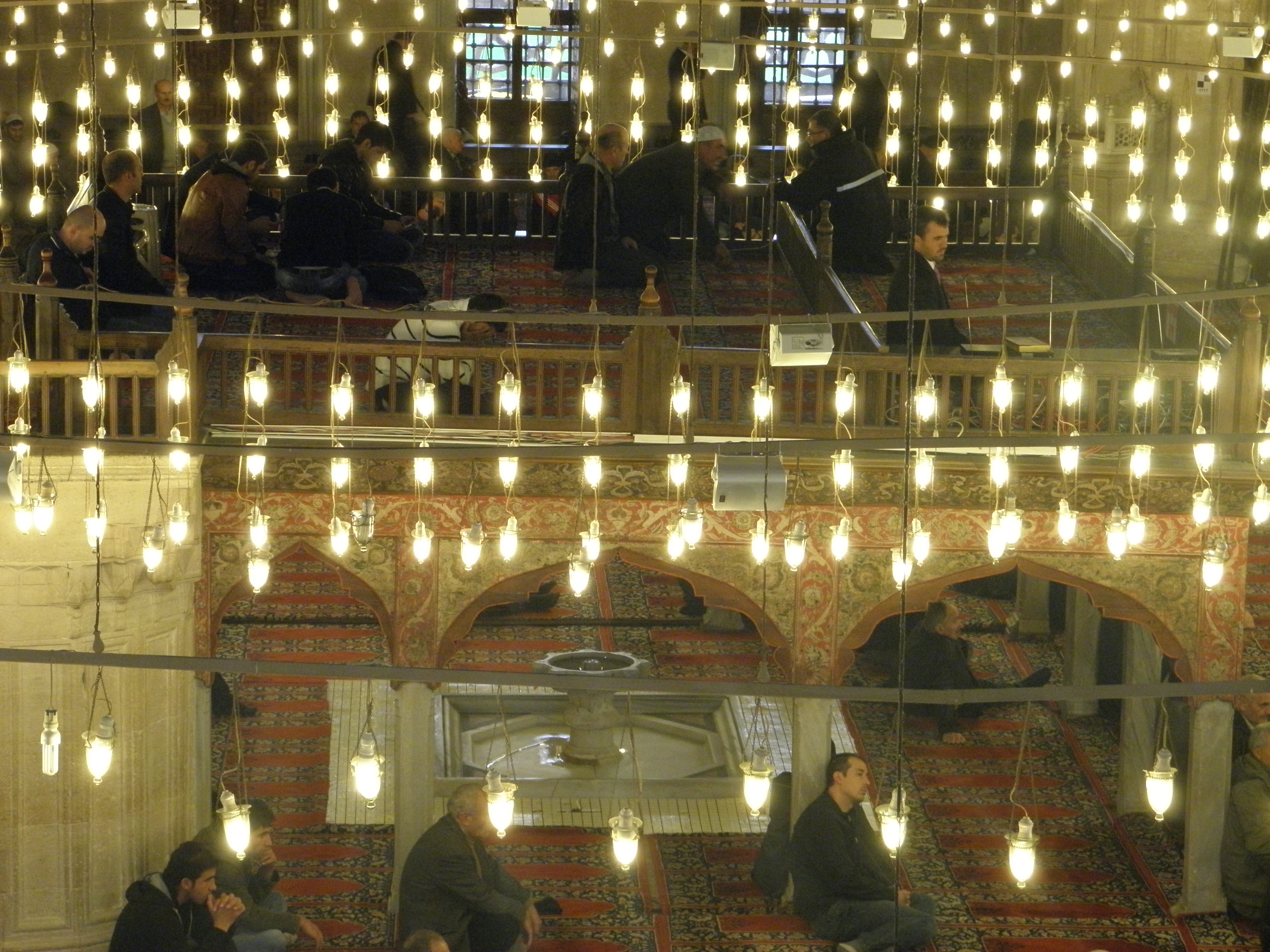
From the women’s section upstairs facing the qibla (direction of prayer, toward Mecca, all mosques are built to face toward Mecca). Note the bulbs, they have been cunningly hung on different lengths so that from a distance one row of bulbs appears as three parallel lines
close up
A close up view of the center. Note the raised platform for anyone who would like to perform salah from there. The little fountain below it and the columns that some as can be seen, use to lean on
inside 2
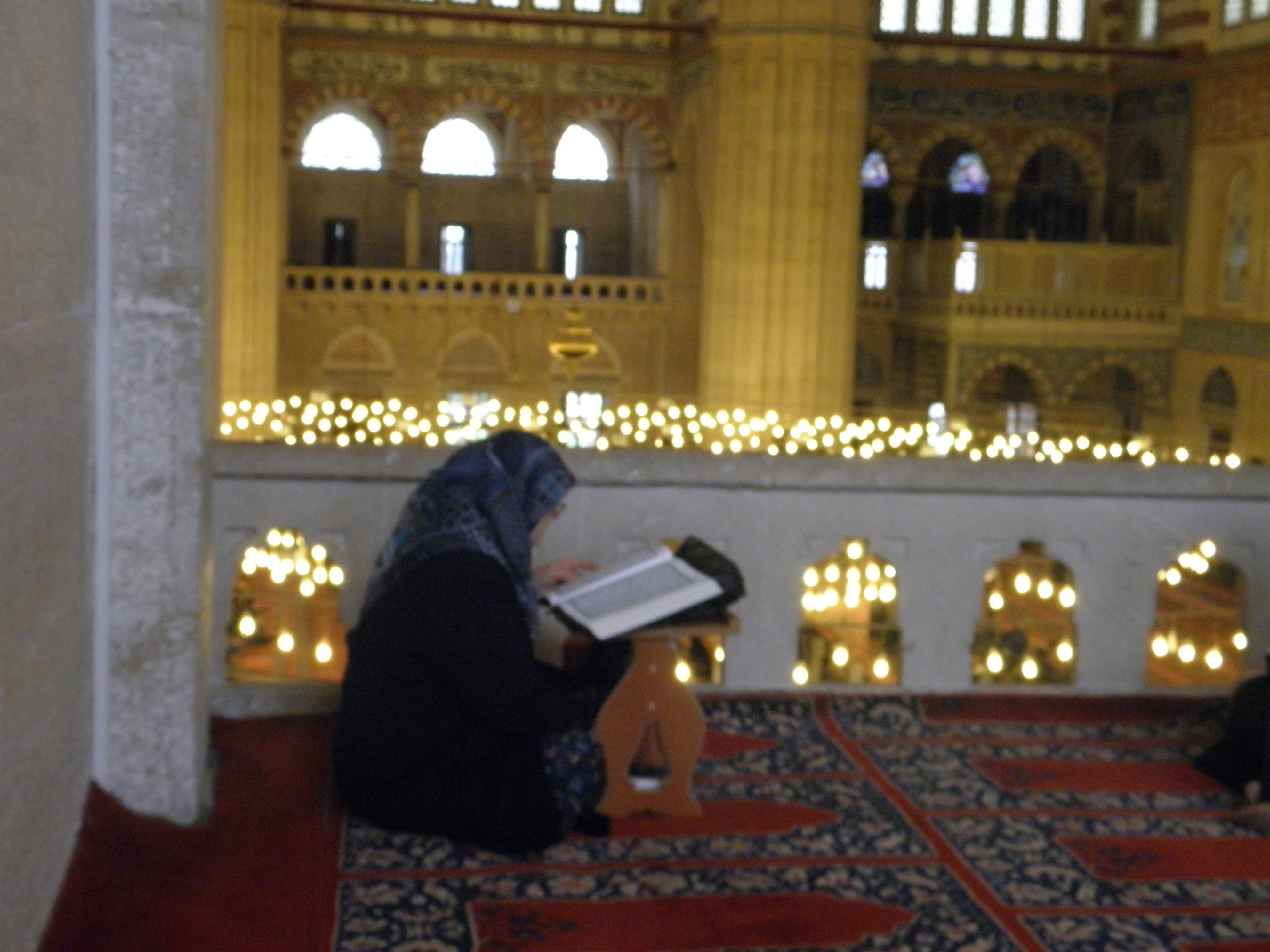
Lady reading Quran before the prayer starts
mimbar
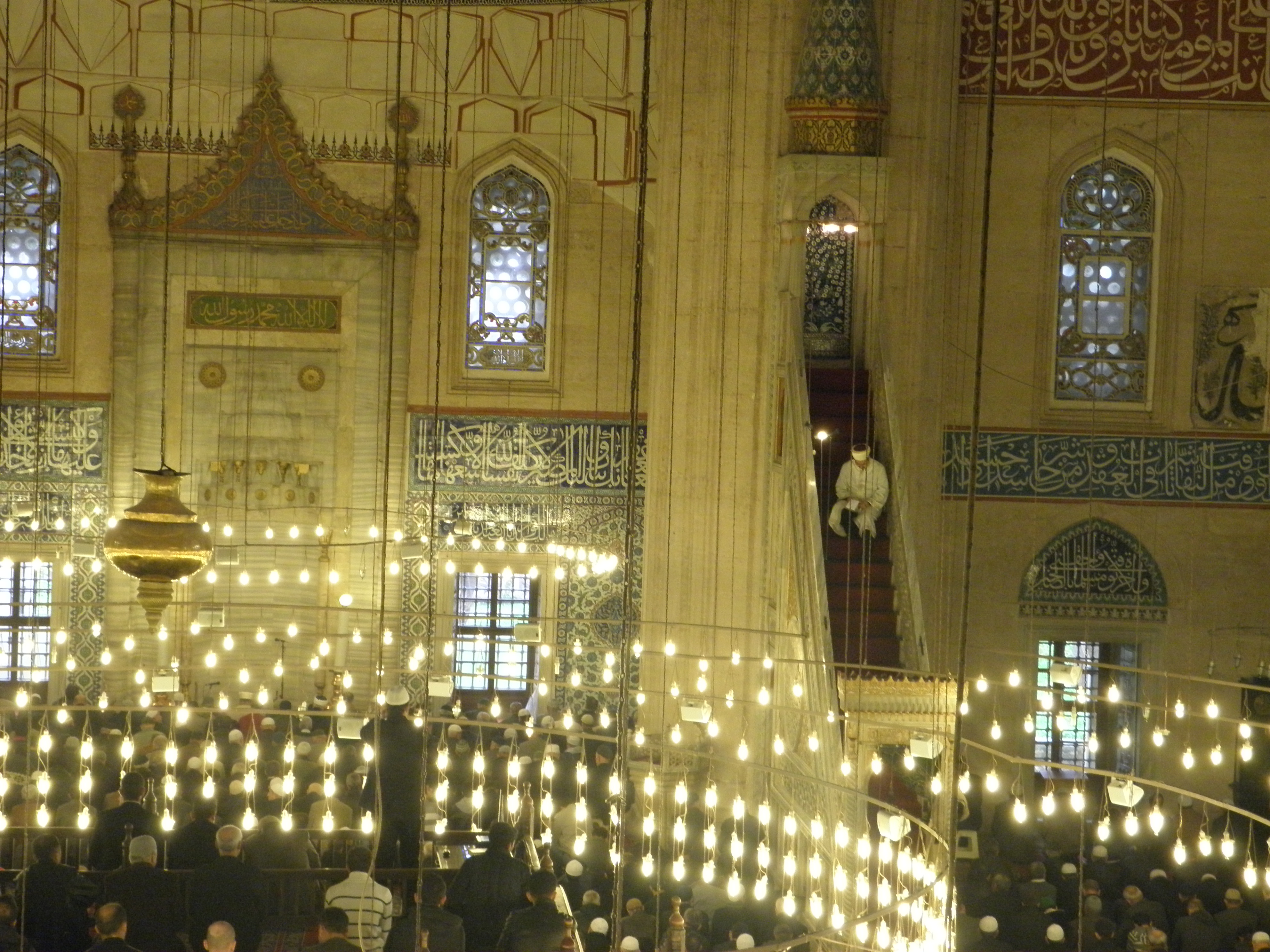
The Imam sitting on the mimbar (the staircase used to deliver the Friday sermon, note the Imam does not go all the way to the top) just before we began. The mimbar is always located to the right of the ‘mihrab (=prayer niche) that points the direction of mecca. I
detail 1
Effect of the arches inside
wall
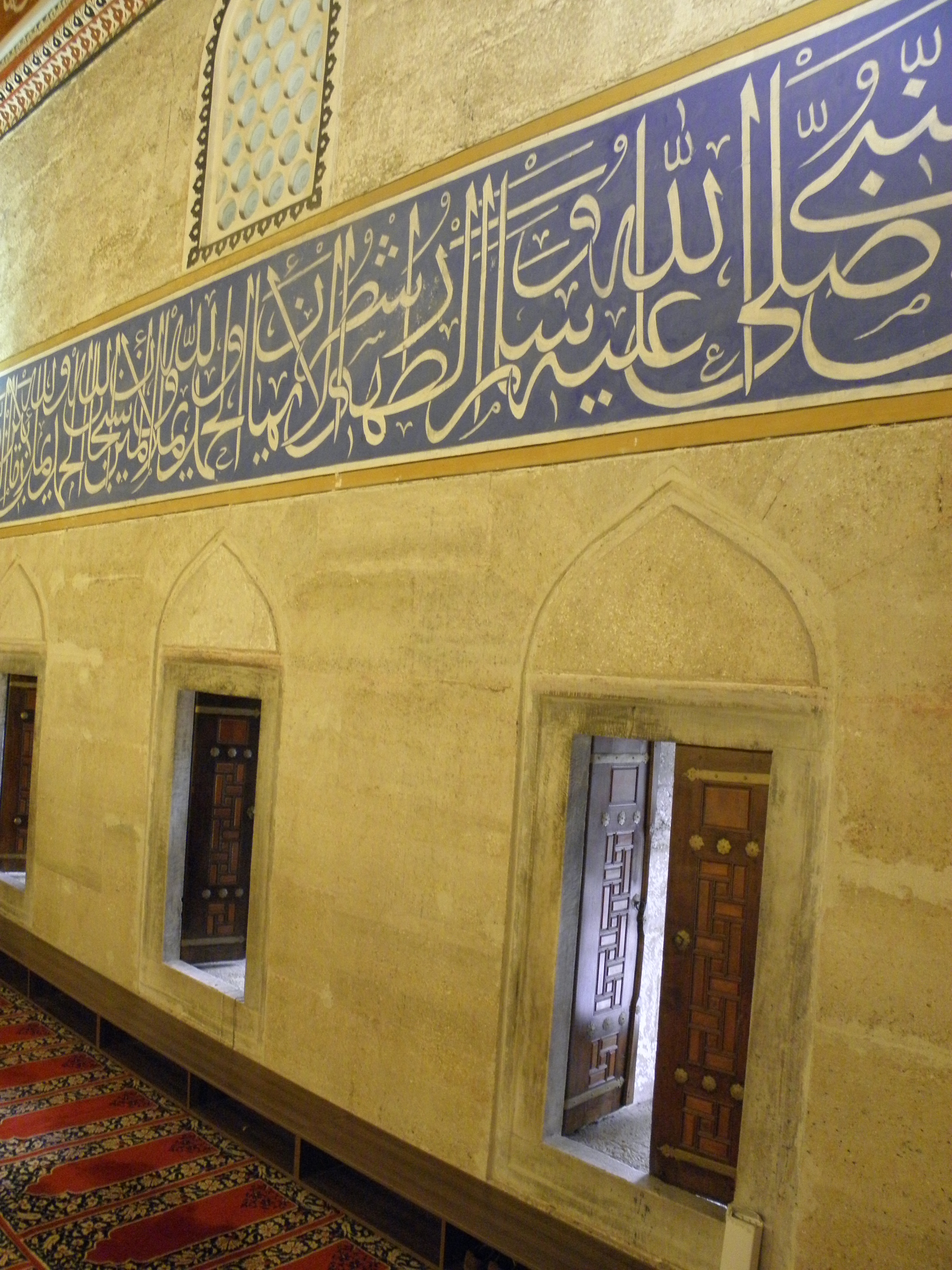
Calligraphy of Quranic ayaath (=versers but literally meaning ‘signs’) over a side or back wall. The window ledge (I forget the proper term) is deep enough for people to offer the ‘salah’ inside it, if they like
up
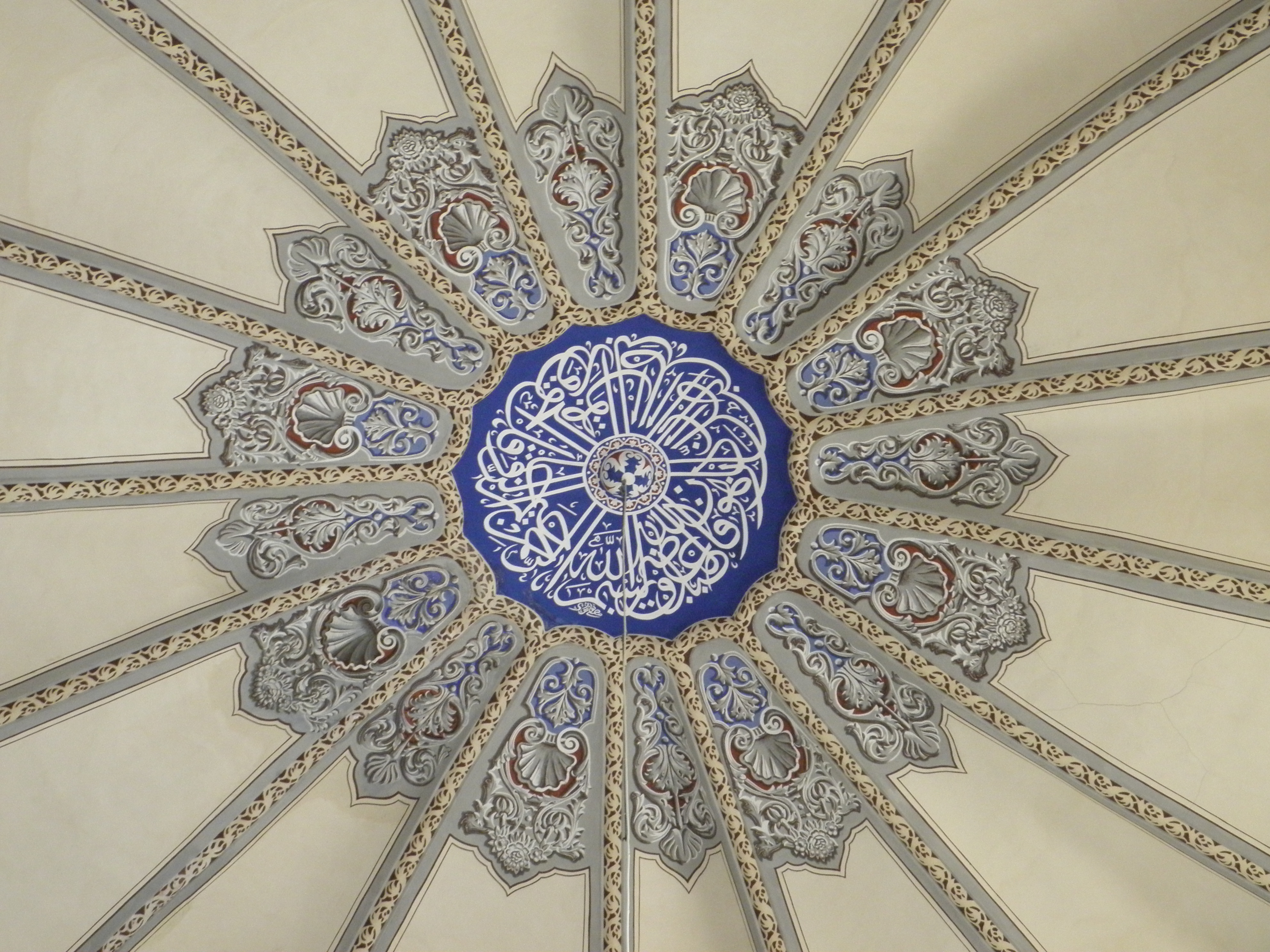
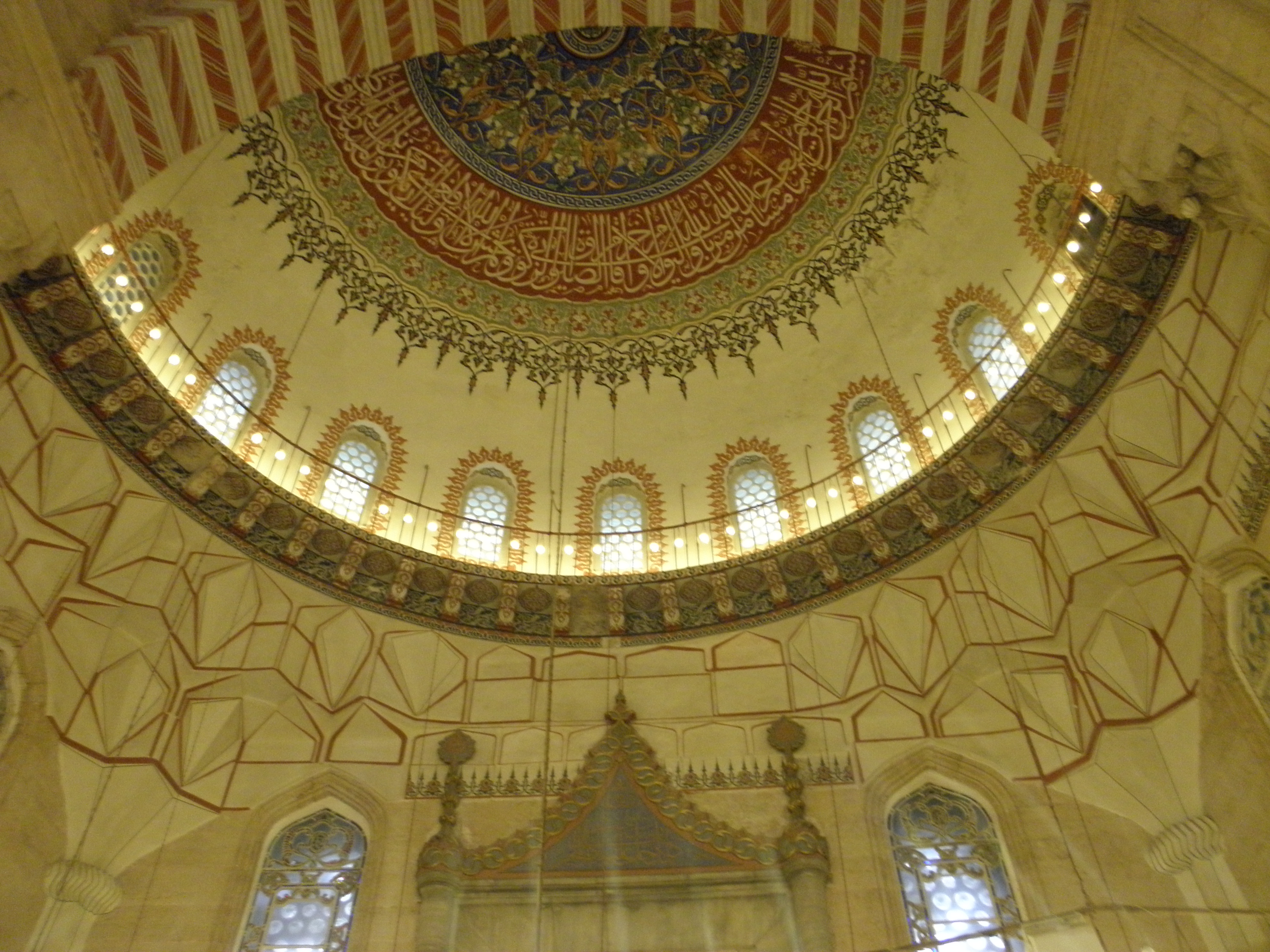
Looking up from just where the mihrab (prayer niche) is. So much light…Subhahanallah!
dome
The great floating dome…how poorly this images can capture the feel of it. I wish you will be able to witness in person inshallah (God willing)
To end, adjoining the camii is a small museum dedicated to this great man. I wanted to share two quotes from him (below). During his lifetime of close to a 100 years, he constructed over 400 buildings, 300 or more considered to be of great dimension. Among his many students is the architect who designed the famous Blue mosque and his teaching influenced the design of the Taj Mahal as well. Yet he was very humble, and the Turks lovingly tell stories of his humility this post will become too long were I to recount. But I can relate that I learned he made a prayer that God forgive him if the opulence of the structures he had built detract worshipers from the greatness of God. He chose to be buried among the common people outside the Sulaimaniya camii whereas many of his stature were buried with the Sultans. From Mimar Sinan –
“As long as the world remains, wise people who see my work and my efforts will look at me with mercy considering the seriousness of my effort and remember me with prayers of goodness I hope”

– O Allah grant him the highest of heaven and ease in the grave!

“I praise God that built Prophet Adam’s body without measurement which is a secluded palace of the soul and heart”

OLYMPUS DIGITAL CAMERA– May Allah eternally bless his soul! I am truly humbled to witness the efforts of such a true and pure human being, elevated by God for his truthfulness to himself, and the fruit of that for generations to enjoy.

Peace be with you all.

Hundred-word Eulogy

Assalamu alaikum ( peace be with you) dear readers, inshaAllah (God willing) I will follow with a post from another segment from my recent ‘rihla’ journey to Turkey. For now, this blog post I wanted to share. I didn’t know of the ‘hundred word eulogy’ and learning of it was expansive, for it highlights the depth of tolerance, respect, and appreciation present in the old world between traditions.

Savera's avatarTowards Enlightment

4548

In the 1300s, the Chinese Hongwu Emperor wrote the “Hundred-word Eulogy“, which praised the characteristics of the Prophet Muhammad (salla Llahu ‘alayhi wa sallam). Copies of it (like this one) were distributed to mosques throughout China.

Translation:
Since the creation of the universe
God had already appointed his great faith-preaching man,
From the West he was born,
And received the holy scripture
And book made of 30 parts (Juz)
To guide all creations,
Master of all rulers,
Leader of the holy ones,
With support from the Heavens,
To protect his nation,
With five daily prayers,
Silently hoping for peace,
His heart directed towards Allah,
Giving power to the poor,
Saving them from calamity,
Seeing through the Unseen,
Pulling the souls and the spirits away from all wrongdoings,
Mercy to the world,
Transversing to the ancient,
Majestic path vanquished away all evil,
His religion Pure and True,
Muhammad,
The…

View original post 3 more words

Konya – and Jalal ad-din Rumi

Assalamu alaikum (peace be with you)

Here is the first of a series of posts about the recently concluded ‘rihla’ I was blessed to be on (rihla=journey, it is a tradition in the Islamic scholarly way that students go on journeys with their teachers. There is a great deal of wisdom to be had from travel. When one travels with a teacher one has the opportunity to not only benefit from specific lessons imparted but  also from observing the teachers’ manners and comportment and therefore to benefit from that good company. This is actually expected from Muslim scholars, that students are allowed to travel and live with them, and thereby learn from their way of behaving. Interesting to me, there is a Quranic account of this type of travel – in the 18th Sura, which our prophet (peace be upon him) recommended we read every Friday, where a story is told of the prophet Musa (Moses, peace be upon him), who went on such a journey with ‘Khidr’ (there is a difference as opinion as to who he was) who was his teacher. I cannot recount it here, but the journey is full of metaphorical teaching via a number of incidents...I hope you can look it up, here is a link from a site I don’t know a lot about, but on going over it quickly it seems accurate)

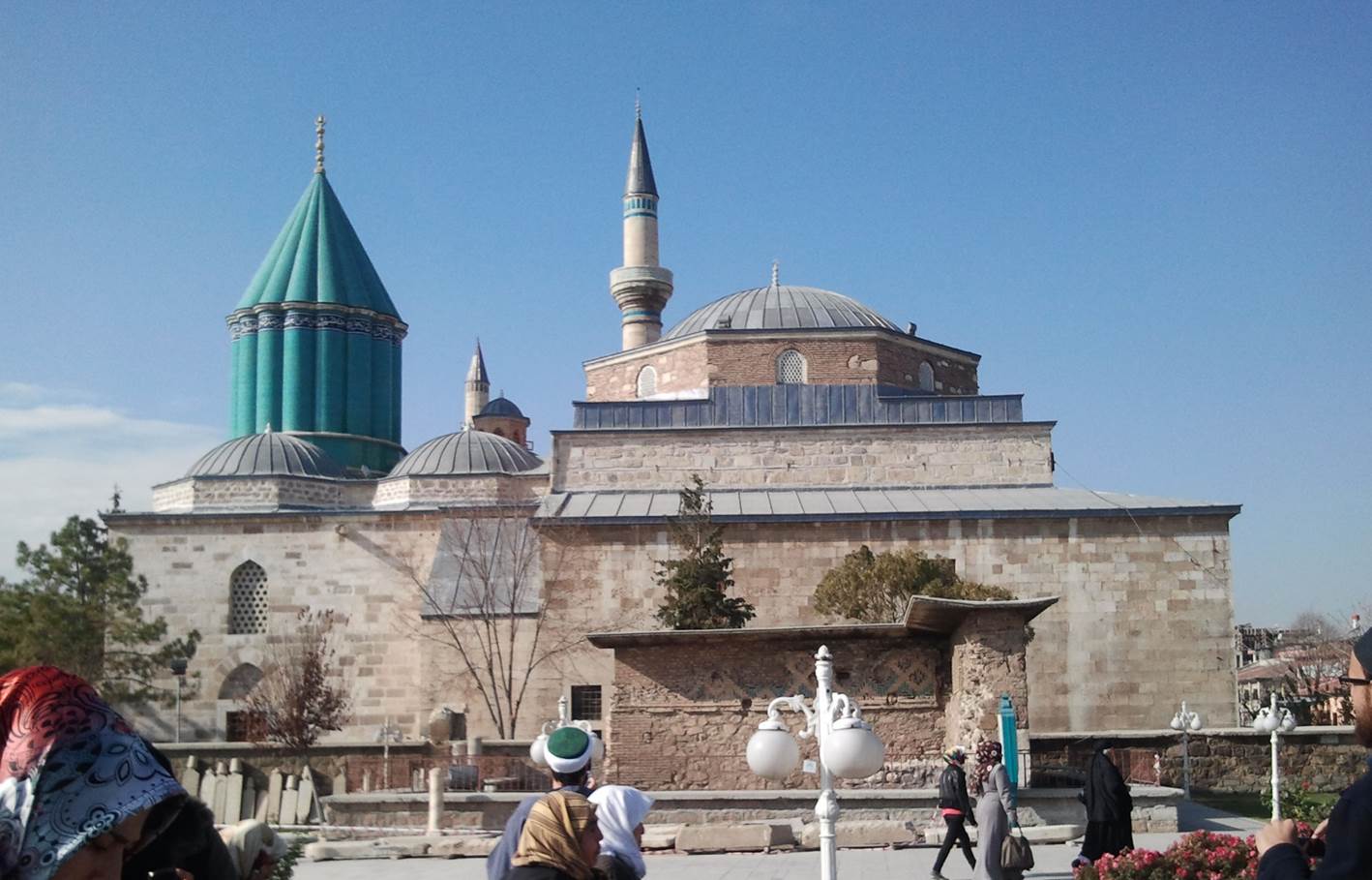
We started our rihla in Konya, the resting place of Rumi (raheemahullah alai = upon whom be Allah’s grace). Though he is popularly known as Rumi in the west, his real name is Muhammed, the son of Muhammed, the son of Ahmed = Muhammed bin Muhammed bin Ahmed. He was a recognized scholar in the classical Islamic tradition, I believe in the hanafi school. And though he is best known, especially in the western world, for the whirling dervishes and ecstatic forms of worshiping God, many of these traditions are quite possibly erroneously attributed to him. He did however write widely about cultivating love for the divine and being on a path of eradicating one’s ego, which is done by filling the heart and mind with God-consciousness.  This view makes more sense to me as my understanding of Islam is that while it allows for all forms of devotion to God, it prefers that the devotee is firmly ‘grounded’ in the practical world while at the same time being always in-tune with the divine. This is why all Muslims love Muhammed (peace and blessing of God be upon him) so much, for he taught how to *live* the quran; being the best father, the best husband, the best tradesman, the best general, the best leader etc., i.e. showing how to best conduct ones worldly affairs while being the foremost in worship to God. He is exalted in our tradition as the best ‘slave’ of Allah. i.e., the one most devoted to serving God.

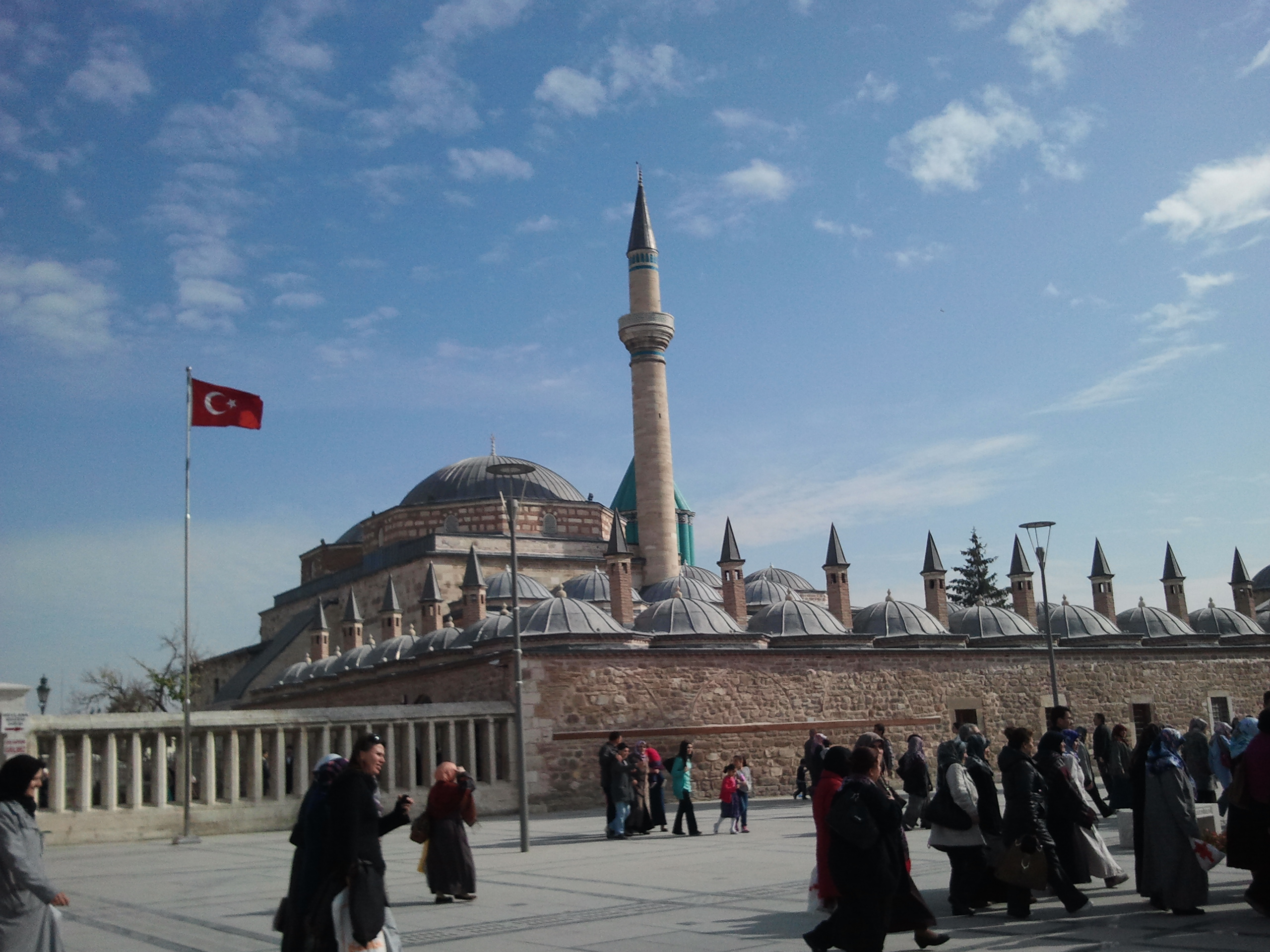
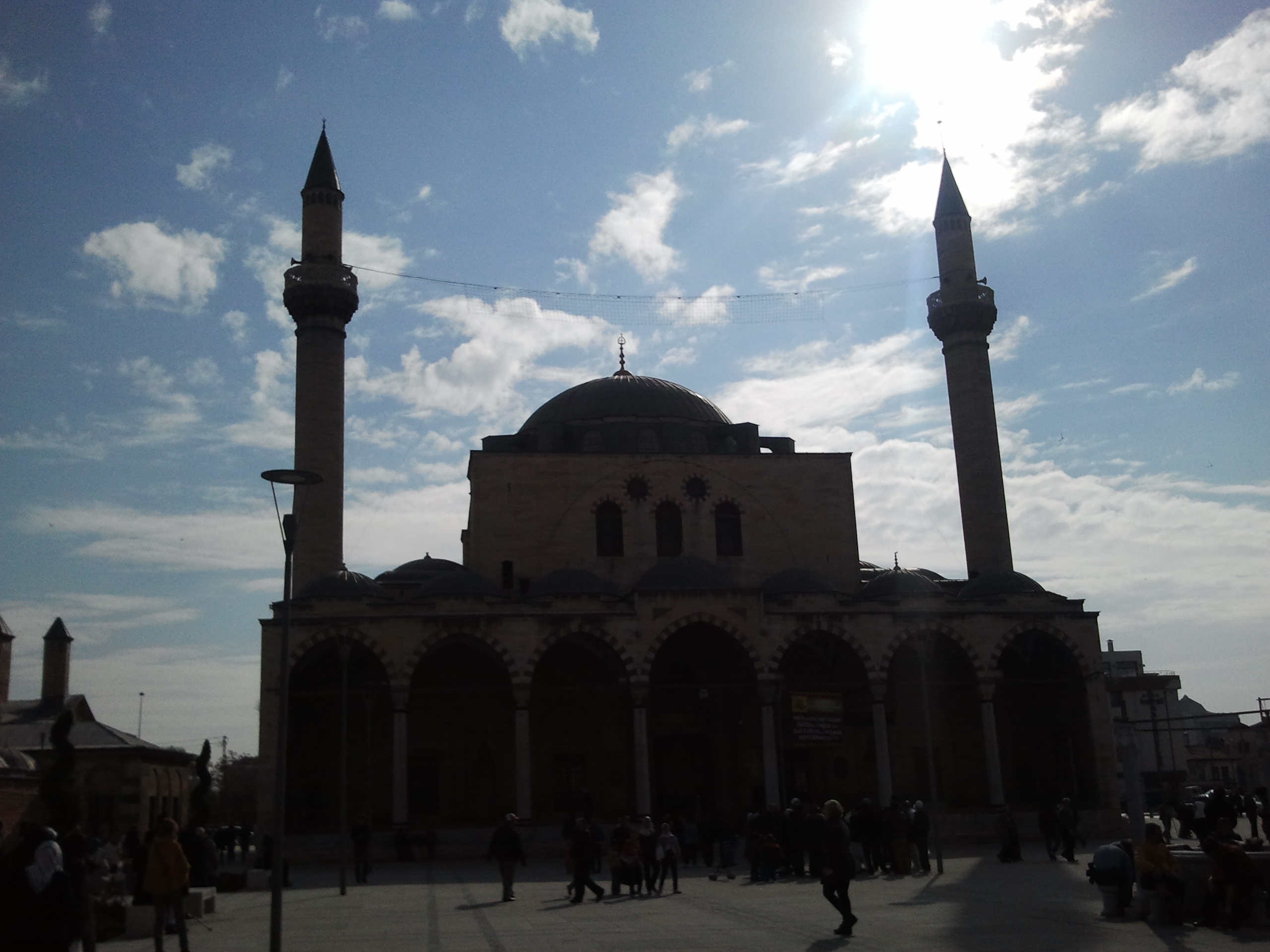
The resting place of Rumi (raheemahullah alai) had a certain peace and feeling in the air hard to describe. In this regard I can so relate to this post by my sister. It was filled with visitors of all sorts, many who stayed to pray by his grave. This is also highly recommended to do in our tradition, to visit the graves and to pray for those who have left this world. We left this place just as the adhan (call to prayer) sounded for dhuhr and made it to the mosque next door. It was a large mosque (masjid) built many centuries ago. Apparently very beautiful inside mashaAllah. I did not get to go inside as it was full, we so rushed to join the jama’ah (congregation) outside all around the masjid. It was my first experience of a jama’ah during this rihla, the first of many beautiful jama’ath (plural of jama’ah) to come. Alhamdulillah!

We saw much more during that one day we spent in Konya. I will mention one more place. We visited an ancient ‘madrasa’ (=school). The famous Karatay madrasa, built in 1252 CE (follow the link for more information on this architectural gem).  Unfortunately the word ‘madrasa’ is also now sullied with sad images of poorly run and decrepit institutions where little kids mindlessly memorize the Quran in places like Pakistan…you may know what I mean… images of boys rocking to and fro as they memorize come to mind. But I digress. The madrasa as it was in the old Muslim world was more akin to a university combined with a boarding school. Students stayed as long as required to master certain texts, and usually an endowment (=waqf, BTW one of the longest running soup kitchens is fed by a +450 year old waqf in old Jerusalem, established by the Haseki Harrem Sultan, the wife of Sultan Sulaiman the magnificent) would fund their food and board. Much like students travel vast distances today to gain knowledge, students did the same then and many such madrassas attracted bright students from all across the world. Interestingly two of the oldest still-working universities in the world are both in the old Islamic world, both linked to strong women figures, the one established by a woman – Al-Karaouine in Morocco and the other named after one- Al-Azhar in Egypt.

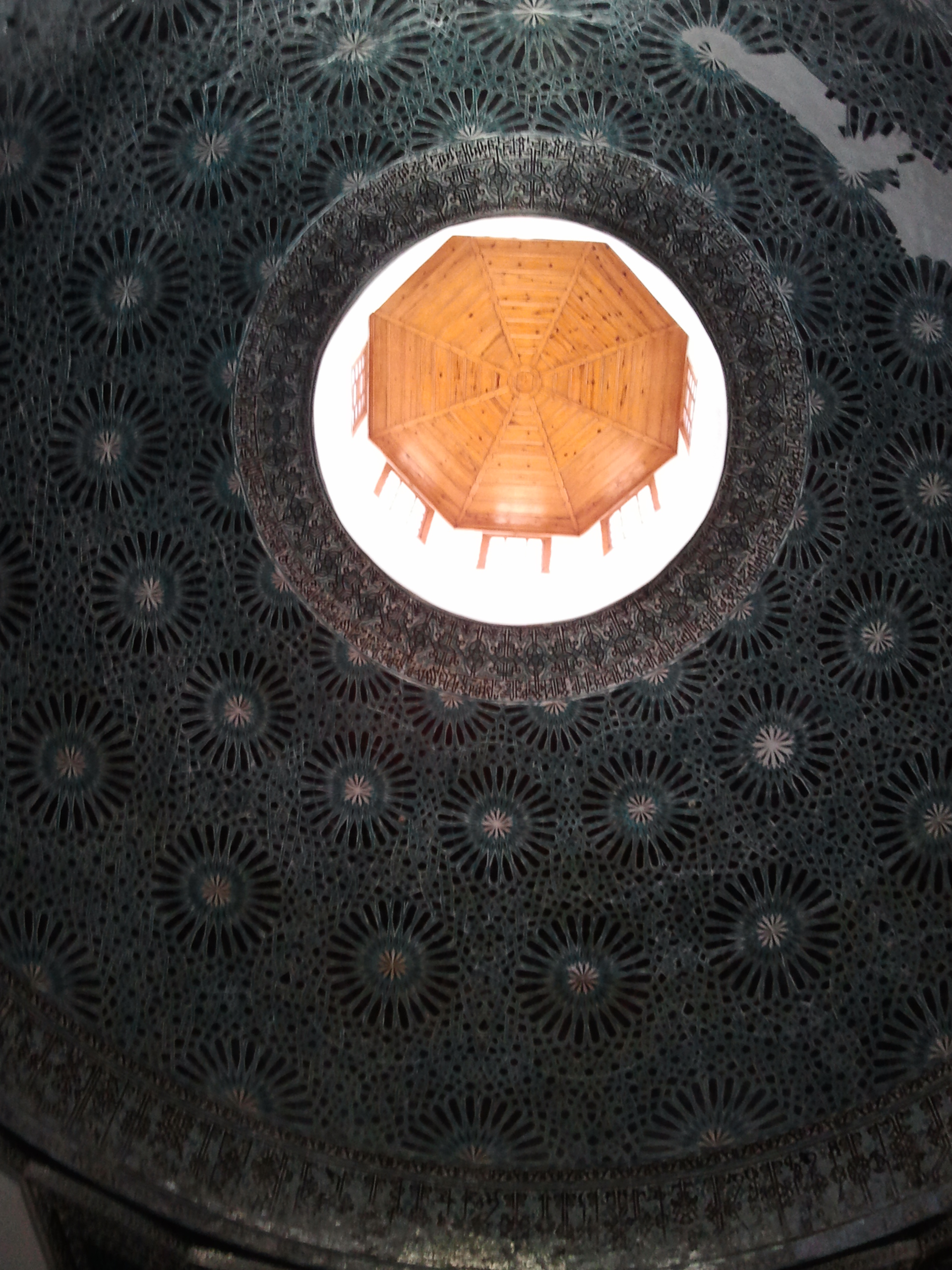
There is so much to be said about this madrasa. Every corner, every square foot was carefully designed with esoteric meaning and exoteric practicality. I can unfortunately only try to cover one very interesting aspect – the hole in the center  of the roof in the main hall. Directly under the hole is a depression in the floor like a small pool. Apparently during the winter this pool was filled with wood and acted as a fireplace sufficient to heat the whole building – the hole then becoming a chimney. And in the summer the pool was filled with water and students would sit around it at night to observe the reflection of the stars from the hole in the roof, and this way study astronomy! This little snippet touched my heart and brought the whole room to life.

This has been a lot of text, pictures below :). May this find you in a high state of good health and happiness. Peace be with you all.

Picture1
The resting place of Rumi (Muhammed bin Muhammed) raheemahullah alai
The view of Rumi’s (raheemahulllah alai) resting place from the front of the masjid (mosque)
The 450 year old Selimiya mosque just outside where we prayed, we managed to find a place in the portico…
The Karatay Madrasa – The wood panel that currently covers what is the hole in the ceiling of the madrasa. Directly below is the pool. The walls of the whole room were covered bottom to top in these gorgeous blue tiles
Tiles that are left on the walls and wall-corner, leading to the domed ceiling opening out to the hole that looks at the stars

To end, one more picture, of a beautifully decorated entrance with ayah (= sign, each verse in the Quran is called an ayah, literally Muslims consider it to be a sign) of the Quran. Peace be with you all.

SAMSUNG