Azaan – calling to prayer

Assalamu alaikum warahmatullah,

The recent global events and events in my own life and in that of my circle of brothers and sisters, whether known ‘virtually’ or ‘in-person’ (Sendie, here’s a call out to you, I hope you’re fine) has made it a quiet time. A time of reflection and renewing, of one’s purpose and one’s plan to live and thrive in this world without becoming damaged or bitter. Truly, God does test those He loves and truly God does come to the aid of those He tests when they call out to Him, and Truly God does not place a burden on any soul greater than it can bear. References for these statements by Allah, the One and Only Creator below;

Or do you think that you will enter Paradise while such [trial] has not yet come to you as came to those who passed on before you? They were touched by poverty and hardship and were shaken until [even their] messenger and those who believed with him said,”When is the help of Allah ?” Unquestionably, the help of Allah is near.
Quran (2:214)

And when My servants ask you, [O Muhammad], concerning Me – indeed I am near. I respond to the invocation of the supplicant when he calls upon Me. So let them respond to Me [by obedience] and believe in Me that they may be [rightly] guided.
Quran (2:186)

Allah does not charge a soul except [with that within] its capacity. It will have [the consequence of] what [good] it has gained, and it will bear [the consequence of] what [evil] it has earned. “Our Lord, do not impose blame upon us if we have forgotten or erred. Our Lord, and lay not upon us a burden like that which You laid upon those before us. Our Lord, and burden us not with that which we have no ability to bear. And pardon us; and forgive us; and have mercy upon us. You are our protector, so give us victory over the disbelieving people.”
Quran (2:286)

The last ayah (verse or better translated as ‘sign’, as each verse in the Quran is considered a ‘sign’ of the miracle of God), is the one which ends the longest chapter in the Quran (chapter 2), and indeed after the statement that God does not lay a burden on anyone greater than that soul can bear, God guides us to how to bear whatever we do have to bear – bear it by asking God to help you with it! For indeed Allah loves to hear the call of his creation and loves to answer that call.

This is a time when our patience is being tested in deep ways. We are bleeding at the disrespect they cause to our beloved prophet (peace be upon his gentle and exalted soul!) and saddened by their ignorance. May God guide us all to light!

Muhammed (peace be upon him) himself was taunted by much much much worse numerous times in his life. He never retaliated. One very telling short hadith gives us a glimpse of his attitude, at a time when they twisted his name to make fun of him, look at with what good character, light-heartedness and wisdom he replies;

Bukhari: Volume 4, Book 56, Number 733:
Narrated Abu Huraira:
Allah’s Apostle said, “Doesn’t it astonish you how Allah protects me from the Quraish’s abusing and cursing? They abuse Mudhammam and curse Mudhammam while I am Muhammad (and not Mudhammam)”

The Makkans made fun of the Prophet (PBUH) by twisting his name because of its meaning being “The one deserving of praise” , and calling him Mudhammam (belittled one).

I leave you with a beautiful clip from a recent CelebrateMercy event. I urge you all to check out the celebratemercy website if you have not already. It is dedicated to the prophet, the prophet who was sent for all mankind, not just for arabs, not just for the 7th century, but for all people and all time.

And I leave you with two beautiful azans, one from the grant mosque in Medina, the city of the prophet and the other from a young muazzin (one who calls the azan) in Los Angeles, presented at a beautiful interfaith event in a Church.

Peace to all, as Muhammed (peace and blessings of Allah be upon him and his family!!) taught us to say and live. Peace to all

Welcoming the month of months…Ramadan Mubarak!

Assalamu alaikum wa rahma Allah wa barakatuh!

O my dear brothers and sisters fortunate enough to witness another Ramadan, I greet you with joy and hope and pray that the light of Allah shines upon you and your loved ones this blessed month.

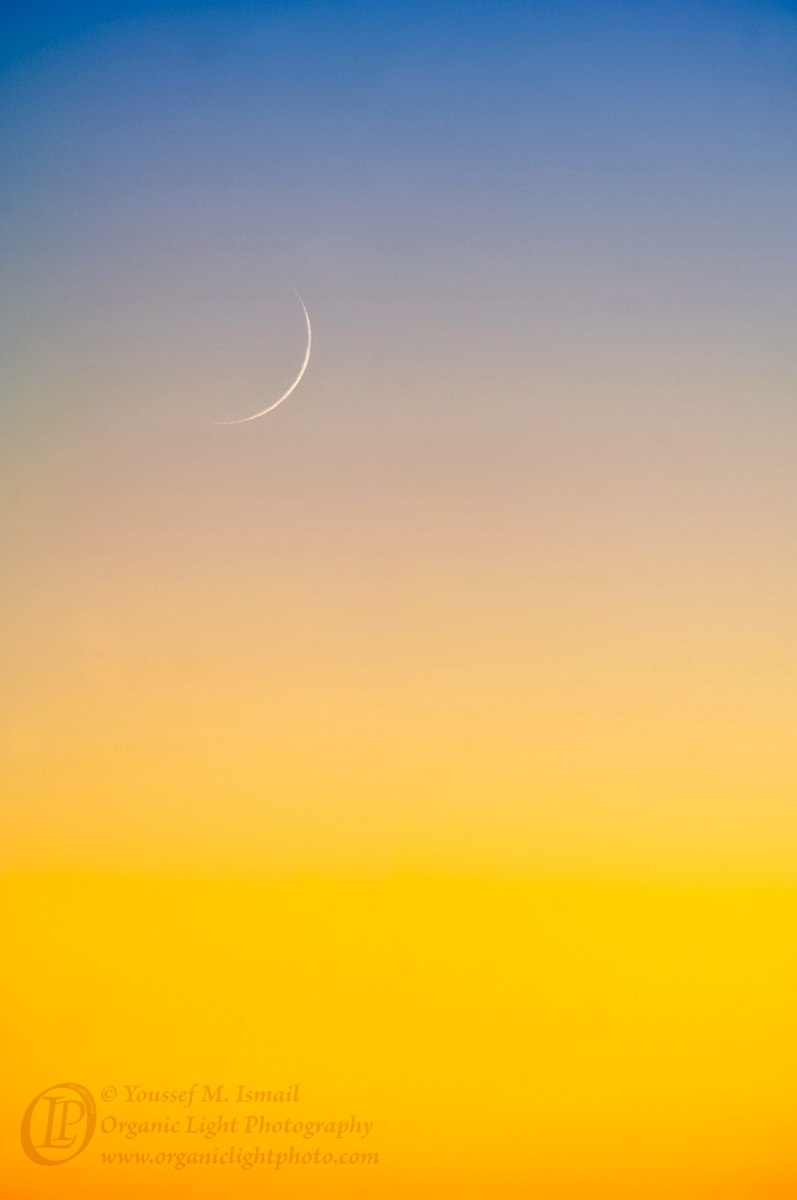
This is an image of the moon of sha’ban 2012. May the new moon of Ramadan be as beautiful and may we get to see it. Remember to make the prayer our beloved messenger did when he beheld the moon; ‘O moon, as thou dost worship my Lord, so do I’! – I love this du’a 🙂

I have been meaning to write a long while, first to share all the beautiful events that I was a part of since my last posting. Not all pleasant mind you, but full of the teaching of Allah, as I journeyed through hurdle upon hurdle and learned much along the way. It is not easy to summarize and indeed I began this post to share some of the joy and pleasure of knowing it is once more, ramadan. But shortly put, as we continued upon our journey through the countryside of Sri Lanka, we came across many interesting and diverse scenes that spoke to much. A sad visit through what used to be a pristine mountain village by a famous waterfall now full of a type of tourism that unnerved me much…it was tourism for drugs it looked like. All these people in the middle of nowhere looking drugged and senseless…the local women staying off the streets and simple village men now stoned and with blood-shot eyes. It was telling, this never existed a few years ago. I guess when the war was on, this type of tourists did not visit the island. Now we hear, coccaine is grown in the jungles and it has become a hotspot. Or so the driver of our vehicle informed us later on as he reported being solicited by locals to bring more of the ‘right type’ of people through. Thankfully we were not the right type, and we were pretty quick to exit the place. There were other things that happened to us along the way, including a rather bizarre and incredibly memorable encounter with a wild elephant! MashaAllah Sri Lanka really is an incredible country.

Then that night we were staying a small guesthouse, with rooms by a paddy-field…mashaallah it was very pretty, when we heard that my beloved grandmother had suffered a bad fall. Alhamdulillah for the salah and the comfort of putting one’s trust in God. May it always be so for all of us! So then in the morning we rushed back to the city and it took us the day to get there. Thereafter began some good work, as that was the main reason I was in the island. MashaAllah we visited many a social service organization and medical center and learned a lot about what is needed and what needs to be done. Allah bless the brave and tireless people working to help all who need help. I have forgotten much about service, now living in this affluent western world removed from the constant reminder of need. I miss this, for in it there is a great healing and great blessing. There is a reason for suffering and want…I believe it brings us closer to being good people and open our hearts to be merciful…this when one is a sincere seeker or truth or a humble human being. These are some brief thoughts I am sharing, there is of course much more to be said. I pray that these experiences stay cemented in me and I am able to contribute in whatever way God wills. Please include me in your prayers too.

Then it was about leave-taking and coming back home again. Then about settling in and preparing for the month of months just around the corner, and now so swiftly upon us all. I am wordlessly happy! I will end with sharing a lovely youtube time-lapse video featuring one of my favourite anasheed, and this du’a

‘O Allah, please remove oppression from all those oppresed in the world and ensure a peace based on justice and mercy to everyone in the world. Bless us, forgive us and increase us in your light upon light. And bless and elevate our beloved Muhammed, the chosen one’

Faith equals no despair and eternal hope

Assalamu alaikum warahmatullah (peace be unto you and the mercy and cherishing protection of God)

All thanks and praise be to God for the beautiful spring days that have unfolded these past days and for the blessing of life in health and security through them. Praise and thanks to God for the knowledge gained and the gift of the Messengers, peace be upon them all. For the beauty in Creation and resonance in this soul of mine that can recognize beauty. Truly, there is profound depth in this integral Muslim belief; ‘God is beautiful and God loves beauty’. They say we find faces that are symetrical more beautiful, and symetry is a manifestation of equation, the balanced formula, a highlight of mathematics. Mathematics, that language of truth, able to explain what the mind cannot concieve…the vehicle to know God. Truly, God is beautiful and God loves beauty. I am therefore a grateful slave, a wellspring of joy welling up inside me, recognizing this timeless beauty in all that is around. The mathematics of form and shape and dimension that abounds in the flowering trees, the growing grass, the towering mountains, the flowing water, the bright moon and star light that just now journeyed to my eye..and it began it’s travel eons ago. Subhhana wa ta’ala (Glory be to God the most High!!)
But I began this post wanting to share a beautiful talk by Sheikh Abdul Hakim Murad, or as he is also known, Tim Winter. A great luminary among modern day scholars of Islam and a lecturer at Cambridge. You can listen to a BBC inteview with him here (it is part one of a two part series, the second part is here). He must have given this talk some time ago…however it is still very topical, dealing with the condition of Muslims today, it puts things in to perspective and helps alleviate the despair and sadness that many Muslims can easily feel overwhelmed by, contemplating the state of the Muslim ‘ummah’ (a word commonly used among Muslims, meaning ‘Nation’ as the Native Americans use the word ‘Nation’, rather than the more modern Western rendering of that beautiful term). So here is sharing it and I hope you benefit by it inshaAllah. I also wanted to share it with those not too familiar with the Muslim faith or nation, as embedded in the talk, are some very insightful aspects of the Muslim faith and worldview that I hope are educational.

God bless all who stumble across here or visit. Please keep me in your prayers and may Allah bless all our deeds with good and protect us from that which is harmful to us and that which we may cause others harm by.

Peace be upon you all!

Forgotten Promises

This is a beautiful song, it melted my heart and made me remember what foolish things I worry about. It is the more impactful for it features the World Food Program, an organization I used to work for and video footage from Sri Lanka. The days I worked in the UN, with the poor of my country are brought back. Those days, I knew myself better. I was closer to my soul. So I make this prayer and may my Lord grant it, and forgive my sins, ‘O Lord, don’t let me forget the poor. This rich western life has made me forget what it feels like to be hungry. Has made me forget humility. O Lord, protect me from too much wealth’

Please do listen, share and buy this track. As usual Sami Yusuf, Allah bless and fill with light his beautiful soul, has done this for charity. What a inspiration to live liek that. Using your God given talent, to serve God.

Topical article….’Are women created only for family life’ by Fathi Osman

I came across this article today on Islamicity and will copy-paste it here. It raises a number of issues very topical in the ‘modern’ world. The arguments are clearly expounded and easy to understand. I’m not merely posting it due to presentation however, I do agree with most of the author’s views and found this a refreshing read.

Here is a bio of the author:

Fathi Osman was a prominent Muslim thinker born in Egypt in 1928 and died in Southern California in 2010. He studied the development of contemporary Islamic thinking since 1947. He has written extensively about the process of change in Islamic concepts, human and gender rights in Islamic and Western perspectives, the Islamic approach to pluralism, the analysis of Islamic history and its interpretation. He has published more than 30 books in Arabic and English which represent new approaches in Islamic thinking. Many of his books, including “Reflections” in “Arabia: the Islamic World Review” published in London 1981-1987, have been translated into several languages.

Inna lillahi wa inna ilaihi rajioon..may Allah grant him the highest heaven.

Article:

We have been used to thinking that women have been created for the family life and for raising children, and thus their natural place is in their homes. Nothing in the Quran or Sunna clearly supports such a view or assumption. Such a division of labor between the husband who earns the living of the family and the wife who stays at home doing housework is a societal experience, which has occurred for a very long time throughout history in so many societies, including the Arab society at the time of Islam, and the subsequent Muslim as well as other societies until recent times when change has come out. Women learn and work equally to men, and the family responsibilities are requiring more financial resources. Caring about the home has to be reviewed, and the Prophet’s traditions indicate his assistance to his wives.

However, such a modern experience of women’s work and the consequent need for husband’s help in the housework in so many countries does not necessarily mean that it is an eternal natural law. Social change never stops; and norms are introduced, maintained or abandoned according to their practical benefit.

In English, the verb form “to husband” denotes the mastery and management of the house, and “husbandry” may mean the control of resources and careful management or the or production of plants and animals. The word “groom”-used in bridegroom-is related to feeding. This may merely reflect a societal tradition that has existed throughout history. The Arabic language, however, differently uses the same word “zawj” meaning mate or companion of the other, for both husband and wife. Some may add the feminine suffix “h” to “zawj” to indicate that the word in a particular context means wife, but this is not a linguistic rule or obligation, and the Quran uses the word “zawj” and its plural “azwaj” to mean wife and wives respectively [e.g. 2:35, 102, 232, 234, 240, 4:12, 20, 6:139, 7:19, 13:38, 20:117, 21:90, 23:6, 24:6, 26:166, 33:4, 6, 28, 37, 25, 50, 53, 59, 60:11, 66:1, 3, 5, 70:31, as well as for husband and its plural [e.g. 2:230, 232, 58:1]. One may argue whether a woman’s work is better from various angles for the family than her stay at home or not. I may go further to say that some Muslim women, and non-Muslim as well, may prefer to stay at home, but this does not mean that this is God’s law that is explicitly spelled out in the Quran or the Sunna. The discussion has to be moved from theology to sociology, or from the divine laws to the human thinking and experience.

Moreover, the Arabic word “qawwamun”, with its preposition “‘ala” which describes the relation of men to women in the Quranic verse 4:34, does not imply any superiority, but simply means “taking full care of”. The verse reads: “Men take full care of women, for what God has granted some of them distinctively from the other, and what they may spend out of their possessions”. The distinctiveness between men and women is related to the woman’s pregnancy, delivery, and nursing, which make it necessary that the man should have the responsibility to provide for her needs and the needs of the children, at least when she is hindered with such a distinctive natural function of reproduction. This hindrance is not permanent, and it cannot be a reason to keep the women at home all her life, and neither does it hinder her intellectual and psychological merits. She is not supposed to bear children or raise them all her life, and at a certain age children have to go to school. Further, suppose that a woman may not marry or bear children, what, then, should keep her at home?

It is time to look to the woman as an equal human being, not just as a bearer and raiser of children, a cook, a home-cleaner, or a dishes and dirty-laundry washer etc. The family life and raising children require a join-effort of both the man and the woman. Since the woman has her right and obligation in obtaining an education according to the guidance of Islam, it is good for her personality and for the society, just as it may be good for the family itself to support the woman’s right to work, and as long as this right is beneficial for all parties, it should be secured.

The woman’s right to inheritance is stated in the Quran, and an addition can be supplemented by writing a will which has priority over the mandatory distribution of inheritance stated in the Quran [14:11-12]. The Muslim should feel his/(her) responsibility to write his (her) will as the Quran urges, even when one realizes suddenly that she (he) is on the brink of death without having it prepared [2:180, 240, 5:106-8]. In the society, men and women are equally and jointly in charge of and responsible for one another in fulfilling their collective obligations towards the public as a whole [9:71]. A woman has the right to vote, to be a member of parliament, a minister, a judge, and even an officer in the army. Which jobs may or may not be convenient to her should be decided-by women themselves not imposed on them, according to their own conviction and interests. In a modern state bodies rule not individuals, and women in executive, legislative and judiciary positions are included in bodies and are subject to a system. Laws are codified, and discretionary decisions are subject to be reviewed by those who have higher positions or by the courts. Not a single man or women has absolute power in a modern state.

Considering two women equal to one man in witnessing a documentation of a credit is connected with a certain practical consideration that is explicitly mentioned in the Quranic text: “so that if one of them [the two women] might make a mistake, the other could remind her” [Quran 2:282]. Women might not in general be familiar with business matters and their financial and legal requirements, especially in Arabia at the time of the Prophets message, but this does not mean that a woman who has had the necessary education or business experience cannot be equal to a man in this respect. Classical jurists pointed out that this is not a general rule for the testimony of a woman, and that the testimony of one woman is sufficient if she knows what she is witnessing and is reliable. In our times, should not a woman who may be a lawyer or an accountant be equal to a man in witnessing a documentation of a transaction? How can some prominent jurists allow a woman to be a judge with full jurisdiction on all matters, if she cannot be a full witness in the first place? Is it not obvious that the limitation regarding her witnessing a document of credit is understood as only conditional and related to certain circumstances?

Monogamy Not Polygyny

What goes with nature and fulfills the “solemn pledge” of marriage is the general rule of marriage in Islam (Quran 4:21). A normal man cannot split his own self into parts, each for a different woman and his children from her. However, Islam allowed – not ordered or recommended – that a man may have another wife exceptionally when this may be necessary. A wife may be seriously and incurably ill for all her remaining life, and her husband may be sincerely committed to take care of her, but he, their children and the ill wife may need badly a woman to take care of the family. It is up to both of the initial wife and the suggested co-wife to accept or reject freely such a second marriage, and no one can impose on any of them a marriage against her will, according to the Islamic law. Each should know that she would be a co-wife, for a legal marriage cannot be mutually based on or maintained on fraud and deception. It is required to register in such a marriage that both the previous and the new wives-know precisely the situation and have no objection.

Islam did not establish polygamy in Arabia nor in the world. Polygyny – the form of polygamy in which a man marries more than one woman – alongside with the reversed form of polygamy: “polyandry” (in which a woman marries more than one husband) still exists in every part of the world, but it is not frequent among African peoples” according to the Academic American Encyclopedia. It is known that polygamy prevailed in the patriarchal age, and was permitted in principle under the Mosaic law, and continued to later times – according to Smith’s Bible Dictionary. The Bible mentioned that Solomon had many wives [I Kings 11:3].

According to the Quran, the permission of marrying more than one wife has several restrictions, as it reads:

“And if you fear that you may cause the orphans injustice, then marry women of your choice who are lawful to you, two, or three, or four, But if you have reason to fear that you may not be able to deal justly with them, then marry only one… This makes it more likely that you will not deviate from the right course for have a family whose maintenance exceeds your ability”‘ (Quran 4:3)

Accordingly:

A ceiling was put to polygyny, restricting the maximum number of legitimate co-wives to four.

It is related to an injustice suffered by the orphans, and widows may be added; a suffering which may refer to after-war circumstances, when many women became widows and have to take care of their orphaned children, including girls in the age of marriage.

Fairness in treating the co-wives is a pre-condition for having more than one wife; otherwise one wife is, the general rule and normal situation “so that you may not deviate from the right course,” through unfair treatment or a lack of due material and moral care for a big family of co-wives and numerous children.

Another Quranic verse shows how almost impossible it is to maintain such an equal fairness among co-wives, and how difficult it is to be even close to such equal fairness (4:129). Injustice would be suffered not only by the co-wives but also by their children who have to live as half brothers and sisters. The required spousal “love and tenderness” (30:21) would certainly be undermined in such complicated “partnership.”

Prophet Muhammad emphasized clearly the general rule and normal situation of monogamy, when he heard that his cousin Ali was to take another wife beside the Prophet’s daughter Fatima, underlining the rights of the wife and her family to know about the other marriage and to reject it. From a practical viewpoint, a woman would never accept to share a man with another woman, unless women outnumber men in certain circumstances, and it may be better to accept the reality temporarily until the balance is restored, rather than to have them suffer psychologically and socially. If the family has to be a model for the whole society in its harmonious relations and fulfillment of all responsibilities (25:74), one man and one women only can establish such a strong and balanced nucleus that can provide such a model in the mutual relations within the family and with the whole society. Polygyny has been permitted with restrictions, exceptionally and temporarily, while men and women were educated and persuaded to develop a monogamous society, which is prevalent now in many Muslim communities. In some Muslim countries, there are laws that control having more than one wife.

The teachings of Islam about the religious and social importance of marriage and the necessity of justice, tranquility and pleasance within the family, have developed in recent times an attitude on monogamy among the Muslims, similar to what occurred before among the Jews, of whom many today may not be aware that polygyny was allowed in their Scriptures and practiced by their ancestors for a longtime time. To this day, cases of polygamy occur among the Yemenite Jews and the Sephardi Jews of the near East.

Modesty Not Segregation

The social role of women requires mixing with men. As Islam does not permit any discrimination between men and women, nor does it advocate a segregation between them as it may be widely understood because of long-standing socio-cultural practices or views. What Islam forbids actually is that one man and one woman stay together in seclusion and privacy (khalwa), if they are not married to each other but they are marriageable according to Shari’a. “Khalwa” cannot apply to a public place, or a place in which others may enter any time such as small offices and shops.

Modesty is required in the outdoor dress for both Muslim women and men. However, there is no specific uniformed dress recommended for a Muslim woman. Purda, chadour, ‘abaya, quftan or hayik are local fashions preferred by women in particular places, and may be changed in any time according to the change of taste. However, various designs or fashions should comply with the basic and permanent requirements of an Islamic dress. The Quran underlines such requirements for a woman’s dress in the following verse:

“O Prophet! Tell your wives and your daughters as well as all [other] believing women that hey should draw over themselves some of their outer garments [when in public]: this will be more conducive to being recognized [as decent women] and not annoyed.” (Quran 33:59)

Moreover, certain decent behavior has to be observed beyond the dress:

“Tell the believing men to lower their gaze and to be [mindful of their chastity and] guarding their private parts, this is more conducive to their purity. …And tell the believing women to lower their gaze and to be [mindful of their chastity and] guarding their private parts, and not to display their charms [in public] beyond what may [decently] be apparent thereof; hence let them draw their head-coverings over their bosoms… and let them not tap [the ground] with their legs [in walking] so as to draw attention to their hidden charms…” [Quran 24:30-31].

Muhammad Asad comments: “Khimra” denotes the head-covering customarily used by Arabian women before and after the advent of Islam. According to most of classical commentators, it was worn in pre-Islamic times more or less as an ornament and was let down loosely over the wearer’s neck; and since the fashion of the time [made] a wide opening in the front of the upper part of a woman’ tunic, this allowed her breast to be bare. Hence, covering the bosom by khimar does not necessarily relate to the use of khimar as such, but is rather to make it clear that a womanÕs breast [should be covered and] is not included in “what may decently be apparent” of her body.

In this light, Islam allows any dress that fulfills the required modesty for a decent woman, and the creativity of fashion designers has to combine elegance and modesty in women’s dresses since one does not negate the other. The attractiveness and respectability of a woman – the same as of a man – are due to one’s personality as a whole, with all intellectual and psychological dimensions, and not to what is physically exposed of one’s body. It is against the human dignity and equality to focus on the physical attraction of a woman, in her social performance with men, the same as this is required from men when they associate with women. In an open society, men and women are equally responsible in “enjoying the doing of what is right and good and forbidding the doing of what is wrong and evil” (Quran 9:71).

Comments are welcome. Peace to all!

Reviving the Islamic Spirit …and the need for it

Alhamdulillah it is good to be back to writing again. Who ever thought my next post would be written laying on a bed in the same hotel I was staying at last year in Long Beach, California! More importantly, that I am back here to attend again the RIS conference. RIS for Reviving the Islamic Spirit, is a fantastic affair..why? Not simply due to the amazing line-up of speakers, the ability to deliver topical sessions year after year, the ever growing attendance and the palpable feeling of ‘barakah’ in the air… but also because this massive event was first envisioned and has been organized and put together every year by youth volunteers. Yep, young working Muslims in Toronto first started it and now after 9 years, they have branched off to a US version too. I am very happy with the latter as its cheaper for me to attend :), but the Toronto convention is about 3 times larger.

Indeed, initiatives like this are so essential. It is a time when events on the global stage are calling us everyday as Muslims, to rise up and let our voices be heard. It is time for us to define ourselves. And to do that, first we must learn Islam. Perhaps then appropriately, this year’s conference is titled ‘Removing the veil of Muslims from Islam’!

Now that I mentioned it, I wonder about that ‘palpable feeling of barakah’ present… is it because of this beautiful truth, where the prophet (peace and blessings of Allah be on him) who said, in a hadith Qudsi… Allah Kareem! And Allah knows best

On the authority of Abu Hurairah (radiAllaahu anhu) that the Prophet (sallAllaahu alayhi wa sallam) said :
Whoever removes a worldly grief from a believer, ALLAH will remove from him one of the griefs of the Day of Resurrection. And whoever alleviates the need of a needy person, ALLAH will alleviate his needs in this world and the Hereafter. Whoever shields [or hides the misdeeds of] a Muslim, ALLAH will shield him in this world and the Hereafter. And ALLAH will aid His Slave so long as he aids his brother. And whoever follows a path to seek knowledge therein, ALLAH will make easy for him a path to paradise. no people gather together in one of the houses of ALLAH, reciting the Book of ALLAH and studying it among themselves, except that Sakeenah (Tranquility) descends upon them, and Mercy envelops them, and the angels surround them, and ALLAH mentions them amongst those who are with Him. And whoever is slowed down by his actions, will not be hastened forward by his lineage.
It was related by Muslim in these words.

On that note, the exciting news is that RIS has launched a website, allowing live streams of the talks as well as access to previous talks. It is not free however, I think that is necessary to fund the project. I heard RIS Toronto has been running in the green, but RIS USA has been in the red unfortunately. They only began last year so inshaAllah it will soon catch up. Here is the website. http://www.revivingtheislamicspirit.com/streaming/
Check it out..it has some nice features.

I also remembered I had ‘reported’ a previous RIS I attended… here are the links if in case it is useful… rather disjointed, but will hopefully give you an idea for the feel of this event; part 1 and part 2.

Finally, I’ll leave you with a sweet song by Maher Zain, performed last year at RIS much to everyone’s joy. This version is from Toronto though

Generating real scholars and Zaytuna

Assalamu alaikum, peace to all. It’s been a while since I logged on here. Many life events came in the way…mashaAllah very happy ones :).

However there have also been a bunch of posts in my head that have piled up over the days I want to put down…hoping to get started today. The first of May, a beautiful spring day that has only gotten ‘springier’ since the first gorgeous day on Friday. And blessed am I to be living in one of the most beautiful places on earth! Shukr wa Hamd Allah (thanks and praise to God). On that note, one long planned blog is to share that spring beauty with posting some pictures up here I was fortunate to take. You see, after years of having only a poor camera (the cheapest I could find) that I bought simply to be able to take pictures of slides from talks at conferences (my cheat-sheet on remembering large volumes of data that gets presented at scientific meetings ;)….this was before they banned the use of cameras at talks saying it was distracting..hrmp!), the past boxing day I found a dandy one going for 50% off and still within budget (100$). So this spring I did find odd moments off to walk about and test it out. Rather hoping to do so more and so expect a few photo-journal entries inshaAllah. Hope you will like them and my camera and eye won’t let me down 🙂

That long preamble done. Here is what I wanted to write of today. The need for good scholars in our community. Its well known (or may not be known at all) that the Muslim ummah has lost or had greatly reduced its history of good religious scholarship the past two to three hundred years, mainly due to the effects of Colonialism. However its roughly been about half a century since the fall of the last Colonial empire (I mean the British…and lets not go in to the USA driven neo-imperialism the world is witnessing now), and mashaAllahu ta’ala we now are witnessing more and more the resurgence of Muslim thought and scholarship.

There are now great luminaries in the Muslim world who are transforming their communities and energizing the Muslim ummah with thought and action. Also important, these are not self-trained, but those who have patiently studied with the best scholars left in the Muslim world that has been somehow preserved in-tact through the ages. Scholars like Sheikh Murabit al Haj who has lived his entire life learning and teaching the Quran in the Sahara desert and did not see a single ‘white’ person until Hamza Yusuf Hanson took his long camel ride to meet him (see this blog post for a precious insight in to Sh. Murabit al Haj’s life). That meeting as the now Sheikh Hamza recounted once, inspired by a dream that he and his teacher had both shared. Subhahanallah (glory be to God), God’s work is being done and will be done despite ever cynic and skeptic that ever lived. Sheikh Hamza is one of the best scholars in the world today. A true polymath he excels with ease on any topic. Mashaallah I’ve spent many a day listening to him speak as I cook/clean and truly learned volumes. Sh. Abdul Hakim Murad, or Professor Tim Winter of Cambridge University, Imam Zaid Shakir who has developed so many community service initiatives, a former USA army man, are other amazing scholars I can think of off the top of my head. If you haven’t heard them, do youtube them… they will offer a glimpse in to true Islam and open your mind and heart to heights and truths that are as deeply peaceful as they are uplifting. And if you have, please do share these gems with me! I will greatly appreciate it!

To resume, Sh. Hamza and Imam Zaid have begun Zaytuna College. The first Muslim ‘seminary’ in North America based at Berkeley University in California. Please do check out their website. I am very excited about the new generation of leaders that are being taught here. The first batch of students are a beautiful mixture of experience and background ….and… of the 15 students, 9 are female!!! (sorry, couldn’t hide my excitement :D..oh how great it will be to see the resurgence of the Muslimah scholar).

If you can do consider becoming a zaytuna companion. An ‘ansar’ to a worthy cause. Sh. Hamza modeled a reward program for the ansar based on the life of the prophet (peace be upon him), where instead of the calling a donor a ‘gold’, ‘platinum’, ‘silver’ etc depending on the amount of funds you give, he said the most precious in their eyes are the first ones to help, regardless of how much they helped with. The first to answer that call. Now isn’t that very touching… it makes me wonder of the great power of our beloved prophet (peace and blessing of Allah be upon him) to move hearts… Zaytuna companions are treated as intimate friends of the college and given recourse to all the guest lectures that the students there get to attend. I cannot insert a post of Zaytuna programming in here, but this link will take you to their youtube channel inshaAllah

Also I wanted to share this talk given by Sh. Hamza on the lives of men. It’s a 2.5 hour lecture and is available in parts on youtube (I’ll share the first part and you can find the rest) or as a whole, but that is poorly edited (I’ll share that too). I think he gave it at the ‘workshop on Islam for high school teachers’ conducted in Abiqueu in New Mexico based solely on what the architecture of the room looks like (!). This is a truly amazing series conducted free by DaralIslam an organization that sounds very impressive but that I do not know much more about.

The idea of the workshop seems to be to educate high school teachers, predominantly non-Muslim, on what Islam is all about. Super!

Here are the youtube videos on the talk ‘the lives of man’ .. first the 10 min video, 1 of 16 parts

and full length here
http://www.youtube.com/watch?v=KUxD-KINjvw

Our only true enemy… ‘The whisperer’

MashaAllahu ta’ala the past few weeks have brought fresh illumination as in our study circle we’ve been learning about the real enemy. The one and only enemy. As told by God to us in His book, we have only one enemy very clearly;

O you who believe! enter into submission one and all and do not follow the footsteps of Shaitan; surely he is your open enemy.
Quran 2:208

While I don’t want to paraphrase all I’ve been learning about the shayateen (devils) in the past weeks in to a few words on one post, I think there certainly is a simple take-home message. That really there is evil, but that evil is only the devil and all he can do is whisper. He tempts, deceives, confuses and moves man to great sin thereby. But in the end, he is not to be feared but only treated with contempt. And our Lord we seek refuge in from his devious whispers. But more importantly that all this cause of hatred/anger/jealousy really is not people but the one real enemy. How many wars are being fought, where brother kills brother, each pandering some truth as a truth above another’s truth. The US Army over the VietCon (Vietnam war), Iraq over Iran (Iran-Iraq conflict), the Gulf war…the list is endless… and now the situation in Libya. Fast deteriorating in to an all out civil war, one wonders what happened to the truth in this conflict.

As someone so wisely said (I forget who, was it Bernard Shaw?) ‘truth is the first casualty in war’.

So hate the sin, but not the sinner. If we hate the oppression wrought by an oppressor, we do not hate the oppressor himself, but only wish for him the same salvation we yearn for ourselves. The vital hadith again;

‘None of you truly believes until he loves for his brother what he loves for himself’
– look at how strong this hadith is, recorded by al-Bukhari (13), Muslim (45), Ahmad (3/176), at-Tirmidhi (5215), Ibn Majah (66), an-Nasa’i (8/115), and Ibn Hibban (234)

Wanting that same salvation, that same peace for everyone is essential to training our hearts to that state of purity demanded by the fact that only those with a sound/serene/peaceful heart will be saved on that day

وَلَا تُخْزِنِي يَوْمَ يُبْعَثُونَ
يَوْمَ لَا يَنفَعُ مَالٌ وَلَا بَنُونَ
إِلَّا مَنْ أَتَى اللَّـهَ بِقَلْبٍ سَلِيمٍ

And do not disgrace me on the Day they are [all] resurrected
The Day when there will not benefit [anyone] wealth or children
But only one who comes to Allah with a sound heart.”

Quran (26:87-89)

So hate the sin but not the sinner. This was beautifully expanded on by Sh. Hamza in his article expounding on Divine Love as understood by the Muslim tradition. An article very much worth reading and passed on. It can be found here

Without going on too much about it, here is in verse form some of that which mashaAllah I’ve learned about all this. I hope it is of benefit inshaAllah. Called ‘the whisperer’

The whisperer

Whispers have brought down empires
From Shakespearan tragedies to real life
Desdemona and Othello to
every day in some every day home
some husband walks out on his wife

A neighbour has whispered
On the streets a rumour spread
Brothers do not speak with brothers
for years. Nor their sisters
fathers, mothers
They are afraid to allow
the possibility that the human errs
Afraid to forgive lest it reduce ‘honour’
or display weakness?

Fools proclaimed in self righteous glory
Sit on your high seat till you taste that same sloth
of the sinner when sin you commit unknowingly
or in a moment of weakness, that you do not forgive in another

The devils can only whisper
And we have no other enemy
No other. Remember Abu Sufyan? Not an enemy but in the end
the Muslim brother. And that great sword of the deen
Khaled, once the attempted excutioner of the prophet

A mercy to the worlds

O Patient man. Teach us your patience
Your people are in disarray
They kill each other inventing enemies
Spurring on deeds of fresh bloodshed
While screaming ‘Allahu akber’

Only a heart serene will be saved on that day
Didn’t you read your book? Held aloft while you screech.
Ah, what are you screeching for?

Perhaps a little silence will lift that veil of ignorance
The constant cacophony of mad passion
Drowned out the whisperer so close to your ear
who has never ceased whispering…
stop the gun so you can hear

A vile enemy that is whispering
Just a whisperer. Just a doomed whisperer

Then love your brother
Your messenger honour. Worry eradicate
All the burdens of the earth fall away from heavy shoulders
You can now fight, knowing what you are fighting for
Just one enemy. Remember.

O my Lord, I seek refuge in Thee
And Thou art sufficient for me.

Copyright – Joymanifest’s blog. 2011

***

Riz Khan show on Radicalization in the USA

Assalamu alaikum, peace be with all!

I came across this episode of the Riz Khan show recently. By the way if you don’t watch the Riz Khan show, I do recommend it highly. Riz who used to be a CNN newscastor and now has his own show on AlJazeera English, has a very affable personality. He is always pleasant to watch and the range of issues he covers quite varied not to mention interesting. I particularly like the questions he asks and the guests he chooses to address a particular topic. Case in point; Sheikh Hamza Yusuf to answer to the recent hearings about radicalization of Muslims in the USA. [Re the actual hearings, I like I suspect many Muslims, was left scratching my head going ‘what?!’ when I heard of them. But I’ll admit it, I’m worried too…sometimes it feels like no matter how much or how often we say we condemn terrorrism and hate it all the more that it is done by these vicous mindless maniac-perpertrators who butcher the name of Islam in such a discpicable way…it feels like no one is listening. I guess some people just don’t want to hear.]

Here it is, it’s very good listening. Thank God we have scholars like sheikh Hamza out there and may he and others like him be given the due media they deserve. May all of us 1.4999999/1.5 billion peaceful Muslims be given the media we deserve. How nice it would be if there were proportionate and responsible media coverage. What a change it would be from the fear-mongering so rampant from today’s media giants.