Mezquita de Cordoba

Dear readers,

Assalamu alaikum, peace be with you,

I cannot move to sharing other snippets from our rihla, without posting on the Mezquita de Cordoba. I had read and heard a great deal about it, and for me, it was a dream come true to be able to stand inside and wander through that magnificent pattern of palm-tree columns.

La mezquita’ as the locals still chose to call it, is the Cathedral of Cordoba. Recently (since a few years ago), signage has begun to read ‘Mezquita-Cathedral’, though for centuries since it was turned into a cathedral, it was still simply called ‘la mezquita’. The locals would say “I’m going to the mezquita for mass”! It used to be the ‘jamia masjid of Cordoba’ (the grand mosque of Cordoba. The word ‘jamia’ comes from ‘jumu’ah’ or Friday..as related in previous posts..the word for Friday comes from the word for gathering as it is when Muslims gather for a communal prayer. Therefore the largest mosque in a city is usually called the ‘jamia’ mosque. It often tends also to be the grandest, and so in English a more appropriate translation has become ‘grand mosque’, though perhaps ‘main mosque’ is more apt). The mosque, in the style of the great Umayyad mosqe of Damascus (God grant it is safe, and this needy abd [=slave] the chance one day to visit!] was built on where there used to be a Visigothic Catholic Church (from ~600 CE to 800 CE) that used to be an ancient Roman temple. I am not sure if any part of the original Church remains, but you can see some of the foundation of the ancient Roman temple. Perhaps the temple was used as a Church ? I do not know. What I do know, and I did some research on this, is that AbdurRahman-I who was the first caliph of Al-Andalucia bought the property for a huge sum of money (~ 100,000 dirhams possibly) from the Catholic church and then built his mosque. He bought it after a few years of sharing the property (paying rent of course) and thereafter upon needing more space for the growing Muslim population.

The original was expanded by successive caliphs to become the huge complex of close to 1000 pilars. Mosques in the Muslim world have always been more than places of worship. It’s the ‘family hang-out’, the ‘classroom and university’. Actually in the Islamic Golden Age, great teachers were born out of the mosque-circles. Usually a speaker/teacher would lean on a pillar after the salah (=prescribed 5 times a day ritual worship, I’ve described the term elsewhere) and give a talk. People would sit to listen, if the talk is good, more people join…and so a teacher’s fame spreads. Even today the mosque in Al-Azhar in Cairo (the second oldest University in the world) serves the same purpose. If you go there, you will see these circles by a pillar. In those days anyone on the street could wander in and sit down to listen. Even today you can do this, very few Muslims do have the interest to however. In them days, people would come in droves and soon a speaker would be addressing hundreds.

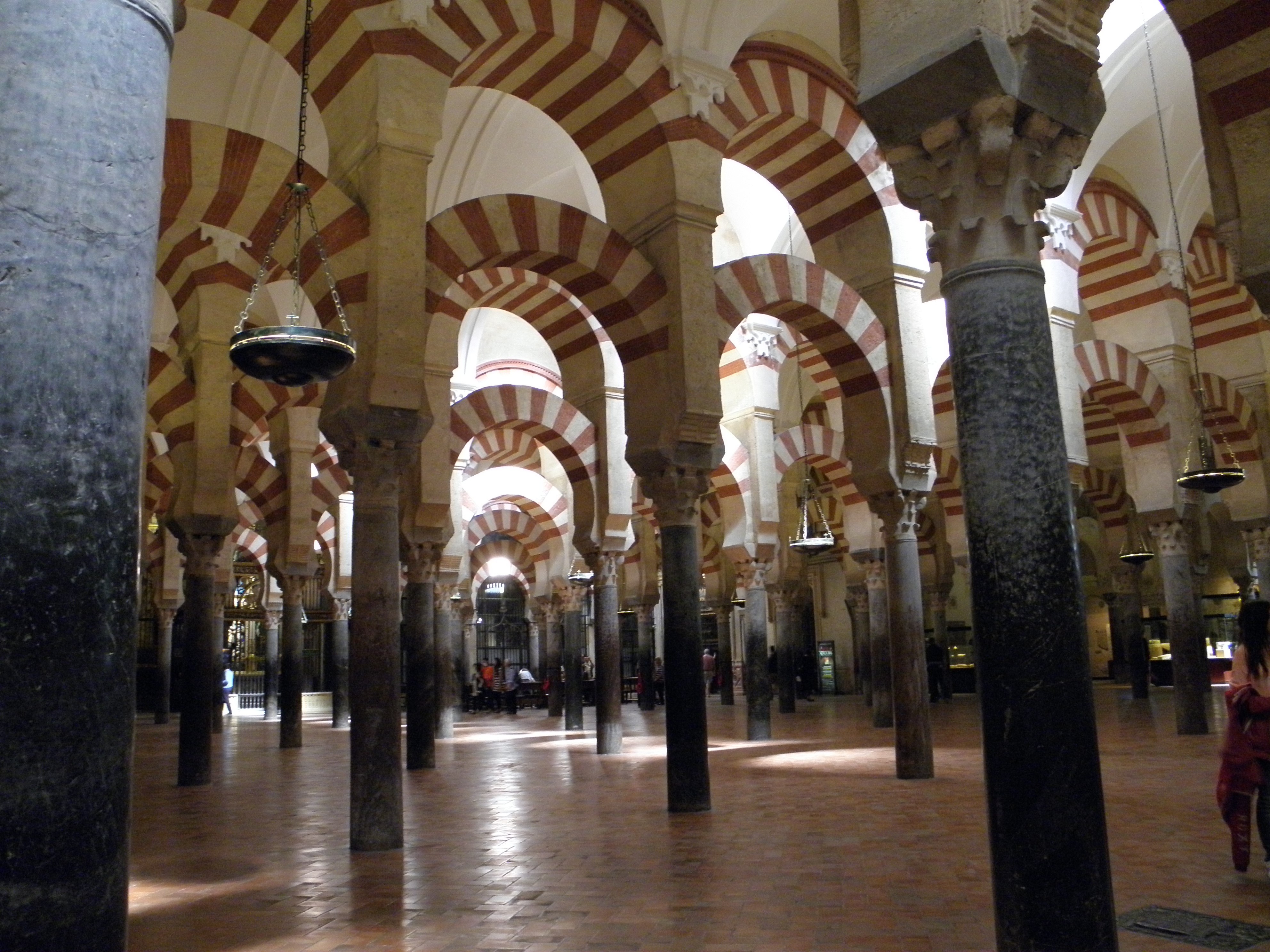
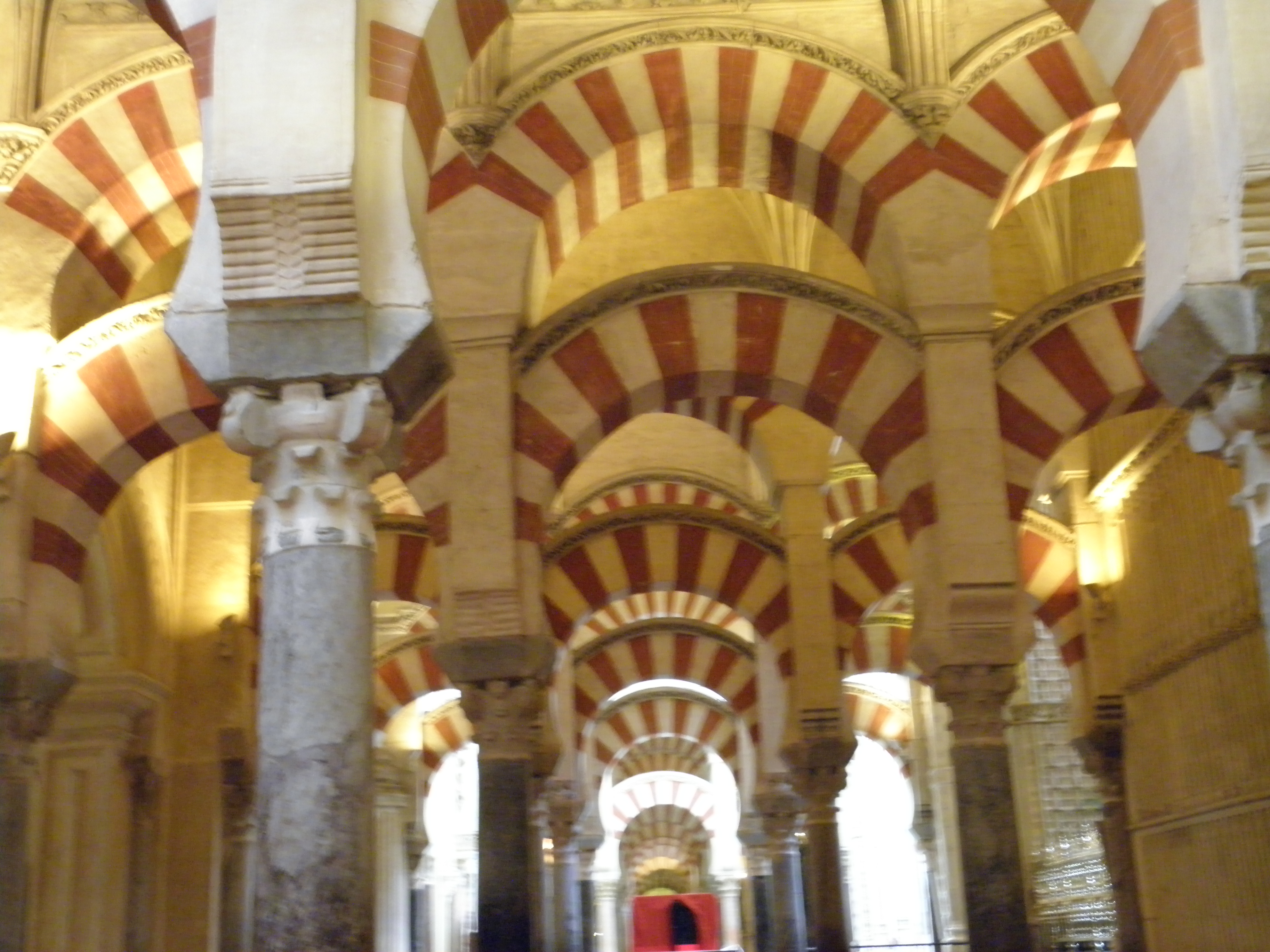
The pillars in the Mezquita de Cordoba have this double arch structure – so evocative of the branches of a date-palm. Others have said more eloquent things about it, so I will limit myself here. Only to add, an engineered effect of all the pillars is the feeling one gets of eternity….of a seemingly never-ending path of tall trees. This is very typical of Islamic art – you will often find repeated patterns, some intricate and elaborate. Often on nature themes. A reminder of the eternal life to come, of paradise, which was our home, and of God the almighty, who is limitless and eternal. Eternal is a poor word according to Muslim theologians, as it still talks upon the frame-work of time. And we believe God, is beyond time, being The Creator, and the Creator is not like the creation. ” …laisaka mithlihi shai =There is nothing like unto Him” (Quran 42:11). So we say, to try to capture this idea better; God is beginninglessly eternal and will be forever, endlessly (the Arabic captures this better).

After the reconqista, the mosque was converted to a church. It would have been torn down (hence why none of the Jamia masajid of other Andalucian cities remain) except the local people were so fond of it, they protested. The Catholic authorities could not therefore, and instead built a cathedral in the middle of it. The cathedral itself is quite grand. But I must be honest – the two art-forms just do not go well together. The overall effect is rather strange and unnerving. I found it very jarring to my artistic sensibilities. I was not the only one, apparently the pope of the time, when he came to visit it having being invited to see the accomplishment by the local Catholics on completion, is reported to have said something along the same lines. However it is a good thing this was done, as it is probably what saved the structure from destruction, particularly during the Inquisition. Wa Allah a’lam (=and God knows best)!

Here are pictures. Please read the captions.

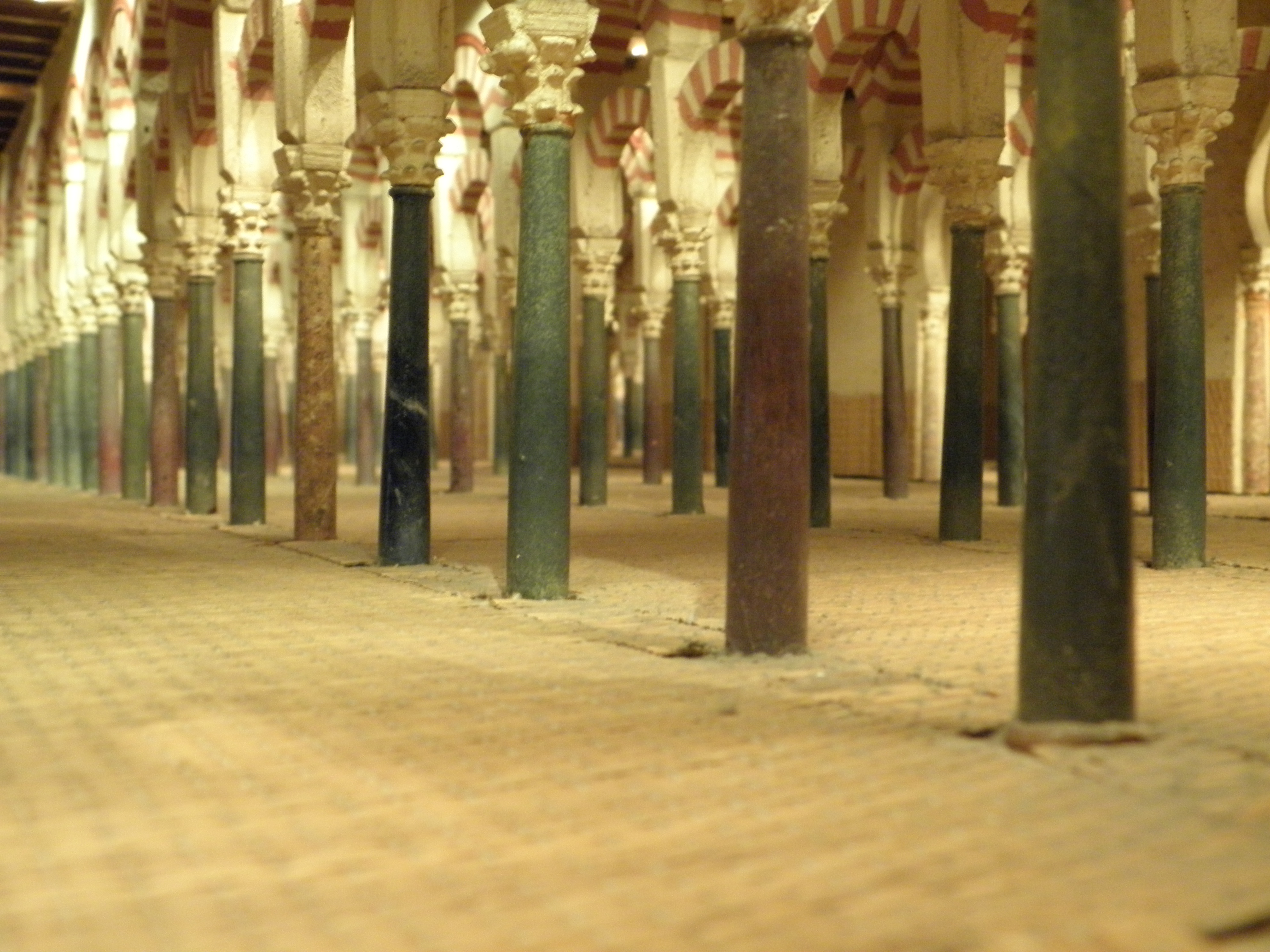
A model of the mosque before the Cathedral was built in it. In the Calahorra museum
A picture of the inside of the model - what the old mosque would have been like
A picture of the inside of the model – what the old mosque would have been like


columns and columns
columns and columns


The effect is amazing...my camera could not do it justice. It's quite dark inside now, as there is only a small entrance and not the many archways that open to the courtyard in the original design
The effect is amazing…my camera could not do it justice. It’s quite dark inside now, as there is only a small entrance and not the many archways that open to the courtyard in the original design


The original mihrab (=prayer niche), a staple in any mosque design, it gives the direction to Mekkah and usually is designed with great acoustics, so that the Imam's recitation as he leads the prayer from inside, is heard by all the congregation.
The original mihrab (=prayer niche), a staple in any mosque design, it gives the direction to Mekkah and usually is designed with great acoustics, so that the Imam’s recitation as he leads the prayer from inside, is heard by all the congregation.

The ayaath above the mihrab are the last lines from Surah Hashr. They are often recited in prayer.

He is Allah, than Whom there is La ilaha illa Huwa (=none has the right to be worshipped but He) the All-Knower of the unseen and the seen (open). He is the Most Beneficent, the Most Merciful. (59:22)

He is Allah than Whom there is La ilaha illa Huwa (=none has the right to be worshipped but He) the King, the Holy, the One Free from all defects, the Giver of security, the Watcher over His creatures, the All-Mighty, the Compeller, the Supreme. Glory be to Allah! (High is He) above all that they associate as partners with Him. (59:23)

He is Allah, the Creator, the Inventor of all things, the Bestower of forms. To Him belong the Best Names . All that is in the heavens and the earth glorify Him. And He is the All-Mighty, the All-Wise. (59:24)


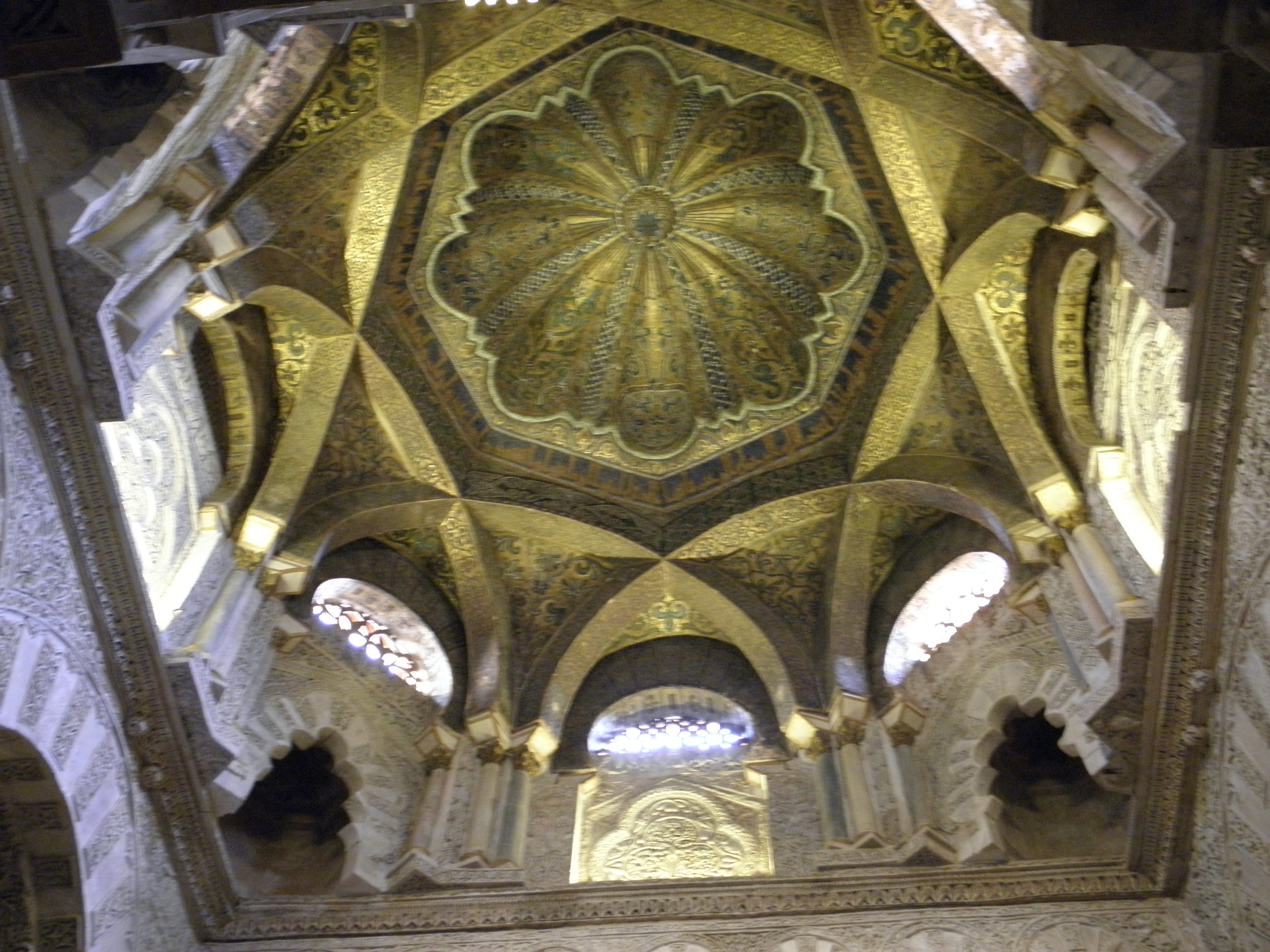
The top of the mihrab
The rather strange juxtaposition of two very different art-forms. This was one of the more graceful pictures I could take


One of the many gates from the outside. It's walled up though
One of the many gates from the outside. It’s walled up though

The above gives you a size of the structure. It was huge, at one time the second largest mosque in the Muslim world.

I will end by saying how many a great thinker and scholar must have sat and leaned on those pillars, how many rapt-eyed students at his or her feet. The space still seems to carry echoes of their lost voices.

Ending with a prayer for peace and understanding and truth told, no matter the cost

Peace be with you all.

Madina al-Zahra and Cordoba

Assalamu alaikum (peace be with you)

Alhamdulillah (=thanks and praise be to God) for the peace and security to continue these posts. We visited Cordoba, a city established by Abdul Rahman I -the Umayyad prince who was the first ruler of Al-Andalus. His story is the stuff of romance. His family, the Umayyad rulers in Damascus were killed by the Abbasids who then established their own dynasty. He escaped and made his way to Spain, where he established his own caliphate that began as an emirate of ruling Berber Muslims in Morocco but then became an independent state.

The Umayyads were the first in Islamic history to establish an aristocracy, the advent of which, saw an end to the time of the rule of the first ‘four rightly guided caliphs’. This was predicted to happen by our beloved prophet (peace and blessings of God be on him). Muslims consider the time of the first four caliphates the true caliphate whereas since then there have been bad and good leaders. On this note, it must be said, that the model of leadership brought by Islam is what Sheikh Quick aptly termed a ‘meritocrasy’ and though an aristocracy is not preferred, where there is absent of rule of law otherwise, it is allowed. Having said that, it was the young prince Abdul Rahman I who was destined to found the Muslim Andalucian kingdom and continue the Umayyad line.

We stayed in a neighborhood in the city called ‘Arrusafa’. It was where AR-I built his palace, though no trace of that structure remains. The name Arrusafa is the name of a part of Damascus, beloved to AR-I, so you can see how he named this location the same, out of home-sickness. Quite remarkable the name stays to this day! This was in the year 711 AD, about 80 years after the death of the prophet (peace be on him).

Many things are told about the caliph AR-I and his rule. He was known as a just and wise ruler. This post will be too long were I to speak in detail about him, but here is one note that I particularly liked. Every child in his realm, whether Christian, Jew or Muslim would get a free education in reading, writing and math (the proverbial three ‘R’s! -hmm, wonder where that came from eh?;) ) and if a child wanted to study more, the doors were open. This love of education is a hallmark of Muslim civilization. As we believe that to know God, you must learn about His creation. The Quran repeatedly enjoins us to learn, study, think! So it is nothing new but something I deeply love about this way of life. One other thing to mention, there was no forced conversion as that is forbidden in the religion (“There is no compulsion in faith” – Quran 2:256). A proof of this is the great Jewish scholars that were produced in the Andalucian kingdom. The historians will speak more accurately about this than I can.

Cordoba became a great jewel in the crown of human civilization. The achievements of its people and its rulers must be given their due recognition no matter what faith or creed one belongs to. History is a common human treasure and it must be given its right. Cordoba was written of by Christian visitors from the North as ‘the ornament of the world’! It had street lighting and running water, great libraries and hospitals, synagogues and churches and of course great mosques. All this a couple of centuries before the battle of Hastings mind you.

And then comes Madina al-Zahra! Madina al-Zahra means ‘The resplendent city’. It was built by Abdur Rahman III who ruled for about 50 years beginning in 912 CE. It took him 12,000 builders and 12 years to build it. It was a custom built city about 6 miles outside the city of Cordoba. It housed the royal family and the court and attendants etc. It was a statement of authority as our tour-guide pointed out – a message to all, that Andalucía had arrived. And indeed it did do that. At that time also the Muslim rule in Baghdad was declining and AR III did declare himself the ruler of the entire Muslim world, it is entirely possible he had the riches and the authority  to be this as well, no small statement indeed.

Ah, but we derive a lesson from this – the caliph was distancing himself from his people. Becoming more exclusive and preferring the pleasures of the world, over the dues owed to the people he ruled. It is the story of history and human folly. It was the beginning of the end. And it is the story playing out time and time again to Muslim rulers…and we see it in today’s news too! We Muslims believe that the mark of the approval of God on any human endeavor is its longevity and that if Allah is not pleased, His blessing removed, no thing will last. So it is with Madina al-Zahra. While Cordoba still stands and Arrusafa is a modern day neighborhood, Madina al-Zahra needed to be dug out by archeologists. Now about 10% of the site is excavated and there is a museum built close by showcasing what life in that city must have been like. Wandering through that 1/10th of the city one gets a feel to what its grandour. I wish I could share that experience with you all, but I cannot here, so please do go visit. Some photos are up on my public facebook page though https://www.facebook.com/joy.manifest

The museum built there is a very interesting structure. It is built entirely underground. The reason for this is to emphasize a subtle yet important message. That the population of Muslim Cordoba is indigenous  to the land. It is ‘part of the earth’. At that time about 80% of the population was Muslim (BTW this is also an index used to prove the lack of forced conversion as where there is forced conversion, 100% of the population will be the enforced religion usually within decades or much less of its enforcement. However here 300 years into the establishment of the kingdom not yet is everyone Muslim) and what is important to note is that these were for the majority, ethnic Spanish Muslims. They were not the dark-skinned black-haired depictions Orientalist painters for some reason seem to love to paint Muslims as, and as is shown in the majority of textbooks. These were very Spanish Muslims. What was nice during this tour was to meet some of those very ethnically Spanish Muslims, who are now reclaiming their history and heritage over 500 years after the Inquisition and the forced erasing of this period from history. But more about that later. For now, it was an important lesson to take home and kudos to the architects of the building for such a subtle yet beautiful message.

And kudos also to the beautiful Spanish people, who are restoring these old sites and reclaiming what is after all, their own heritage!

Please do check out the pictures of Madina al-Zahra on Facebook. And below are some more, from a Museum as we entered the old city of Cordoba. Captions below.

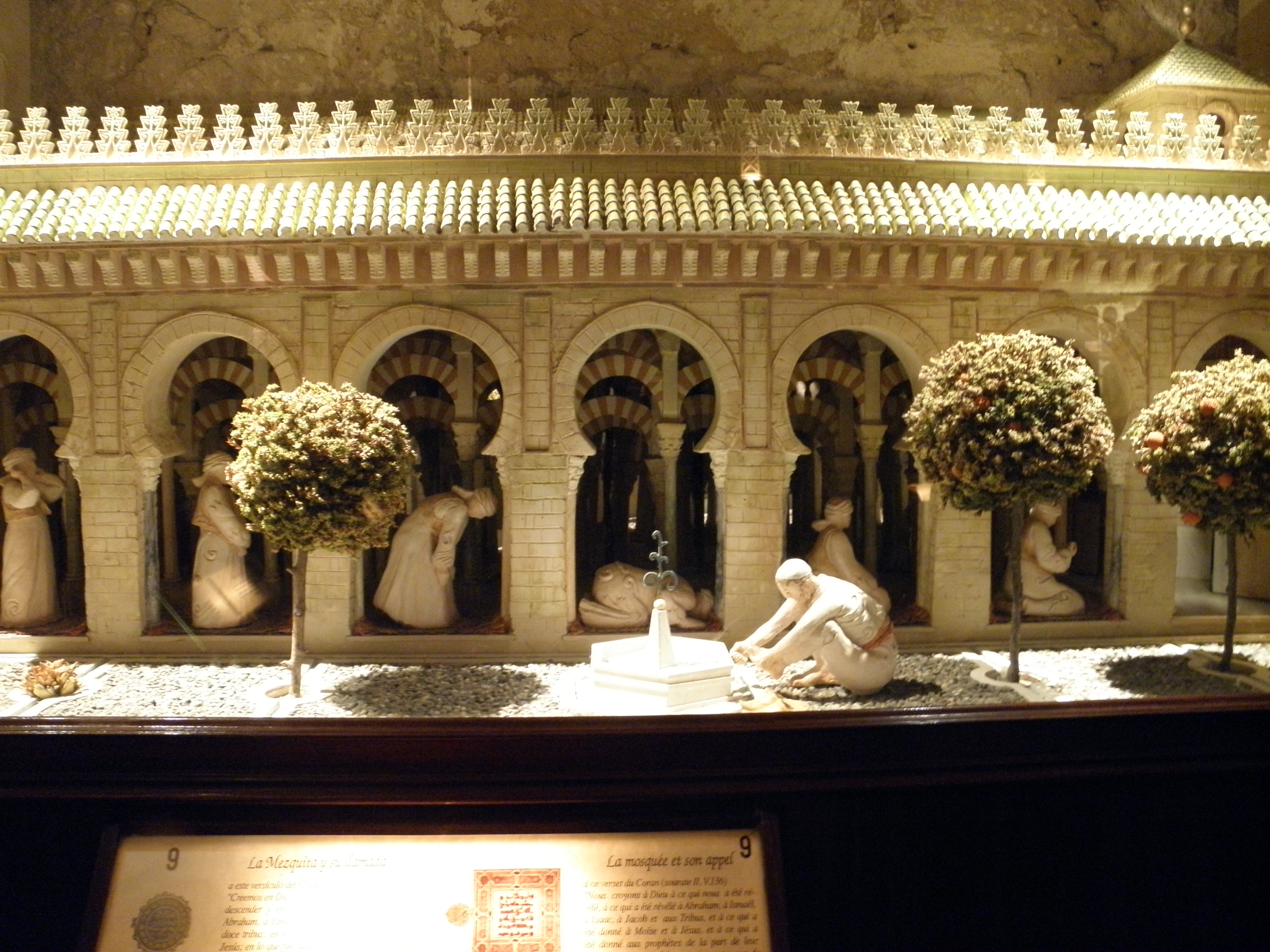
A model of the great masjid of Cordoba and the stages in a person's prayer. The masjid is now a Cathedral and still stands
A model of the great masjid of Cordoba and the stages in a person’s prayer. The masjid is now a Cathedral and still stands


A model of a Synagogue in Cordoba. I was struck by how similar to a masjid it is in that it is an empty space. The tile-work is obviously Moorish. The jewish quarter still exists in modern Cordoba


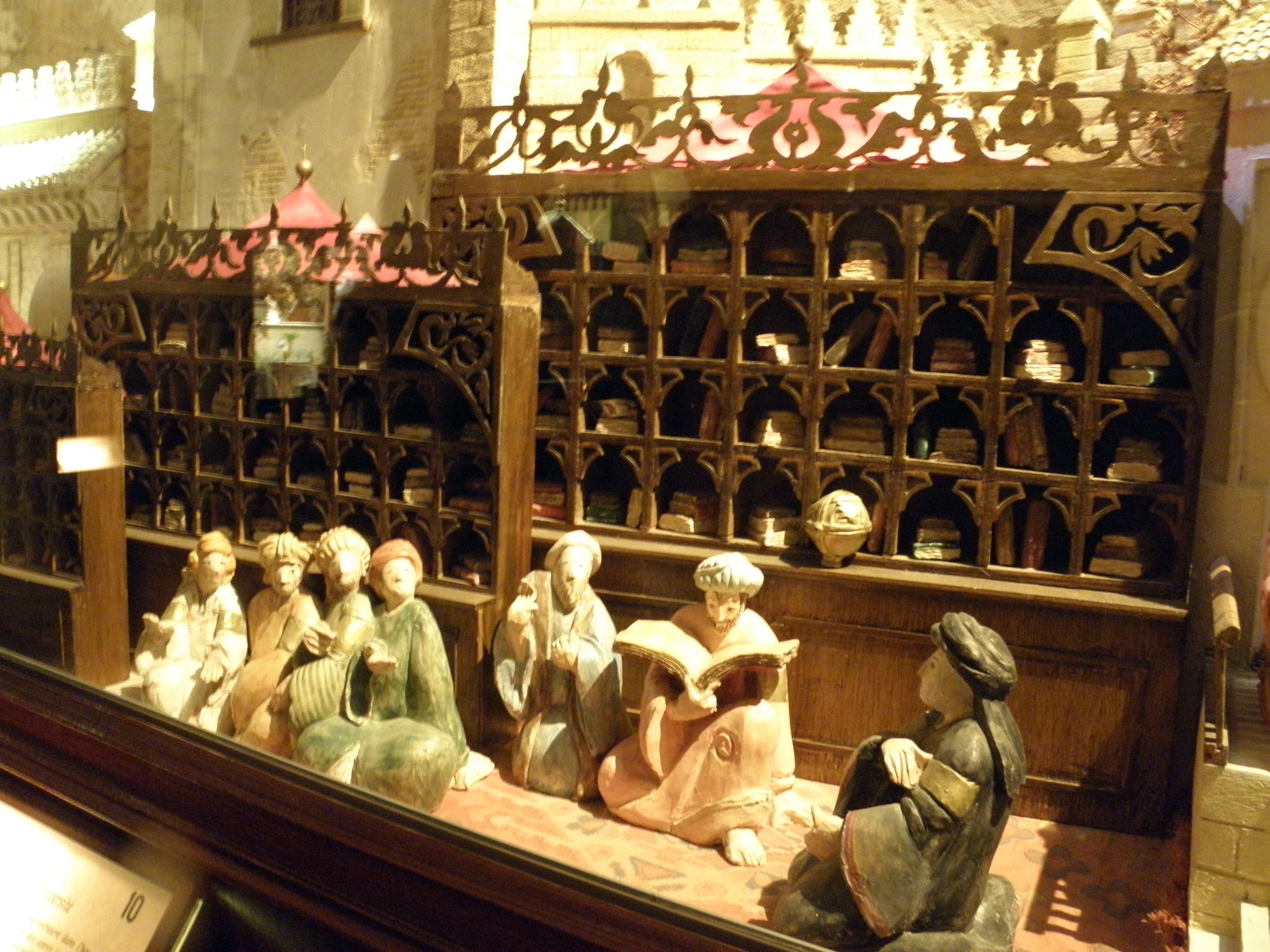
A model of a library/school/university
The bridge over the river Guadalquivir. Originally built by the Romans, it was fortified by AR-I. Interestingly the names of most rivers in Spain begin with 'guada'. This word comes from the Arabic 'wadi' which means valley. Guadalquiver is from 'Wadi al Akber' = The great valley. The river systems were called by the valleys they carved.
The bridge over the river Guadalquivir. Originally built by the Romans, it was fortified by AR-I. Interestingly the names of most rivers in Spain begin with ‘guada’. This word comes from the Arabic ‘wadi’ which means valley. Guadalquiver is from ‘Wadi al Akber’ = The great valley. The river systems were called by the valleys they carved.
One of the old 'water-wheels' used to irrigate the city. I think the only one still standing. Rather remarkable given it is over a thousand years old
One of the old ‘water-wheels’ used to irrigate the city. I think the only one still standing. Rather remarkable given it is over a thousand years old
The site of the masjid of Madina az-Zahra. Unlike many Muslim cities, where the city is built around the masjid, here the masjid is in a corner of the city almost outside its main design.

Finally, the trailer for a video we watched in the Museum, that recreates life in Madina az-Zahra. Ending with the visit of a delegation from a Christian kingdom in the North. Enjoy!

Take Back Islam: #BringBackOurGirls

I could not have said it better. Have to add my voice loudly and clearly – “It is time for the Muslims to stand up together in outrage about the filth that is done in the name of our religion.

We demand that Boko Haram brings these girls back to their families, to their childhood, and to their education!

We demand that Boko Haram and groups like it STOP misappropriating Islam for their agendas!”
– thank you to my sister for writing this

Corbin's avatarislamwich

theresa-byline

Take-Back-IslamAs the world waits and worries over the fate of the girls who were abducted on April 14 from a school in Nigeria, a terrorist group, Boko Haram, steps forward and claims responsibility for the repulsive act. And all this evil based on the premise–as their name states–that Western education in sinful (much of which is based on the Golden Era of Islamic discovery) and that Allah tells them to sell these girls as sex slaves (did someone forget to take their Thorazine?).

But somewhere between May 2013 and the recent kidnapping the story changed. CNN reports that Shakau, the leader of Boko Haram, in May 2013 “first announced in a video that Boko Haram would start kidnapping girls. The kidnappings, he said, were retaliation for Nigerian security forces nabbing the wives and children of group members.”

Now after the deed is done and the world is looking at Nigeria…

View original post 785 more words

Mezquita de Grenada

Dear readers,

Alhamdulillah (=praise and thanks to God) I am returned after completing a very educational and blessed tour of Andalusia. The tour was run by Andalucian routes, a company that offers tours of the ‘western Muslim world’ (as Morocco/Algeria/Tunisia/Islamic Spain used to be known) not just for pleasure, but with a definite educational slant. They also work with empowering ‘ghetto-ized’ Muslim youth in the UK, via teaching them their history. And they work to bring back to modern-day Europe, the spirit of co-existence and mutual respect between different faith groups that the Andalusian kingdoms of old Europe were famous for. So famous that a term was coined to describe this – ‘convivencia’. Check out Project Convivencia for more information on the work Andalucian routes staff do on this front. The tour was organized by the Swiss Muslim Events group and included by invitation, Sheikh Abdullah Hakim Quick, who is well known in western Muslim circles. One of the earliest western Muslim scholars, he has in addition to his formal Islamic knowledge training, a Masters and PhD from McGill University and specializing in History. He has made some fascinating documentaries on the old very rich (in wealth and knowledge) African kingdoms of Mali and Timbuktu. Here is a link to a short video on this topic. Do check them out, you may be quite surprised at what you find.

There are many special places we visited, in addition to the better known Alhambra and the Mezquita of Cordoba. And there were special people we got to meet, skilled artists and pure souls. What a blessing it is to be able to travel in this way. I pray you all also have these opportunities! For this post, I will only talk about a rather new place in Granada – a mosque that was built a few years ago. It is the main mosque in Granada, and called the Mezquita de Granada in Spanish.

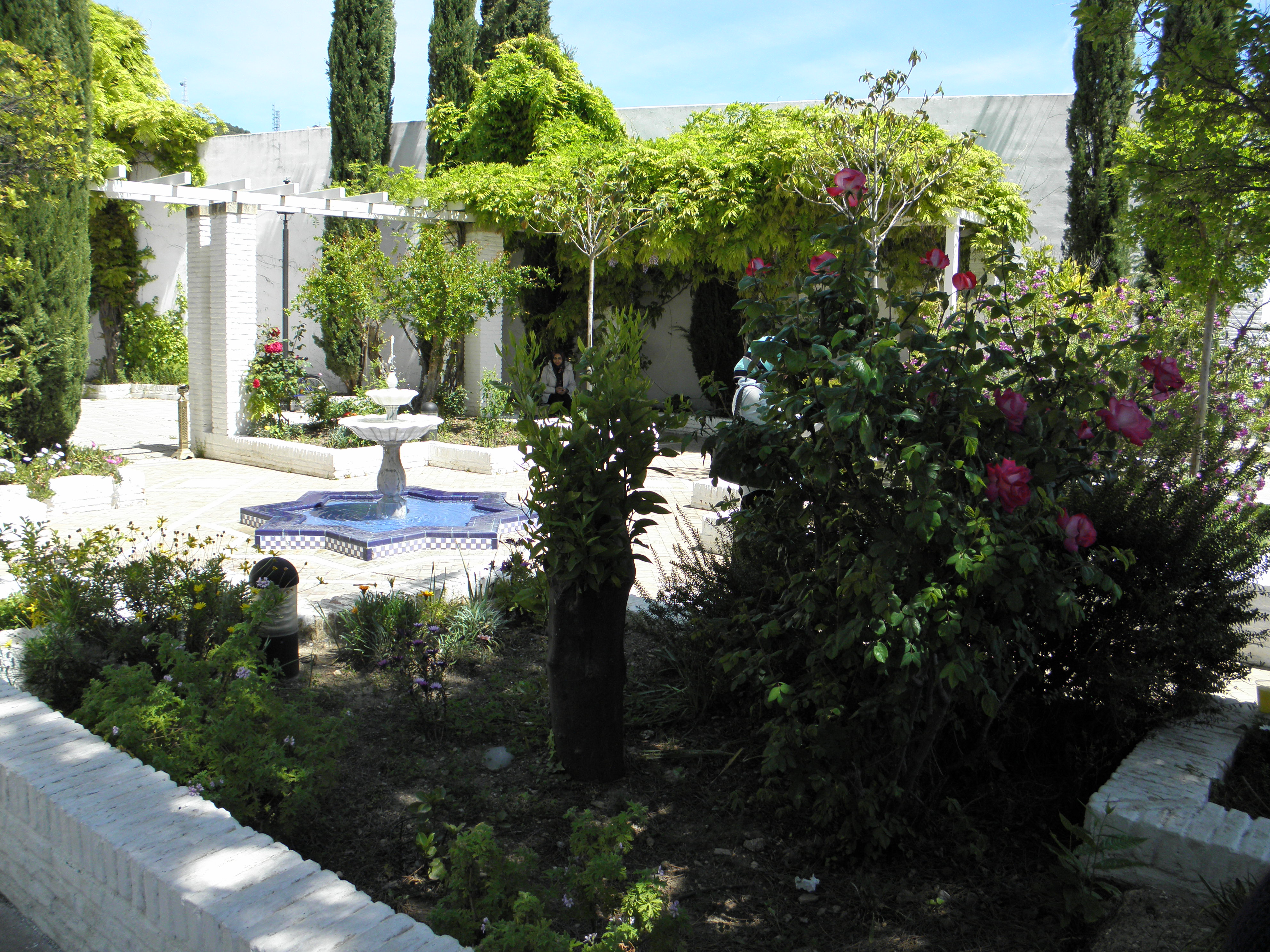
The Mezquita (easy to figure out that the Spanish word for Mosque comes from the Arabic ‘Masjid’) de Granada was built recently. It is on a hill that overlooks the Alhambra. It is built in the Moroccan style, which by no accident, is very much the Spanish style of building. In front of the masjid is a beautiful garden, with roses and jasmine and little fountains. Pictures below. The sound of the rippling water, the wind that blows the fragrance of the flowers as you sit in the welcome shade of the trees, and you feast your eyes on the flowers and yes, even the still resplendent walls of the Alhambra that evokes so much memory of history and of wise lessons of life.. and you wait for the Muazzin (=the person who makes the azan) to call the Azan (=call, the poem sung to inform the faithful it is time to pray) to prayer…what bliss! It was a piece of paradise. I made a video of the muazzin giving the call, I missed the first couple of lines. It is the first time I have heard the azan in this way, not through a loud-speaker. It must have always been like this in the past. It is very beautiful to hear the human voice wafting on the wind like this, sans technological input. No wonder the minarets (from where the muazzin makes the call) are high…the minaret on this mosque was not too high, yet I was surprised we could hear, though we were quite far away. Also I loved the style the azan was delivered in, distinctly European overtones I thought! I love this about the Azan, you will hear different styles (though the words and the language has never and will never change) depending on where in the world you are.

The garden is open to all, but the mosque is very small and can’t hold too many people, so it is not open to anyone except Muslims as yet. We were there on the Friday and got to participate in the Friday prayer. It was the first time I heard the khutbah in Spanish 🙂 (khutbah= literally meaning ‘speech’. the name of the two sermons given in place of two of the units of the noon prayer on Fridays. So we listen to the two sermons and then only offer 2 more units of prayer, thereby completing the prescribed 4 units of the noon prayer. There are guidelines of what a sermon should include and should not include in our tradition. Now that I am studying all of this, I sigh more thinking of how little the sermons I have sometimes heard in places like the subcontinent conform to this model. But I digress). It was a beautiful experience praying next to my Spanish brothers and sisters, many of whom can trace back their ancestors to Spanish Muslims who lived in Andalucía centuries ago.

Even more beautiful was to be able to attend the sunrise prayer there…walking up the hill in the night when it is darkest just before dawn, and then to sit in the quiet of the mosque. The Imam recited from Quran after finishing the offering of the prescribed short dawn prayer. He is a hafidh of Quran (one who has memorized the Quran. Hafidh is a beautiful word, it is translated as memorizer, but really it comes from the root word which means guardian or protector. And Al-Hafidh is one of the ‘names’ of God. It means then ‘The One of who protects’. And God is the ultimate and only real protector of all. But this is an example of the metaphysical meanings that Arabic is able to capture, as to memorize something denotes that one is then a protector and guardian of it). And he sat there and recited for a long time from memory. A young man, likely his student, was siting in front of him and reciting as well. I was following along with my mushaf (the actual written copy of the Quran) and not a single mistake could I detect in the recitation of the Imam, Al-hafidh al-Quran (=the hafidh of Quran. A title given to a memorizer of the Quran as Muslims greatly respect people who have done this). Allah ihfidhhu (= O Allah protect him!)

Here are some pictures of the ‘Mezquita’

The garden, facing the front of the masjid
A view of the Alhambra from the mosque garden
cool fountains and the sound of flowing water
The masjid, you can see the minaret where the muazzin gives the azan from in the distance
Children love to play with water!
The muazzin is ready to begin

Live Below The Line: Day 2

Had to share this beautifully and lovingly written post from one of my favourite artists and people… a pure and simple soul now blogging about his living below the line fundraiser challenge.
[For readers waiting to see more of my trip to Andalusia, stay tuned – I am still on the road and just waiting to get home so I can upload some photos to an already written post. Learned and experienced so much. What a blessing travel is!]

When the Moors ruled in Europe

Dear readers, Assalamu alaikum (peace be with you)

Bi fadhlillah al-adheem (= by the immense bounty of God, the most High) I am currently in Spain, in the province of Andalusia which is the modern form of the Arabic name, Al-Andalusia. Al-Andalusia comes from how the Arabs called the ‘Vandals’, the old European tribes that lived in this area.

Now many of my readers, as indeed I was a few years ago when yet again, this period of lost history was revealed to me, would be surprised to know that there was a long period of Islamic rule in Spain. It began only 80 years after the death of the prophet (peace be upon him) and ended with what the Spanish call ‘The reconquest’ and Inquisition of the 15th century – a period of over 700 years. Yet, my history books certainly never breathed a word of it. It is a very interesting history and Muslims derive many teachings by it. It is also very interesting how many Islamic civilizational practices came into European culture by it, such as for example the ‘three course meal’ and apparently even the tradition of traveling musicians ‘troubradours’.

I am most interested also for a personal reason which I will share; Sri Lankan Muslims are commonly considered descendants of Arab traders who settled over the centuries (and integrated with the local communities, via marriage and adopting local languages while Arabic was preserved only in the written form and that too with interesting variations on the text itself…that are now being corrected with the Internet-age), however we are ethnically called ‘Ceylon Moors’. I always wondered where the term Moor came from. Some said it was because the British who coined it during their rule of what was at that time Ceylon (present day Sri Lanka) were only familiar with Muslims from Spain so they called any Muslim a Moor. That seems rather simplistic to me. An alternative I have heard is that we may indeed be descendant of those Spanish Muslims who fled Grenada when it fell to King Ferdinand and Queen Isabella who then initiated a brutal and comprehensive inquisition which lasted many decades if not centuries. This happened in the year 1492 CE, the same year the same couple blessed the voyage of Chistopher Columbus! Its outcome is that the Muslim history in Europe was almost wiped out. But not quite, and this is good, for no matter what religion or group we belong to, history is a common human treasure and must be preserved.

Having said that, I will endeavor to share more of what I learn here, but for now a very well produced documentary from a great historian, Bettany Hughes, that will introduce the subject well I believe and that I feel you will enjoy. It is called ‘when the Moors ruled in Europe’

BTW I can’t help but say that I love the segment where Bettany speaks with a very honorable princess of the modern-day Royal family in Spain (if I recall correctly). I love the way she holds herself, her simplicity and her clear presentation of facts.

Enjoy, peace be with you all


Modern influential Muslim women

Dear readers, Assalamu alaikum

Now, a couple of posts ago I promised to follow up with a more detailed post highlighting modern influential Muslim women at the request of my dear reader ‘genometalk’. This is a reminder to myself never to promise something with a definite time-line attached unless I can be sure to meet it. Please forgive me for the tardiness of this post, it should have come a few days ago. But I’ve had a couple momentous life-events come to pass in the meantime and was a little unwell due to that as well, and this I hope will excuse me. Allah forgive me. Breaking a promise is a sign of the ‘munafiq’ (=one whose is in a state of ‘nifaaq’, which means hypocrasy) and being a munafiq is a terrible state to be in indeed. We know this from the well authenticated hadith of prophet Muhammed (peace be upon him)-

Muahmmed (peace be upon him) said, “There are three signs of “Munafiq”; When he speaks he Lies, when he promises he breaks those promises and when he is entrusted, he embezzles.” (Hadith Bukhari and Muslim).

So with the prayer this fulfills my promise and thanks to be able to do it;-

Here are some names that have been coming to mind the past few days that I have enjoyed contemplating on this post. They are in no particular order and not the outcome of extensive research, rather of some moderate research and names that are well-known in the Muslim community. I purposely wanted to include examples of leaders/exemplars in the religious and secular fields.

Dr. Ilham Al-Qaradawi

Image

Prof. Ilham Al-Qaradawi is professor of Physics at Qatar University and Adjunct Professor of Physics at Texas A&M University in Qatar. She received her Ph.D. working in the field of positron physics from University of London, UK in 1991.

Over the past decade, she has established a positron laboratory at Qatar University and successfully built the first slow positron beam in the Middle East. She has also established an environmental radiation measurement laboratory. Dr. Al-Qaradawi is involved with Europe’s CERN in the Antihydrogen experiment AEGIS. She is the founder of the Qatar Physics Society. Dr. Ilham Al-Qaradawi is a fellow of the institute of Physics and a member of many international societies. She also sits on the advisory committee of the World Nuclear University Radiation Technology Summer School and the World Council on Isotopes, and has lectured in the World Nuclear University Summer Institute for the past four years.

Prof. Ilham Al-Qaradawi has been awarded many awards for excellence in research, for Arab Women in Science and outstanding contribution to science. She has had many appearances on Al-Jazeera channel and several other TV channels and newspapers and magazines.

She has been listed by the Arabian Business magazine as one of the 50 most influential people in the State of Qatar and one of the 500 most influential Arabs in the world for the year 2012 and 2013 and one of the top 28 Arab scientists in the world and by CEO Middle East magazine as one of the100 Most Powerful Arab Women for the year 2012.

Above is taken from her website, www.ilhamqaradawi.com

[Interesting to many of my Muslim readers maybe (and perhaps for my dear non-Muslim readers also) is that she is the daughter of a very prominent orthodox scholar in the Muslim world, the Eygptian theologian, Sheikh Yusuf al-Qaradawi, who was exiled from Egypt for 30 years during the Presidency of Hosni Mubarak. I believe he delivered the Friday sermon in Tahrir square soon after the overthrowing of Mubarak. On this note, a prayer for my Egyptian brothers and sisters – Allah ease their present difficulty and increase them in what is pleasing to Him, SWT (=subhahana wa ta’ala, most Exalted and the most High)]


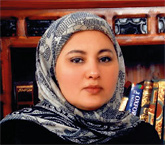
Ustadha Yasmin Mogahed (Ustadha is a title meaning something like ‘teacher’. It is affectionately given, She is not of the stature of a shaykha in terms of religious knowledge acquired, but she is certainly a recognized teacher by the community)

Image

A gifted and powerful speaker, she is raising young Muslims to new heights of self-awareness. Here is her bio from her website, it doesn’t do her justice. I have personally met many sisters who say her teachings have personally benefited them through life-events, and I can say the same. I also had the great delight of meeting her briefly, a simple and humble person. Allah bless her

Yasmin Mogahed received her B.S. Degree in Psychology and her Masters in Journalism and Mass Communications from the University of Wisconsin-Madison. After completing her graduate work, she taught Islamic Studies and served as a youth coordinator. She also worked as a writing instructor at Cardinal Stritch University and a staff columnist for the Islam section of InFocus News. Currently she’s an instructor for  AlMaghrib Institute, a writer for the Huffington Post, an international speaker, and author, where she focuses most of her work on spiritual and personal development. Yasmin recently released her new book, Reclaim Your Heart, which is now available worldwide. Visit her website, yasminmogahed.com, where you can find a collection of her articles, poetry, and lectures.


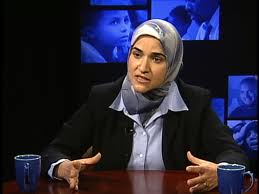
Dalia Mogahed

Image

The sister of Yasmin Mogahed. Her forte is different to that of her younger sister, but no less powerful. I will let her bio from the Huffington Post speak for her

Dalia Mogahed is Chairman and CEO of Mogahed Consulting, a Washington, D.C. based executive coaching and consulting firm specializing in Muslim societies and the Middle East. She is former Executive Director of and Senior Analyst for the Gallup Center for Muslim Studies where she led the analysis of surveys of Muslims worldwide, including in the U.S. and Europe. With John L. Esposito, Ph.D., she is coauthor of the book Who Speaks for Islam?: What a Billion Muslims Really Think. Dalia was appointed to President Obama’s Advisory Council on Faith Based and Neighborhood Partnerships, where she served on the Inter-religious Dialogue and Cooperation Task Force. Arabian Business magazine recognized her as the most influential Arab woman in the world, and The Royal Islamic Strategic Studies Centre included Mogahed in their list of the 500 most influential Muslims. Ashoka named her the Arab World’s Social Entrepreneur of the Year in 2010, and Mogahed received her alumni association’s prestigious Forward Under 40 award for outstanding contributions by a graduate of the University of Wisconsin. She is a WEF Young Global Leader and serves on the Forum’s Global Agenda Council on the Arab World.


Dr. Ingrid Mattson

Image

The past president of ISNA (Islamic Society of North America). I blogged about her here.


Anse Tamara Grey

Image

I mentioned this dear Shaykah in a previous post. Here is more about her

Anse Tamara Gray was born in 1966 in Minneapolis, Minnesota. Soon after converting to Islam in 1984, she traveled to Damascus, Syria; where she lived for almost twenty years while studying core subjects of the Islamic tradition such as theology (aqīda), hadith, Qur’anic exegesis (tafsīr), and Islamic law. She also received a certification (ijāza) in Qurʾanic recitation from the late preeminent scholar of the Qur’an, Shaykh Abū al-Ḥasan al-Kurdī, in 1997. Anse Tamara Gray holds a Bachelor’s degree in political science and elementary education from Macalester College and a Master’s degree in curriculum theory and instruction from Temple University. Her career as an educational consultant includes curriculum design and implementation, administrative support, teacher training, and sensitivity training. Her speaking engagements encompass women’s issues in Islam and the Middle East, education, geographical issues, and other matters related to education, social issues, and Islam. She currently resides in St. Paul and serves as the founder of Rabata, which organizes educational activities for Muslim women in the form of online classes, workshops, and weekend intensives.


Dr. Feryal Salem

Image

Dr. Feryal Salem received her ijaza in Qur’anic recitation from the late Syrian scholar Abu al-Hasan al-Kurdi in 1998.  She has since then studied a number of related Islamic sciences including: Shafi’i and Hanafi jurisprudence (fiqh), Islamic theology (aqida), the Prophetic biography, Arabic grammar, Muslim inheritance law, classical logic, Qur’anic sciences (ulum al-Qur’an), and Islamic legal methodology (usul al-fiqh).  In 2009, she received a degree in the hadith sciences from the Nuriyya Women’s Hadith Institute of Damascus attached to the ancient Umayyad Mosque complex and whose program of study includes studying various hadith texts and classical commentaries.  In addition to her traditional study, Dr. Salem has completed a PhD in Islamic Studies with a focus on hadith methodology from the University of Chicago. She currently resides in Hartford where she is Assistant Professor of Islamic Scriptures and Law at the Hartford Seminary as well as Co-Director of the Islamic Chaplaincy Program and Director of the Imam and Muslim Leadership Graduate Certificate Program.


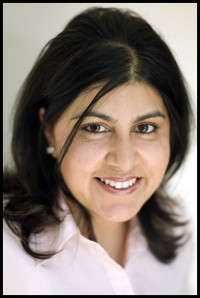
Baronnes Warsi
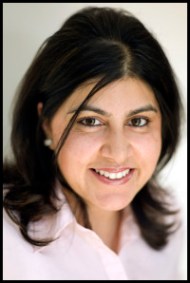
Image

Voted Britian’s most powerful Muslim woman recently, she is a powerhouse. Here are excerpts from her bio here

A lawyer, a businesswoman, a campaigner and a cabinet minister, Sayeeda Warsi has had many roles, but she is best known for being the first Muslim to serve in a British cabinet and the foremost Muslim politician in the Western world.

One of five girls born to immigrants of Pakistani origin in Dewsbury, West Yorkshire, Sayeeda studied law at Leeds University, going on to work for the Crown Prosecution Service before setting up her own legal practice. Her father, a former millworker and bus driver who set up his own business, instilled in her values of freedom, responsibility and aspiration.

 In 2007 she was elevated to the House of Lords aged 36, making her the youngest peer in Parliament. Later that year she travelled to Sudan and famously helped to secure the release of the British teacher Gillian Gibbons who was on trial for blasphemy.

In 2010 she was appointed by Prime Minister David Cameron as Minister without Portfolio, becoming the first Muslim to serve in a British Cabinet.  In 2011 she provoked support and controversy when she famously declared that Islamophobia had ‘passed the dinner table test’. In 2012 she led the UK’s largest ever ministerial delegation to the Vatican, gaining global coverage for a speech which called on Europe to strengthen its Christian identity. Outspoken and challenging on the issues that many people seek to avoid, she has become an interesting and distinct voice on topics previously considered taboo. She led the government’s campaign to criminalise forced marriage and spoke out on the sexual grooming of children by gangs. Her business background and her passion for manufacturing have made her a champion for British business both at home and abroad, and as a result she has played a key role this government’s foreign policy priorities. Her campaign to ensure that Britain became the first western country to issue a Sukuk (Islamic bond) succeeded when Prime Minister Cameron announced the UK’s intention to implement this in 2014.


This young lady is no stranger to most of my readers I think. My inspirational little sister, Malala Yousufzai.

Image

Her courageous stand for what is right no matter the situation she is in, is such a powerful reminder of the personality of the women who were the vanguard of this Ummah (=nation, a word Muslims use to refer to the entire Muslim community. It has a more personal meaning than that, as Muslims do consider ourselves to be part of one very large very diverse and very old family). I won’t include a bio here, as she is so well known.

Another well known modern highly influential Muslim woman; Tawakkul Karman.
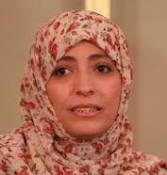
Image

Most of my readers would likewise be familiar with her story I think. I never tire of hearing her speak. What is most striking about her when she speaks, is her honesty and simplicity. Another personal thing I love about her is something she had likely nothing to do with – her name :). For my non-Arabic speakers, it has a very special meaning. Something Muslims remind each other to do all the time. ‘Tawakkul’ means to have trust in God/rely on God/be God-conscious. Again, it comes from a grammatical derivation of a root word which is composed of the three letters ‘w k l’. From it is also derived one of the ‘names’ of God, Al-Wakeel, meaning ‘The Guardian’. As in it is only God who is the protector of all. A very beautiful hadith on this topic I have to share

  Umar (Allah be pleased with him) said: I heard Muhammad (peace be upon him) saying, “If you all depend on Allah with due reliance, He would certainly give you provision as He gives it to the birds who go forth hungry in the morning and return with full bellies at dusk.” (At-Tirmidhi)

That tangent aside, here is an excerpt from an article in the Guardian about this remarkable lady, recipient of the Nobel Peace prize in 2011 and tireless campaigner for human rights and freedoms. And all of this within the fold of Islam. Fighting to bring justice back to so-called Muslim leaders who have forgotten that justice is a cornerstone of the way of the prophet (peace be upon him)

Known to some of Yemen‘s opposition movement as the “mother of the revolution”, Tawakkul Karman has emerged as a crucial figure among the youth activists who began camping out at Change Square in central Sana’a in early February, demanding the end of President Ali Abdullah Saleh’s three-decade rule. In Yemen, a 32-year-old mother of three may seem an unlikely leader of the fight to overthrow the president, but Karman – a journalist and human rights activist – has long been a thorn in Saleh’s side and has been jailed many times. She was catapulted into the international spotlight this January after being seized from her car and slung into prison. Thousands of people poured on to the streets of Sana’a calling for her release. It was a key moment in Yemen’s uprising when the tide began to turn against Saleh


Here is someone I doubt many of you would have heard of, despite the fact that TheMuslim500 calls her likely the most powerful Muslim woman in the world.

Sheikha Munira Qubaysi

No picture is available of her as she like many Muslim women I know, prefer not to have their photograph circulated. Here is a bio of her and her movement. Taken from the above linked The Muslim 500 (chronicles top 500 influential Muslims) and other sources. She is given the title ‘Her Eminence’ in the Arab world

Munira Qubeysi is the head of the largest women-only Islamic movement in the world. It offers Islamic education exclusively to girls and women. Qubeysi commands around 80 schools in Damascus alone, teaching more than 75.000 students. She is one of the most significant Islamic scholars in the world; her movement focuses on learning the Qur’an and six Hadith collections by heart. Qubeysi is arguably the most influential Muslim woman in the world, albeit in great discretion. By training a new generation of female Islamic scholars, Sheikha Qubeysi has made Islamic knowledge widely accessible.


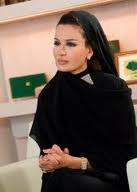
Sheikha Moza bint Nasser (Here sheikha does not refer to her religious standing but is simply a title)

Image

From her website; In Qatar, her home, her highness serves as Chairperson of Qatar Foundation for Education, Science and Community Development (QF), a private non-profit organisation founded in 1995. Its flagship project is Education City, which covers over 14 million square metres and houses branch campuses of renowned international universities and institutions. QF also is engaged in numerous scientific research and economic and social development projects. Sheikha Moza serves as the Vice Chair of the Supreme Council of Health and she also served as the Vice Chair of the Supreme Education Council from March 2006-February 2012. In these roles, she has helped enact major top-down reforms of Qatar’s public schools and healthcare system. Also, more recently, she chairs the Sidra Medical and Research Centre, a new training and research hospital that is envisaged to become a leading institution for women and children’s specialty care.On a regional and international level, Sheikha Moza has launched multiple projects including the International Fund for Higher Education in Iraq, the Silatech initiative to address the growing challenge of youth employment in the Middle East and North Africa, and Education Above All, a policy research and advocacy organization concerned with a single policy area: protecting the right to education in conflict-affected areas.

I realize I can continue this post for quite a bit longer. So I will stop now. I think the above gives you a glimpse of the variety of prominent roles women play in the Muslim world. I suppose due prevalent misinformation and due to unfamiliarity with a foreign system, many in the West think of women in the Muslim world as subjugated and backward. It is true there is patriarchy in the Muslims world, but that is true in the Western world as well – it may only be not so open (e.g., look at salary scales for men and women for the same jobs). What is true in the Muslim world is that women are more modest in their dress – and this has always been considered a strength rather than the opposite. I don’t want to go into a hijab discussion in this post, so suffice to say that the headscarf is usually considered by Muslim women a symbol of empowerment and not otherwise. It has always traditionally allowed us to move freely in male dominated societies and be respected for our prowess and intelligence and allowed us to interact with men sans a superimposition of our sexuality. That said, let me close this post by highlighting a poster from MuslimScience.com; It is their list of top 20 Muslim women scientists globally. As a young scientist myself I was ecstatic to find it. I hope the names are readable, if not, link here

Image


Finally I want to end by sharing a letter of appreciation written for a great teacher by her student, upon her death. I wanted to share this, as for me, it beautifully portrays the great place women and women-scholars have always had in our tradition. This letter has been translated to the English here, from where I take it. It was written notably, by a male student and given in the dignified and honorable Arabic style of presentation that I am coming to love more and more the more I study it. Most people are not aware of the movements of preserving knowledge going on in the Muslim world. Indeed I did not know either until recently. An unfortunate side-effect of my colonial education, albeit it was very good in many other ways.

Here is the letter, it is about Dr. Da’ad al-Husayni

al-Ḥāfiẓa al-Jāmiʿa Dr. Daʿad al-Ḥusaynī (1938-2009)

The people of Greater Syria have a beautiful quality, namely that they love the men and women of sacred knowledge.  With this merit also comes a shortcoming in that many of them do not become aware of their scholars until after they have passed.  Before our tears had yet to dry for our dear brother and teacher, al-Ḥāfiẓ al-Ustādh ʿAbd al-Hādī al-Ṭabbāʿ, God willed that another great and noble scholar, whose likeness is rare to find, be taken to the eternal abode.  The scholars of Damascus and the carriers of God’s book submitted their affairs to His divine will with the death of Dr. Daʿad al-Ḥusaynī (may God have mercy on her).

 Dr. Daʿad earned her PhD in mathematics from the Soviet Union and was one the oldest professors of mathematics in the Department of Science at the University of Damascus.  She was born in 1938 and her father was the late teacher and guide Muhammad ʿAlī Ḥusaynī al-Jazāʾirī.  She was an individual of many talents. During her youth she studied in Moscow and taught in Algeria before settling at the University of Damascus.

She became devoted to her faith and transformed both in heart and action.  She was a leader of the Islamic women’s movement in Syria and one of its most senior teachers.  She was certified (mujāza) in all ten recitations of the Qurʾān (acquiring the station of al-ḥafiẓā al-jāmiʿa li-l-qirāʾāt) at the hands of the blessed scholar of Syria, Shaykh Abū al-Ḥasan al-Kurdī—may God preserve him and continue to benefit the Muslims from him.

Hundreds of women graduated under her tutelage as certified reciters of the Qurʾān.  The students of these reciters then produced thousands of other women reciters of the Qurʾān.  She was rigorous in her precision and exactitude in Qurʾānic recitation.

She spent her life as an upright spiritual guide, a devoted wife, a dedicated mother, and a great scholar.  This is attested to by all who interacted with her and witnessed her qualities of distinction and leadership.  I was privileged to have been her student in mathematics at the university during the late seventies.  Later, I was honored to have met with her many times at the meetings of the board of directors of the Badr al-Dīn al-Ḥasanī Foundation for Sacred Sciences.  She was an individual who possessed strength of character while maintaining a balance in her life that was further exemplified by her farsightedness.  Until now, I recall her firm command over a college lecture hall of hundreds of students whose eyes had never been exposed to a woman in a headscarf who was capable of instructing them in mathematics (keeping in mind that she was one of the rare women in the universities at that time who practiced Islam to this level).  I can also testify with all honesty that she was one of the most proficient professors with whom I had studied mathematics and to this day, I possess in my heart the greatest of respect and gratitude towards her.

While she published only a small booklet on the science of tajwīd, she engraved the Book of God on the hearts of thousands of our mothers, sisters, and daughters.  She also published books on mathematics, problem solving, and numbers.  She possessed—may God have mercy on her—the most lofty of good character, exceeding benevolence and had a luminous smile that encompassed both resolution and kindheartedness.

She is survived by her husband, Muḥammad Nadhīr al-Māliḥ, as well as a son and daughter.  Her funeral prayer was held on Thursday the 23rd of Rabīʿ al-Awwal, 1430 AH or March 19, 2009 CE at the Shāfiʿī mosque in West Mezze Damascus.  She was buried in the Najhā cemetery.  Her funeral was attended by an abundance of scholars of sacred knowledge and people of spiritual excellence.  It was also witnessed by thousands of men and women who are carriers of the Book of God in their hearts.

O Allah, have mercy on her in the grave and soothe her loneliness by the truth of Your Book that was her best companion, and make her and our brother ʿAbd al-Hādī al-Ṭabbāʿ of those who intercede on our behalf. O Allah, make those whom she has left behind from among her children, homeland, and students to receive the utmost of goodness and exchange this loss to the Muslim community with another bounty.  Indeed, God does not take or give except that everything is set in a balance. Innā lillāh wa innā ilayhi rājiʿūn.

Composed by one of her students and sons in knowledge, upbringing, and virtue: Aḥmad Muʿādh al-Khaṭīb al-Ḥasanī.


Peace be with you all


Joyjot for the day :-)

image

A little note-to-self I found tucked away in my wallet, that fell out while riffling through 🙂

Al-wadud is one of the names of beauty (in Arabic, ism-jamal) of God. It means the source of all love put simply. Though it is deeper than that. There are several words in Arabic that mean love…each to communicate different types of love. Not all can be used as a ‘name’ of God. This one, Al-Wadud, (= The Love) means a type of love that never tires or dries-up that, like Allah, is all sustaining but not sustained (in Muslim theology God is One in His essence as well as His attributes).
Continue reading “Joyjot for the day :-)”

Women Scholars and the forbidding of being sad :)

Assalamu alaikum (peace be with you) dear readers,

Tonight I have been doing some joyful (not sure this is a right way to use this favourite word of mine, I mean that I have been enjoying the task very much, and surely that can be said to be ‘joyful’) research on modern day influential Muslim women, in order to respond to a request by ‘genometalk’ commenting on the post about famous Muslim women I shared. Genometalk – Thank you for spurring me to do this!

Now I have a lot to say about this and inshaAllah (=God willing) tomorrow I will complete the post, but for tonight I want to highlight one woman. A ‘shaykha’ in her own right. BTW ‘sheikh’ literally means ‘old man’ and sheykha is the feminine form of that word. It is often given to a scholar as a title to convey the fact that they are learned. But if you walk on the streets in an Arab land, you will find people addressing the elderly as ‘ya sheikh’ (= O’ sheikh ) or ‘ya sheikha’ as a term of respect. And such is Arab colloquial custom that some times kids are called the same way as a term of endearment. [Having said that I can’t but help point out that it is strange idiom or language usage customs like these, that lead to so much confusion and error when translations are undertaken by those not familiar with ‘the other’. The orientalist movement contributed its fair share to this misunderstanding of the Muslim world due to this. Unfortunately the same types of misunderstanding are still prevalent].

Anse Tamara Grey (with thanks to W.B Abdullah, wbabdullah.wordpress.com, ‘Anse’ is an affectionate title given to sister Tamara. It is used in Syria and means sometime like Shaykha, but as in an educational-nurturer) is a highly respected scholar. Here is a bio from her website. Do read more about her. For now, what I will share is something she wrote about what the Quran says about being sad. She is actually bringing to light a teaching by one of Islam’s best known scholars of yore, Ibn al-Qayyum al-Jawziya a polymath, who wrote vast amounts in many fields of religious sciences, especially to do with the heart, and in other sciences such as astronomy and medicine. I have one of his books on medicine actually, some remedies there I have used as well and they’ve been very effective keeping the sick-bugs away. Allah have mercy on him!

Taken from ‘The Sandal’ blog at this post – Journeying to places: the secret of joy and rest (II). [According to what I have understood from the share buttons there, I do not believe it is wrong to post it here with the above citation] –

“The word joy is one of my favorite words.  We can use it to say things like, “She cried tears of joy.” Or “At the moment she was soaking in the joy of being alive.” In its verb form we say, “Rejoice!” As an adjective, “She uttered a joyful noise!” and as an adverb, “The children giggled joyfully.”
 Sometimes I think we come to Islam thinking it is better to be miserable. We carry around a ‘martyr’s attitude.’ This is not the martyr who struggles and fights, and is killed in the way of God. No, this is the whining and complaining ‘poor-me’ martyr.  Poor me I have to live in a small apartment; poor me I have to live in (and clean) a big house; poor me I’m not married; poor me I’m married; poor me I have only one child; poor me I don’t have any children; poor me I have to do the dishes every day; poor me I have to work; poor me I can’t work… and it goes on and on and on.
Every life in essence is the same. All have great and wonderful moments and all have trials.  The only difference is in our ‘rida’ (N.B – my translation rida=contentment, being pleased with a the state one finds oneself in) of this life, this stage of life, this moment.
Ibn al-Qayyim tells us that there is no mention of huzn (grief/ sadness/ sorrow) in the Qur’an except in two places. It is forbidden in the verse: {Do not weaken and do not grieve} (3:139), and it is rejected in the verse, {No fear shall afflict them, nor shall they grieve} (2:274). The secret behind this is that ‘huzn’ (grief/ sorrow) is of no benefit to the heart. It is most beloved to Shaitan (N.B my translation = satan) that the believer suffers in grief and depression so that it throws him off course and stops him in his tracks.
Indeed, the Prophet (s) sought refuge from grief, saying, “O Allah, I seek refuge in you from worry and grief.”
It is thus that Ibn al-Qayyim says, “Depression/grief weakens the heart, dampens one’s resolve and erodes one’s will, and there is nothing more pleasing to Shaitan than the sorrow of a believer. So rejoice! Spread cheer! Be positive and think good of Allah (z).  Trust in Him and rely on Him. Indeed you will find happiness and deep contentment in all circumstances.”
This is an awesome, joyful faith. Every day should have a joy jot – or something that brings you enough joy that it needs to be written down.  Bring joy to others, rejoice, spread joy. You are a Muslim. That is a joyful word in and of itself.  Let it be your first joy jot. “I am a Muslim… alhamdulilah!” 😀


To my dear Anse Tamara Grey, if you do ever read this, please know I send my salam to you and to all your students and that I am delighted joy is one of your favourite words, it is mine too! Allah have mercy on my dear grandfather who named me. May he be in the highest heaven and we be there to greet him!

This is my ‘joy jot’ for today! And what a great big joy jot it is. Hey, I love that phrase – “joy jot”! Thank you Sr. Tamara and thank you to W.B Abdullah, the author of ‘The Sandal‘ for sharing this with a global audience.


15 Important Muslim Women in History

Dear readers,

Peace be with you all, I just came across this and  I couldn’t but share it 🙂

Sometimes, one gets rather tired of the misconception of women in Islam…not just from non-Muslims. I have heard silly things said by Muslim women themselves…notably who come from patriarchal societies devoid of much islamic education. Here’s the article, do read. Nice pictures too 🙂

15 Important Muslim Women in History.